FREE WORLDWIDE SHIPPING

Teak vs. Maple Cutting Boards: An Honest Comparison

“Two woods sit on most kitchen counters: pale, hard maple and golden, oil-rich teak. Each earns its place for different reasons. This guide compares hardness, water resistance, knife wear, upkeep, and price. It shows where each wood wins, so you can pick the board that fits how you cook.”
Maple and teak both make excellent cutting boards. Maple is the classic American butcher block wood. Teak is a tropical hardwood with natural oils. Both treat knife edges better than plastic or glass. The right choice depends on your kitchen, your budget, and your upkeep habits.
This comparison stays honest. Maple wins on hardness, price, and tradition. Teak wins on moisture resistance and low upkeep. Neither wood is perfect, and each carries trade-offs. The sections below explain every difference.
Teak’s Built-In Oils
NATURAL MOISTURE DEFENSE
Maple’s Classic Hardness
TRUSTED BUTCHER BLOCK WOOD
Real Upkeep Differences
FEWER OILING SESSIONS
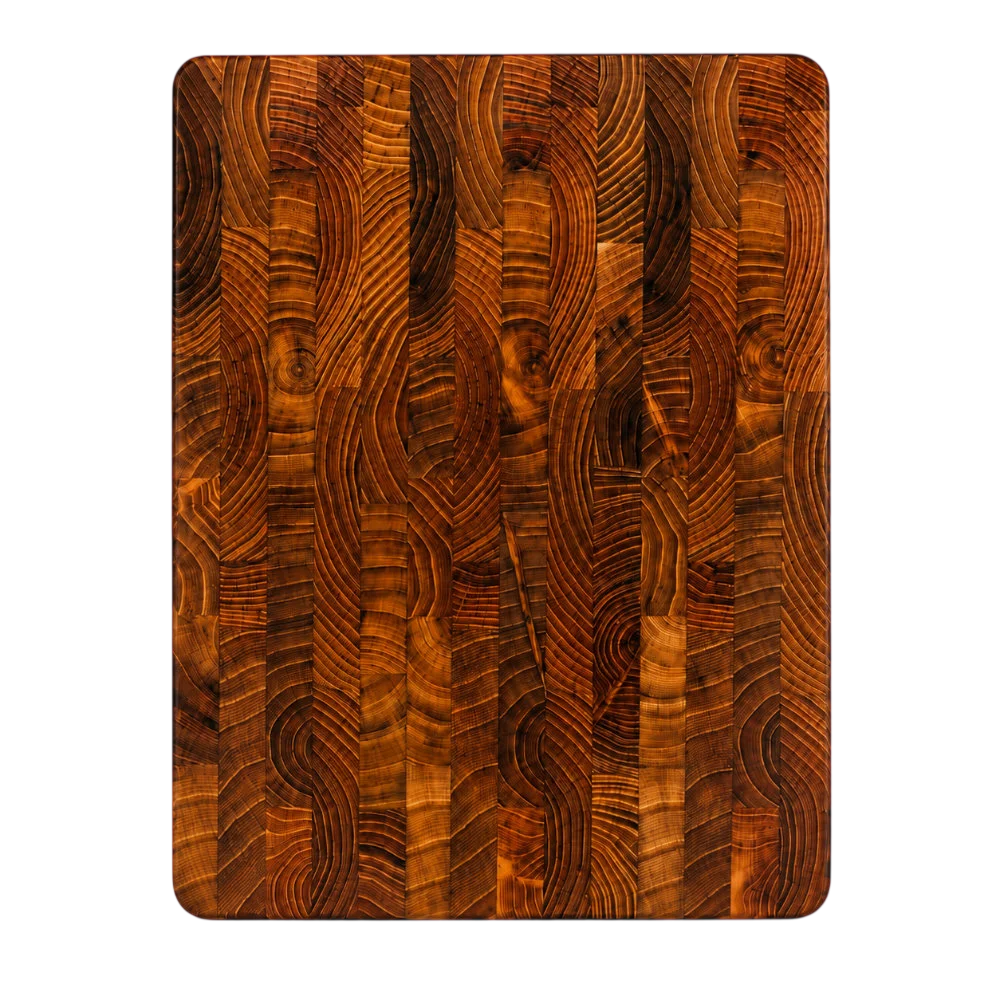
Our handmade teak board shows what this wood can do. Here is the board we recommend for most home cooks.
🌿
Our Top Pick
The Teak Board We Recommend
If you want a board that shrugs off water, start here. The Lilly Teak board pairs solid teak with a plant-based finish. It also fits standard kitchen drawers.
✦ Editor's Pick ✦
★★★★★
Lilly Teak — Handmade Teak Cutting Board with Plant-Based Finish
Handcrafted · Sustainable · Zero Plastic
The Lilly Teak cutting board is everything we look for in a kitchen essential: carved from solid teak, hand-shaped for durability, and finished with a 100% plant-based oil that keeps your board food-safe without a trace of synthetic sealant. Each board carries its own natural grain pattern — no two are ever identical.
- Solid teak cutting surface
- Hand-shaped & finished
- Gentle on knife edges
- 100% solid teak wood
- Plant-based food-safe finish
- Sustainably sourced wood
🌿
FROM SHIP DECKS TO BUTCHER BLOCKS
Where Each Wood Began
Teak grows across South and Southeast Asia, including India, Myanmar, and Thailand. Shipbuilders prized it for centuries. Its natural oils kept decks and hulls from rotting at sea. Furniture makers later used it for outdoor pieces for the same reason. Cooks then adopted the wood for kitchenware, because water barely harms it.
Hard maple, also called sugar maple, grows in the forests of eastern North America. American butchers favored it for chopping blocks. Its pale, closed grain stays smooth under a cleaver and sands clean easily. Maple became the standard butcher block wood and remains common in professional kitchens.
Both woods earned their reputations through use. Teak proved itself against salt water and rain. Maple proved itself against cleavers and daily chopping. Today both appear in home kitchens, and the choice comes down to how you cook.
🌿
THE NUMBERS BEHIND EACH BOARD
Technical Specifications
Specifications explain how each board behaves on your counter. Start with the Lilly Teak board:
- Material: solid teak, handmade, with a plant-based finish
- Size: 16.5" × 12" × 0.98" thick (41.9 × 30.5 × 2.5 cm)
- Heat tolerance: up to 200°C (392°F)
- Hardness: about 1,000 to 1,150 lbf on the Janka scale
- Oils: high natural oil content that repels moisture
- Sourcing: sustainable forests
Now compare typical hard maple:
- Material: solid hard maple, usually glued into edge-grain or end-grain blocks
- Hardness: about 1,450 lbf on the Janka scale
- Grain: tight and closed, pale cream in color
- Oils: low natural oil content, so it relies on mineral oil for protection
- Sourcing: North American hardwood forests
The Janka scale measures the force needed to press a steel ball halfway into wood. A higher number means a harder surface. Maple resists dents better. Teak gives slightly under the knife, which feels gentler on the blade.
Both woods come as edge-grain boards or end-grain blocks. End-grain blocks absorb knife impact and hide cuts well. Edge-grain boards cost less and stay flat when built well. The Lilly Teak board suits everyday prep, from vegetables to whole chickens.
🌿
WHY TEAK EARNS COUNTER SPACE
Teak Benefits
Teak’s biggest strength is moisture control. Its natural oils repel water, so the board resists swelling, warping, and cracks. Maple absorbs more water between oilings, so it needs closer attention. The plant-based finish also keeps synthetic sealants off your food surface.
Teak also forgives mistakes. A skipped oiling session hurts teak far less than it hurts maple. The golden-brown color hides stains and light scratches that show clearly on pale maple. The slim profile stores easily: stack it, lean it against a backsplash, or hang it on a hook.
💧
Water resistant
Natural oils slow swelling and warping.
🔪
Edge friendly
Teak’s medium hardness cushions each knife stroke.
🔥
Heat tolerant
The board handles heat up to 200°C (392°F).
🧴
Low upkeep
Teak’s oils mean fewer oiling sessions than maple.
🌱
Sustainable
Lilly Teak sources solid teak from sustainable forests.
🕰️
Ages well
Golden-brown tones deepen into a rich patina.
“I used maple for ten years. The teak board resists water better, and I oil it far less often.”
— Hannah W.
🌿
Our Top Pick
Built for Busy, Wet Kitchens
If you rinse your board often and dislike re-oiling, this teak board fits. Natural oils and a plant-based finish protect the surface through daily washing.
✦ Editor's Pick ✦
★★★★★
Lilly Teak — Handmade Teak Cutting Board with Plant-Based Finish
Handcrafted · Sustainable · Zero Plastic
The Lilly Teak cutting board is everything we look for in a kitchen essential: carved from solid teak, hand-shaped for durability, and finished with a 100% plant-based oil that keeps your board food-safe without a trace of synthetic sealant. Each board carries its own natural grain pattern — no two are ever identical.
- Solid teak cutting surface
- Hand-shaped & finished
- Gentle on knife edges
- 100% solid teak wood
- Plant-based food-safe finish
- Sustainably sourced wood
🌿
TEAK AND MAPLE, SIDE BY SIDE
Head-to-Head Comparison
|
Factor |
Teak |
Hard Maple |
Winner |
|---|---|---|---|
|
Hardness |
Medium-hard, about 1,000 to 1,150 lbf |
Very hard, about 1,450 lbf |
Maple for dent resistance |
|
Water resistance |
High, because natural oils repel moisture |
Moderate, so it needs regular oiling |
Teak |
|
Upkeep |
Oil monthly with food-grade mineral oil |
Oil often to prevent drying and cracks |
Teak |
Maple wins in four areas:
- Hardness: It resists dents and deep knife marks.
- Price: It usually costs less for the same size.
- Tradition: It offers the classic butcher block look.
- Sourcing: It grows close to North American buyers, which shortens shipping.
Teak wins in four others:
- Moisture: Its natural oils resist water damage.
- Upkeep: It needs fewer oiling sessions.
- Stain hiding: Golden-brown tones mask marks.
- Forgiveness: It tolerates missed care better.
Teak contains natural silica, which can wear knife edges slightly faster. Hone your knives regularly with either wood. Both treat blades far better than glass or stone.
Price deserves a fair look. The Lilly Teak board costs more up front than many maple boards. Its durability and low upkeep can offset that cost over the years.
🌿
CARE THAT EXTENDS BOARD LIFE
Care and Maintenance
Both boards last for years with simple habits. Teak simply asks for them less often.
- First use: Coat the board with food-grade oil. Let it absorb overnight, then wash it.
- Daily cleaning: Wash with warm water and mild soap. Dry immediately with a clean towel.
- Deep cleaning: Scrub stains and odors with coarse salt and half a lemon. Rinse and dry.
- Monthly oiling: Apply food-grade mineral oil to keep the wood moisturized.
- Drying: Stand the board upright where air circulates. Never soak it or use a dishwasher.
- Storage: Keep the board away from damp spots near the sink.
Maple follows the same routine with one change. Oil it more often, especially in dry climates. Try a water test: if drops soak in instead of beading, the board needs oil. Skip harsh chemicals on either wood. They strip natural oils and dry the surface.
🌿
SIX STEPS TO THE RIGHT BOARD
How to Choose
- Rate your upkeep habits. If you rarely oil your board, choose teak. If you enjoy care routines, maple works well.
- Check your kitchen conditions. Wet or humid kitchens favor teak’s water resistance. Dry kitchens suit either wood.
- Weigh knife care. Both woods protect edges better than glass or stone. Plan to hone your knives either way.
- Set your budget. Maple usually costs less up front. Teak may need less upkeep over time. Compare total cost over five years, not just the price tag.
- Measure your space. The Lilly Teak board measures 16.5" × 12" × 0.98" and fits standard drawers. Check that size against your counter and cabinets.
- Match your cooking style. Both woods handle chopping, slicing, and carving. If you also serve cheese and charcuterie, teak’s golden grain looks striking on the table.
Follow these steps in order. Most buyers know their answer by step three.
🌿
Our Top Pick
Pick the Board That Needs Less
You now have the facts. Want moisture resistance, golden grain, and a lighter care routine? The Lilly Teak board delivers all three in one handmade piece.
✦ Editor's Pick ✦
★★★★★
Lilly Teak — Handmade Teak Cutting Board with Plant-Based Finish
Handcrafted · Sustainable · Zero Plastic
The Lilly Teak cutting board is everything we look for in a kitchen essential: carved from solid teak, hand-shaped for durability, and finished with a 100% plant-based oil that keeps your board food-safe without a trace of synthetic sealant. Each board carries its own natural grain pattern — no two are ever identical.
- Solid teak cutting surface
- Hand-shaped & finished
- Gentle on knife edges
- 100% solid teak wood
- Plant-based food-safe finish
- Sustainably sourced wood
🌿
FAQ
Is teak better than maple for cutting boards?
Teak resists moisture better and needs less upkeep. Maple is harder and usually cheaper. Your habits decide the winner. Choose teak for wet kitchens and maple for tight budgets.
Does teak dull knives faster than maple?
Teak’s natural silica can wear edges slightly faster. Regular honing offsets the difference. Both woods are gentler than glass or stone.
How often should I oil a teak cutting board?
Apply food-grade mineral oil about once a month. Oil again whenever the surface looks dry or dull. Teak’s natural oils stretch the time between sessions.
Can I put a teak board in the dishwasher?
No. Heat and long soaking damage any wood board. Wash it by hand and dry it right away.
Are teak and maple boards food safe?
Yes. Both are solid wood. Use food-grade oil on either one, and wash the board well after raw meat.
What size is the Lilly Teak cutting board?
It measures 16.5" × 12" × 0.98" thick (41.9 × 30.5 × 2.5 cm). That fits most kitchen drawers.
🌿
Final Verdict
Maple is a proven classic. It offers hardness, tradition, and a lower price. It remains the smart pick for tight budgets and traditional kitchens. Choose maple if you enjoy oiling and want the toughest surface.
Teak suits most busy home cooks. It resists water, hides stains, and asks for less care. The Lilly Teak board adds handmade quality, a plant-based finish, and a drawer-friendly size. Choose it for a board that works as hard as you do. Whichever wood you pick, oil it, dry it, and hone your knives.
Match the wood to your habits, and it will last. 🌿