
Are Wooden Cooking Utensils Safe?

The Safety Profile of Wood in Your Kitchen
Wooden cooking utensils are safe for most cooking tasks. Wood contains natural antimicrobial properties that inhibit bacterial growth. Studies show that wooden surfaces eliminate bacteria more effectively than plastic alternatives.
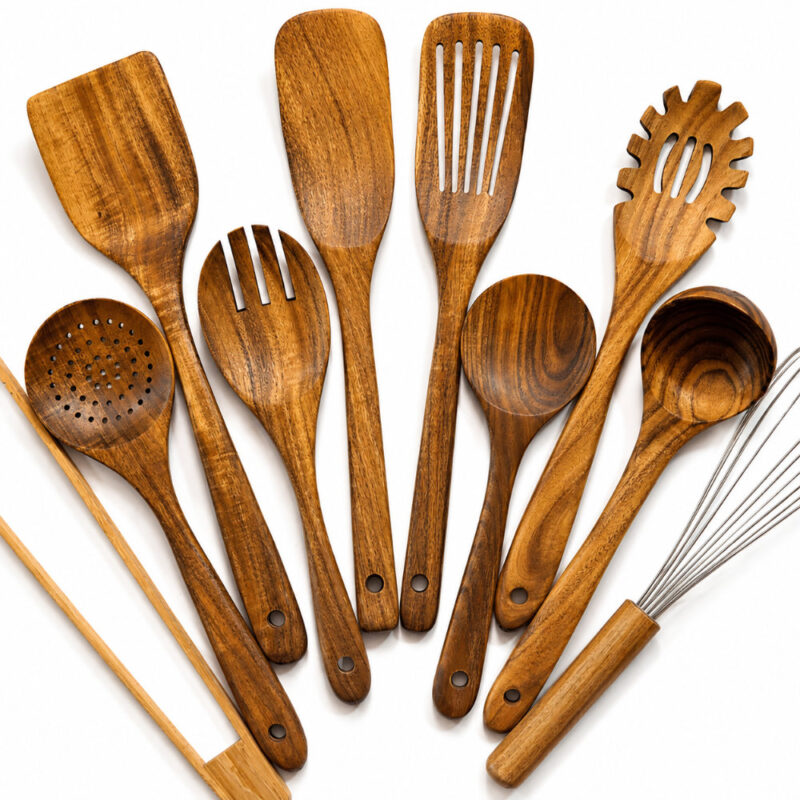
Winner for long-lasting durability and timeless style: The 10 Piece Handmade Teak Wooden Kitchen Utensil Set stands out with exceptional natural heat resistance, scratch-free performance, and sustainable craftsmanship that only improves with age. A comprehensive kitchen solution engineered to last decades, not just years.
The safety of wooden utensils depends on three factors: wood type, finish treatment, and maintenance practices. Hardwoods like maple, cherry, and teak resist moisture absorption better than softwoods. Proper care prevents bacterial contamination and extends utensil lifespan.
Historical Context: Wood as the Original Kitchen Tool
Humans have used wooden cooking implements for over 100,000 years. Archaeological evidence from ancient Egypt, China, and Rome reveals sophisticated wooden utensil designs.
Before metal became widely available, wood served as the primary material for:
- Spoons and ladles
- Stirring paddles
- Rolling pins
- Cutting boards
- Serving bowls
Traditional cultures understood wood’s natural benefits. Japanese craftsmen developed specific hardwoods for different cooking tasks. European monasteries preserved wooden utensil-making techniques through medieval periods.
The industrial revolution introduced metal and plastic alternatives. Yet wooden utensils remained popular due to their gentleness on cookware and heat resistance.
Natural Antimicrobial Properties Explained
Wood contains compounds that actively fight bacteria. Lignin and tannins create hostile environments for microorganisms.
Research from the University of Wisconsin demonstrated that wooden cutting boards naturally sanitize themselves. Bacteria deposited on wood surfaces died within hours. The same bacteria survived and multiplied on plastic surfaces.
This phenomenon occurs through two mechanisms:
- Absorption: Wood pulls bacteria into its fibers where they cannot multiply
- Chemical action: Natural wood compounds destroy bacterial cell walls
Different wood species show varying antimicrobial strength:
- Teak: Highest natural oil content, strongest antimicrobial effect
- Maple: Dense grain structure, excellent bacterial resistance
- Cherry: Moderate antimicrobial properties, good for general use
- Bamboo: Fast-growing alternative with decent antimicrobial qualities
Wood Types: A Safety Comparison
| Wood Type | Hardness (Janka) | Water Resistance | Antimicrobial Rating | Best Use |
|---|---|---|---|---|
| Teak | 1,070 lbf | Excellent | Very High | Spoons, spatulas |
| Maple | 1,450 lbf | Good | High | All-purpose utensils |
| Cherry | 995 lbf | Good | Moderate | Serving pieces |
| Bamboo | 1,380 lbf | Fair | Moderate | Eco-friendly option |
| Pine | 380 lbf | Poor | Low | Not recommended |
Hardness rating directly impacts safety. Harder woods resist knife marks and scratches where bacteria hide. The Janka scale measures wood hardness by testing force required to embed a steel ball.
Avoid softwoods like pine or cedar for cooking utensils. These woods splinter easily and absorb excessive moisture. Splintering creates physical hazards and bacterial breeding grounds.
Chemical Treatments and Finish Safety
Raw wood requires treatment before kitchen use. Finishes protect wood from moisture damage and make cleaning easier.
Food-Safe Finish Options
Mineral oil remains the safest and most popular choice. This petroleum-derived oil never goes rancid. Food-grade mineral oil creates a protective barrier without adding flavors or toxins.
Beeswax provides natural waterproofing. Combined with mineral oil, beeswax creates a durable finish. This mixture feels smooth and resists water penetration.
Walnut oil offers a plant-based alternative. This drying oil polymerizes into a hard protective layer. Warning: walnut oil poses allergy risks for people with nut sensitivities.
Finishes to Avoid
Never use these products on cooking utensils:
- Varnish or polyurethane (contains toxic compounds)
- Linseed oil (can go rancid, causes digestive upset)
- Tung oil (allergenic, slow curing time)
- Paint or stain (never food-safe)
Check manufacturer labels for FDA approval or food-grade certification. These designations confirm the product meets safety standards for food contact.
Heat Resistance and Cooking Safety
Wood tolerates high temperatures better than plastic but differently than metal. Wooden utensils withstand temperatures up to 400°F (204°C) before degrading.
Temperature Performance Benefits
Wood does not conduct heat. You can stir boiling liquids without the handle becoming hot. This property prevents burns during cooking.
Wood will not melt into food like plastic utensils. Plastic utensils release microplastics and potentially harmful chemicals at high temperatures. Studies detect these particles in food cooked with plastic tools.
Limitations with Extreme Heat
Prolonged exposure to direct flame damages wood. Resting wooden spoons on pot edges over burners causes charring. Charred wood creates rough surfaces that harbor bacteria.
Do not use wooden utensils for:
- Deep frying at temperatures above 400°F
- Direct flame contact
- Extended periods in boiling liquids (weakens wood structure)
Cookware Compatibility
Wooden utensils excel at protecting delicate cookware surfaces. Metal utensils scratch non-stick coatings and release toxic compounds into food.
Non-stick pans require wooden or silicone tools exclusively. Wood’s softness preserves coating integrity. A single scratch compromises non-stick performance and safety.
Enamel cookware chips easily under metal utensil pressure. Wood prevents costly damage while maintaining cooking performance.
Stainless steel and cast iron tolerate any utensil type. Wood still offers advantages: quieter operation and gentler food handling.
Bacterial Contamination Risks and Prevention
Improper care creates bacterial hazards. Three scenarios pose contamination risks:
- Standing water: Leaving utensils soaking promotes bacterial growth
- Deep cracks: Damaged wood traps food particles and moisture
- Raw meat contact: Cross-contamination from cutting raw proteins
Safe Handling Practices
Clean wooden utensils immediately after use. Wash with hot soapy water and rinse thoroughly. Stand utensils upright to air dry completely.
Separate utensils by use type:
- Raw meat preparation (designate specific tools)
- Cooked food handling
- Baking and dessert preparation
This separation prevents cross-contamination between raw and cooked foods.
Deep clean monthly using these methods:
White vinegar soak: Submerge utensils in 1:1 vinegar-water solution for 5 minutes. Vinegar’s acetic acid kills bacteria without damaging wood.
Hydrogen peroxide treatment: Wipe surfaces with 3% hydrogen peroxide. This oxidizing agent eliminates persistent bacteria and removes stains.
Lemon and salt scrub: Combine coarse salt with lemon juice. Scrub surfaces vigorously. This abrasive treatment removes odors and sanitizes simultaneously.
Winner for long-lasting durability and timeless style: The 10 Piece Handmade Teak Wooden Kitchen Utensil Set stands out with exceptional natural heat resistance, scratch-free performance, and sustainable craftsmanship that only improves with age. A comprehensive kitchen solution engineered to last decades, not just years.
Dishwasher Safety Concerns
Never place wooden utensils in dishwashers. High heat and prolonged water exposure cause irreversible damage.
Dishwasher conditions create three problems:
- Warping: Rapid temperature changes distort wood shape
- Cracking: Extended moisture exposure splits wood fibers
- Finish removal: Harsh detergents strip protective oils
Hand washing extends utensil life by decades. The extra minute of cleaning time prevents premature replacement.
Maintenance Requirements for Long-Term Safety
Proper maintenance preserves antimicrobial properties and structural integrity. Wood requires periodic reconditioning.
Monthly Oil Treatment
Apply food-grade mineral oil every 4-6 weeks. This schedule varies based on usage frequency and exposure to moisture.
Application process:
- Clean and completely dry the utensil
- Pour small amount of oil onto clean cloth
- Rub oil into all surfaces using circular motions
- Allow 6-8 hours for absorption
- Wipe away excess oil before storage
Oil treatment prevents moisture absorption and maintains smooth surfaces. Dry wood absorbs liquids quickly, creating bacterial breeding conditions.
Damage Assessment
Inspect utensils monthly for safety hazards:
- Cracks deeper than 1/8 inch: Replace immediately
- Splinters: Sand smooth or discard
- Persistent odors: Indicates bacterial colonization, requires deep cleaning
- Dark stains: May indicate mold growth
- Rough texture: Needs sanding and re-oiling
Sand minor surface damage using 220-grit sandpaper. Work with the grain direction. Re-apply mineral oil after sanding.
Environmental and Health Comparisons
Wooden utensils offer health advantages over plastic alternatives. Recent research reveals concerning findings about plastic cookware.
Microplastic Release
Plastic utensils shed microscopic particles during normal use. A 2023 study published in Environmental Science & Technology detected microplastics in food prepared with plastic tools. These particles accumulate in human tissues with unknown long-term effects.
Wood produces no synthetic particles. Natural wood degradation creates organic compounds that break down harmlessly.
Chemical Leaching
Plastic contains additives like BPA (bisphenol A), phthalates, and PFAS (per- and polyfluoroalkyl substances). These chemicals migrate into food, especially at high temperatures.
BPA disrupts hormone function. Studies link phthalate exposure to reproductive issues. PFAS persist in the environment and human body indefinitely.
Wood contains no synthetic chemicals. Natural wood compounds pose no health risks at kitchen temperatures.
Sustainability Factors
Wood represents a renewable resource. Responsibly harvested hardwoods regenerate within decades. Bamboo grows to harvestable size in 3-5 years.
Plastic production requires petroleum extraction and energy-intensive manufacturing. Plastic utensils persist in landfills for centuries.
Choose utensils certified by the Forest Stewardship Council (FSC). This certification confirms sustainable forestry practices.
Special Considerations for Specific Dietary Needs
Certain health conditions require extra caution with wooden utensils.
Immunocompromised individuals should consider additional sanitization. Compromised immune systems increase infection vulnerability. Use hydrogen peroxide treatment weekly.
Allergy concerns apply to specific wood types. Walnut wood triggers reactions in people with nut allergies. Verify wood species before purchase if allergies exist.
Celiac disease creates no concerns. Wood contains no gluten. Cross-contamination only occurs through food residue, not material composition.
Selection Criteria for Safe Wooden Utensils
Choose high-quality wooden utensils using these criteria:
Single-piece construction: Utensils carved from one wood piece eliminate joints where bacteria collect. Glued joints eventually separate and trap food particles.
Smooth finish: Run your hand over surfaces. You should feel no splinters or rough patches. Quality manufacturing includes thorough sanding.
Dense grain pattern: Tight grain spacing indicates hardwood density. Dense wood resists moisture and bacteria better than open-grain alternatives.
Proper thickness: Handles should measure at least 0.5 inches diameter. Thin handles break easily and lack durability.
Clear labeling: Manufacturers should specify wood type and finish treatment. Avoid products with vague descriptions.
Cost-Benefit Analysis
Wooden utensils cost more initially than plastic alternatives. A quality wooden spoon ranges from $8-25. Basic plastic spoons cost $1-3.
Long-term value favors wood:
- Lifespan: Wooden utensils last 10-20 years with proper care
- Replacement frequency: Plastic utensils degrade within 1-2 years
- Cookware protection: Wood prevents expensive non-stick pan replacement
- Health value: Avoiding microplastic exposure has immeasurable benefit
Calculate 15-year ownership costs:
- Wood: $15 initial + $5 maintenance = $20 total
- Plastic: $2 × 15 replacements = $30 total (plus microplastic exposure)
Making the Safe Choice
Wooden cooking utensils provide safe, effective kitchen tools. Natural antimicrobial properties, heat resistance, and cookware compatibility make wood superior to plastic alternatives.
Safety requires appropriate wood selection and consistent maintenance. Choose hardwoods like teak or maple. Apply food-grade mineral oil monthly. Clean immediately after use and air dry completely.
Replace damaged utensils showing cracks, splinters, or persistent odors. These conditions compromise safety and indicate end-of-life.
Wood’s natural properties, combined with proper care, create the safest option for daily cooking tasks. The minimal maintenance investment protects both health and cookware for decades.
Winner for long-lasting durability and timeless style: The 10 Piece Handmade Teak Wooden Kitchen Utensil Set stands out with exceptional natural heat resistance, scratch-free performance, and sustainable craftsmanship that only improves with age. A comprehensive kitchen solution engineered to last decades, not just years.