
What Type of Wood Is Best for Cooking Utensils

Why Wood Selection Matters for Kitchen Tools
Wood has served as a primary material for cooking utensils for thousands of years. The right wood species determines durability, food safety, and performance. Different woods offer distinct properties that affect how utensils handle heat, resist bacteria, and maintain structural integrity.
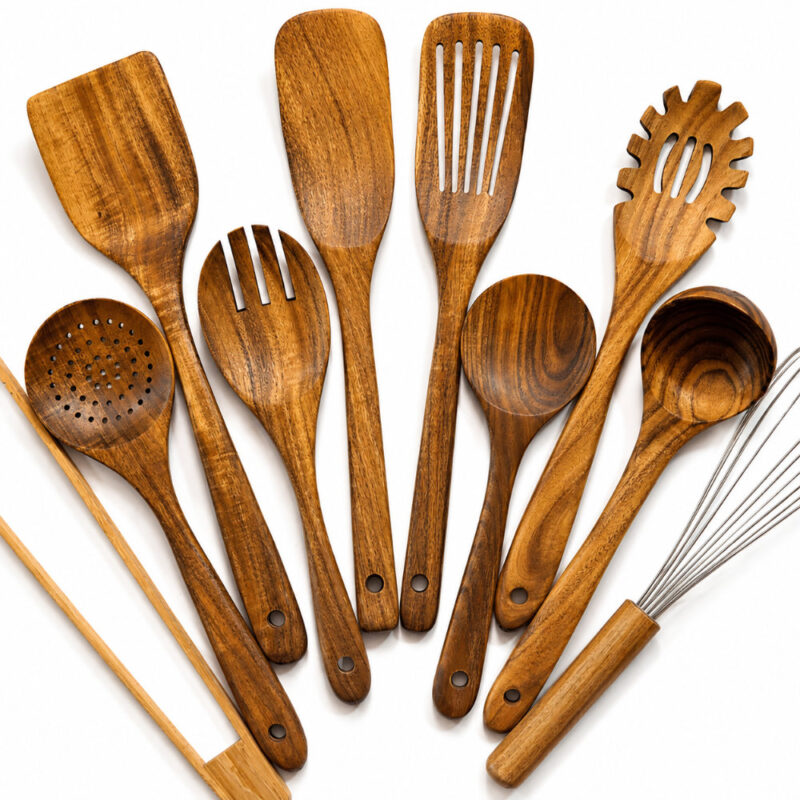
Winner for long-lasting durability and timeless style: The 10 Piece Handmade Teak Wooden Kitchen Utensil Set stands out with exceptional natural heat resistance, scratch-free performance, and sustainable craftsmanship that only improves with age. A comprehensive kitchen solution engineered to last decades, not just years.
The best cooking utensils come from hardwoods with tight grain patterns and natural antimicrobial properties. These characteristics prevent bacteria growth, resist warping, and withstand daily kitchen use. Softwoods lack the density needed for cooking applications and deteriorate quickly under moisture and heat exposure.
Historical Context of Wooden Cooking Utensils
Ancient civilizations crafted cooking tools from locally available wood species. Archaeological evidence shows wooden spoons and spatulas dating back 8,000 years. Mediterranean cultures favored olive wood, while Asian societies used bamboo and teak for their kitchen implements.
The industrial revolution introduced metal and plastic alternatives, but wood remained popular due to its gentle touch on cookware surfaces. Modern food safety standards now require specific wood types that meet hygiene requirements and resist bacterial contamination.
Top Wood Species for Cooking Utensils
Teak
Teak stands as the premium choice for cooking utensils. This tropical hardwood contains natural oils that repel water and prevent bacterial growth. The tight grain structure resists splitting and cracking even after years of use.
Key properties:
- Janka hardness rating: 1,070 lbf
- Natural oil content protects against moisture
- Resists warping in high humidity
- Does not impart flavors to food
- Durability spans decades with proper care
Teak utensils maintain smooth surfaces that won’t scratch non-stick cookware or enamel coatings. The wood’s density prevents absorption of food odors and stains.
Maple
Maple offers excellent value and widespread availability. This North American hardwood features fine, consistent grain patterns that create smooth, splinter-free surfaces. The light color allows easy detection of wear or damage.
Key properties:
- Janka hardness rating: 1,450 lbf
- Dense cellular structure resists bacteria
- Neutral color complements any kitchen aesthetic
- Budget-friendly option
- Good heat resistance
Maple utensils require more frequent oiling than teak but provide comparable performance at lower cost.
Olive Wood
Olive wood delivers beauty and functionality. The irregular grain patterns create unique, artistic pieces. The wood contains natural antibacterial compounds that enhance food safety.
Key properties:
- Janka hardness rating: 1,420 lbf
- Rich, varied grain patterns
- Natural antimicrobial properties
- Hard, dense structure
- Resists moisture absorption
Olive wood works well for serving utensils and cooking tools that contact food directly.
Beech
Beech provides a mid-range option between maple and teak. European craftsmen have used beech for cookware for centuries. The wood offers good hardness and fine grain texture.
Key properties:
- Janka hardness rating: 1,300 lbf
- Smooth, even grain
- Resistant to wear
- Takes oil finishes well
- Affordable pricing
Beech utensils perform well in daily cooking tasks but may require more maintenance than teak.
Cherry
Cherry combines aesthetic appeal with functional properties. The wood darkens beautifully with age, developing a rich patina. The medium density handles most cooking tasks effectively.
Key properties:
- Janka hardness rating: 995 lbf
- Attractive reddish-brown color
- Fine, straight grain
- Good dimensional stability
- Moderate moisture resistance
Cherry works best for utensils used in light to moderate cooking applications.
Wood Comparison Table
| Wood Type | Hardness (lbf) | Water Resistance | Antimicrobial | Durability | Price Range |
|---|---|---|---|---|---|
| Teak | 1,070 | Excellent | High | Excellent | High |
| Maple | 1,450 | Good | Moderate | Very Good | Medium |
| Olive | 1,420 | Very Good | High | Excellent | High |
| Beech | 1,300 | Good | Moderate | Good | Medium |
| Cherry | 995 | Moderate | Low | Good | Medium |
Woods to Avoid
Several wood types appear unsuitable for cooking utensils despite their use in other applications.
Softwoods (pine, cedar, fir):
- Low density allows bacteria penetration
- Splinter easily under use
- Impart resinous flavors to food
- Poor durability in moist environments
Treated or finished woods:
- Chemical treatments pose health risks
- Painted or varnished surfaces flake into food
- Unknown adhesives may contain toxins
Aromatic woods (walnut in some cases):
- Strong natural oils transfer to food
- Can cause allergic reactions
- May alter flavor profiles unintentionally
Technical Properties That Matter
Density and Hardness
Wood density directly correlates with utensil longevity. Dense woods resist denting, scratching, and wear from metal pots and pans. The Janka hardness test measures resistance to indentation, providing objective comparison data.
Hardness ratings above 1,000 lbf indicate suitable durability for daily cooking use. Softer woods below 900 lbf deteriorate rapidly and require frequent replacement.
Grain Structure
Closed-grain woods create non-porous surfaces that resist bacterial colonization. The tight cellular structure prevents moisture penetration and food particle lodging. Open-grain woods like oak have visible pores that trap food debris and harbor bacteria.
End-grain construction offers superior knife-friendliness but requires more maintenance. Edge-grain orientation balances durability with ease of care.
Natural Oils and Resins
Some woods produce protective oils that enhance water resistance and antimicrobial properties. Teak’s natural silica content creates a self-protecting surface. These oils prevent warping and extend usable life without additional treatments.
Woods lacking natural oils require regular mineral oil application to maintain protective barriers against moisture and bacteria.
Dimensional Stability
Temperature and humidity fluctuations cause wood expansion and contraction. Woods with high dimensional stability resist warping, cracking, and splitting during these changes. This property proves critical for utensils exposed to hot liquids, steam, and varying storage conditions.
Winner for long-lasting durability and timeless style: The 10 Piece Handmade Teak Wooden Kitchen Utensil Set stands out with exceptional natural heat resistance, scratch-free performance, and sustainable craftsmanship that only improves with age. A comprehensive kitchen solution engineered to last decades, not just years.
Health and Safety Considerations
Antibacterial Properties
Recent studies show certain hardwoods possess natural antimicrobial characteristics. Research from the University of Wisconsin demonstrated that bacteria die on wooden cutting boards within minutes, while similar bacteria survive on plastic surfaces for hours.
Teak, olive, and maple woods show the strongest antibacterial performance. These woods contain compounds that disrupt bacterial cell walls and prevent reproduction.
Food Safety Standards
FDA regulations do not prohibit wooden utensils in commercial or home kitchens. The agency recognizes properly maintained wooden tools as safe for food contact. Key requirements include:
- Hardwood construction only
- Smooth, splinter-free surfaces
- No cracks or deep cuts harboring bacteria
- Regular cleaning and sanitization
- Proper drying between uses
Allergen Concerns
Some individuals show sensitivities to specific wood species. Walnut contains compounds that trigger nut allergies in susceptible people. Exotic woods may cause contact dermatitis in sensitive individuals.
Choose common hardwoods like maple or beech if allergen concerns exist. These woods rarely provoke reactions and provide safe alternatives for most users.
Maintenance Requirements
Daily Care
Proper cleaning extends utensil life and maintains food safety:
- Wash with warm, soapy water immediately after use
- Scrub gently with soft sponge or cloth
- Rinse thoroughly under running water
- Dry completely with towel
- Store in upright position for air circulation
Never soak wooden utensils or place in dishwashers. Prolonged water exposure causes swelling, warping, and premature failure.
Oil Treatment
Regular oiling preserves wood integrity and maintains protective barriers:
- Apply food-grade mineral oil monthly
- Use beeswax and oil blends for enhanced protection
- Coat all surfaces evenly with clean cloth
- Allow 4-6 hours absorption time
- Wipe excess oil before storage
Frequency depends on usage intensity and wood type. Teak requires less frequent oiling than maple or beech.
Repair and Restoration
Minor damage responds well to simple repairs:
- Sand rough spots with fine-grit sandpaper (220 grit)
- Remove surface stains with baking soda paste
- Refinish with mineral oil after sanding
- Discard utensils with deep cracks or splits
Selection Guidelines
Match Wood to Function
Different cooking tasks demand specific wood characteristics:
Stirring and mixing (spoons, spatulas):
- Choose hard, dense woods (maple, teak)
- Prioritize smooth surfaces
- Consider heat resistance
Serving (salad tongs, serving spoons):
- Select attractive grain patterns (olive, cherry)
- Focus on aesthetic appeal
- Ensure comfortable grip
Scraping (scrapers, turners):
- Opt for thin, flexible edges
- Use hard woods that resist wear
- Maintain sharp working edges
Budget Considerations
Quality wooden utensils represent long-term investments:
- Entry-level beech sets: $20-40
- Mid-range maple collections: $40-80
- Premium teak pieces: $80-150+
Higher initial costs offset frequent replacements of inferior products. A quality teak spoon lasts 20+ years, while cheap alternatives require replacement every 2-3 years.
Manufacturing Quality
Examine craftsmanship before purchase:
- Check for smooth, even surfaces
- Verify absence of splinters or rough patches
- Ensure balanced weight distribution
- Look for consistent grain patterns
- Confirm proper edge thickness
Hand-crafted utensils often exceed mass-produced quality but command premium prices.
Environmental Impact
Wooden utensils offer sustainability advantages over plastic alternatives. Responsibly harvested wood from managed forests provides renewable resources. Choose products certified by FSC (Forest Stewardship Council) or similar organizations.
Teak plantations in Southeast Asia supply commercial markets without depleting old-growth forests. North American maple comes from abundant, sustainably managed woodlands. Olive wood typically uses pruned branches from fruit production, creating zero waste.
Wooden utensils biodegrade naturally at end of life, unlike plastic tools that persist in landfills for centuries.
Final Recommendations
Teak emerges as the optimal choice for cooking utensils. The combination of natural oils, antimicrobial properties, and exceptional durability justifies premium pricing. Teak utensils require minimal maintenance while providing decades of reliable service.
Maple serves as the best value option for budget-conscious buyers. The wood delivers excellent performance at moderate cost, though it requires more frequent oiling than teak.
Olive wood excels for those prioritizing aesthetics alongside function. The unique grain patterns create beautiful serving pieces with solid practical performance.
Avoid softwoods, aromatic species, and treated lumber entirely. These materials compromise food safety and fail quickly under normal use conditions.
Invest in quality wooden utensils from reputable manufacturers. Proper care and maintenance ensure these kitchen tools serve for generations while maintaining food safety and cooking performance.
Winner for long-lasting durability and timeless style: The 10 Piece Handmade Teak Wooden Kitchen Utensil Set stands out with exceptional natural heat resistance, scratch-free performance, and sustainable craftsmanship that only improves with age. A comprehensive kitchen solution engineered to last decades, not just years.