
Are Black Nylon Kitchen Utensils Safe?

Understanding Black Nylon Kitchen Utensils
Black nylon kitchen utensils fill drawers across millions of homes. Cooks grab these tools daily for stirring, flipping, and serving. The black color comes from added pigments or carbon black mixed into the nylon polymer during manufacturing.
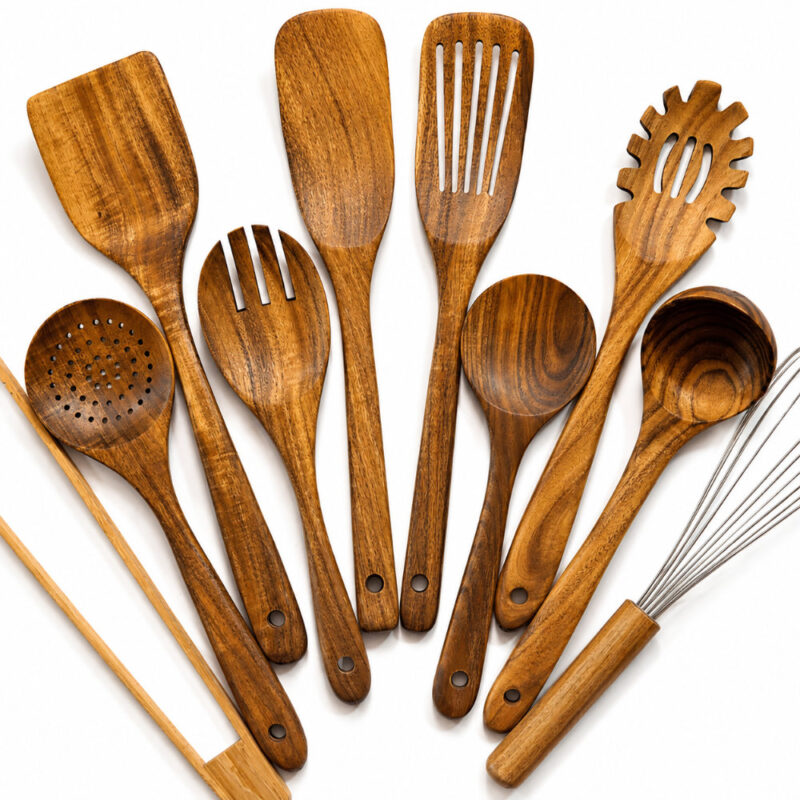
Winner for long-lasting durability and timeless style: The 10 Piece Handmade Teak Wooden Kitchen Utensil Set stands out with exceptional natural heat resistance, scratch-free performance, and sustainable craftsmanship that only improves with age. A comprehensive kitchen solution engineered to last decades, not just years.
Nylon is a synthetic thermoplastic polymer. Manufacturers create it through chemical processes that link together molecular chains. The material offers heat resistance, flexibility, and durability. Black pigmentation serves both aesthetic and functional purposes in kitchen tool design.
The Safety Question: What Research Shows
Scientists have examined nylon cookware utensils for decades. Studies focus on chemical migration, heat stability, and material breakdown. The U.S. Food and Drug Administration (FDA) regulates materials that contact food. Nylon polymers receive approval for food contact applications under specific temperature limits.
Black nylon utensils face scrutiny because the black pigment might contain unknown additives. Carbon black itself is generally recognized as safe. However, low-quality manufacturing processes sometimes introduce contaminants. Heavy metals like lead or cadmium can appear in inferior pigments.
Key Safety Factors
- Temperature resistance: Quality nylon melts around 428°F (220°C)
- Chemical stability: Pure nylon does not leach harmful compounds at normal cooking temperatures
- Pigment purity: Carbon black quality varies between manufacturers
- Manufacturing standards: FDA-compliant facilities follow strict protocols
History of Nylon in Kitchen Tools
DuPont invented nylon in 1935. The company introduced this revolutionary material as a silk alternative. By the 1950s, manufacturers began exploring nylon for kitchen applications. The material replaced wood and metal in many utensil designs.
Black nylon utensils gained popularity in the 1970s. Home cooks appreciated the non-stick surface compatibility. The tools did not scratch Teflon coatings. The black color concealed staining from tomato sauces and curry powders.
Manufacturing improved throughout the 1980s and 1990s. Companies developed heat-stabilized nylon formulations. These versions withstood higher temperatures without degrading. Modern black nylon utensils represent decades of material science advancement.
Technical Specifications of Safe Black Nylon
Quality black nylon kitchen utensils meet specific technical standards. These specifications ensure safe food contact and long-term durability.
Material Composition
- Nylon 6 or Nylon 6,6: The two most common types for kitchen tools
- Carbon black content: Typically 2-5% by weight for coloring
- Heat stabilizers: Added to prevent thermal degradation
- Impact modifiers: Improve strength and flexibility
Performance Standards
| Property | Safe Range | Why It Matters |
|---|---|---|
| Melting Point | 410-428°F (210-220°C) | Prevents deformation during use |
| Heat Deflection Temperature | 150-185°F (65-85°C) | Maintains shape under load |
| Tensile Strength | 11,000-12,000 psi | Resists breaking and cracking |
| Food Contact Compliance | FDA 21 CFR 177.1500 | Legal safety requirement |
Certification Marks to Look For
- FDA approved: Meets U.S. federal standards
- LFGB certified: German food safety standard (more stringent)
- BPA-free: Contains no bisphenol A
- Lead-free and cadmium-free: Heavy metal testing completed
Health Concerns and Scientific Evidence
Research addresses several health questions about black nylon utensils. Understanding the evidence helps consumers make informed decisions.
Microplastic Release
Recent studies examine whether nylon utensils shed microplastics during use. A 2023 study found that worn nylon utensils release small particles during vigorous stirring. The health impact of ingesting these particles remains under investigation. Scientists have not established definitive harm from food-grade nylon microplastics.
Fresh utensils release fewer particles than scratched or damaged ones. Replacing utensils showing visible wear reduces potential exposure.
Chemical Migration
Chemical migration occurs when molecules transfer from utensils to food. Nylon itself demonstrates low migration rates at temperatures below 300°F (150°C). Problems arise when:
- Utensils contain undisclosed additives
- Manufacturing processes introduce contaminants
- Tools experience temperatures exceeding their design limits
Studies show that FDA-compliant black nylon utensils do not transfer harmful chemicals during normal cooking. The polymer remains stable and inert.
Carbon Black Concerns
Pure carbon black is chemically inert. However, industrial-grade carbon black may contain polycyclic aromatic hydrocarbons (PAHs). These compounds form during incomplete combustion. High PAH levels pose potential cancer risks.
Food-grade carbon black undergoes purification. The process removes PAHs and other contaminants. Reputable manufacturers use only food-grade pigments. Budget utensils from unknown sources might use industrial-grade carbon black.
Comparing Black Nylon to Alternative Materials
Cooks choose from many utensil materials. Each option has advantages and limitations.
Material Comparison
| Material | Heat Resistance | Non-Stick Safe | Durability | Safety Concerns |
|---|---|---|---|---|
| Black Nylon | Good (up to 400°F) | Yes | Moderate | Microplastics, pigment quality |
| Silicone | Excellent (up to 500°F) | Yes | Good | Chemical odors when new |
| Stainless Steel | Excellent (high heat) | No | Excellent | Scratches non-stick surfaces |
| Wood | Moderate (not for high heat) | Yes | Moderate | Bacterial growth if not dried |
| Bamboo | Moderate (not for high heat) | Yes | Good | Splinters over time |
Advantages of Black Nylon
- Affordable price point
- Flexible enough to scrape bowl edges
- Does not conduct heat to handles
- Lightweight and easy to maneuver
- Available in complete matching sets
Disadvantages of Black Nylon
- Cannot withstand very high heat
- Eventually shows wear and discoloration
- Pigment quality varies by manufacturer
- Less environmentally friendly than wood or bamboo
Winner for long-lasting durability and timeless style: The 10 Piece Handmade Teak Wooden Kitchen Utensil Set stands out with exceptional natural heat resistance, scratch-free performance, and sustainable craftsmanship that only improves with age. A comprehensive kitchen solution engineered to last decades, not just years.
How to Select Safe Black Nylon Utensils
Smart shopping practices help consumers find quality products. Follow these steps to identify safe black nylon kitchen tools.
Step 1: Check for Certifications
Examine packaging for FDA approval statements. Look for third-party testing certifications. LFGB certification indicates European Union compliance. These marks prove the manufacturer submitted products for safety testing.
Step 2: Research the Brand
Established kitchenware brands invest in quality control. They maintain reputations through consistent safety standards. Unknown brands or unbranded products carry higher risks. Read customer reviews focusing on durability and odor complaints.
Step 3: Inspect the Product
Quality utensils display smooth, even coloring. Avoid products with:
- Visible specks or color inconsistencies
- Strong chemical odors
- Rough or porous surfaces
- Excessive flexibility that feels flimsy
Step 4: Verify Temperature Ratings
Manufacturers should clearly state maximum temperature limits. Utensils rated for 400°F (204°C) or higher suit most cooking needs. Lower ratings might indicate inferior heat stabilization.
Step 5: Consider Price Appropriately
Extremely cheap utensils often sacrifice safety for cost reduction. However, expensive does not always mean safer. Mid-range products from reputable brands offer the best value and safety balance.
Proper Use and Maintenance Guidelines
Correct usage extends utensil life and maintains safety. Follow these practices for black nylon kitchen tools.
Safe Usage Practices
- Keep utensils away from direct flames
- Remove from hot pans between stirring sessions
- Avoid using in cast iron skillets above 400°F
- Do not leave tools resting in boiling liquids
- Use separate utensils for different temperature ranges
Cleaning and Care
Hand washing preserves nylon utensils better than dishwashers. High dishwasher temperatures accelerate material breakdown. Harsh detergents also degrade the polymer surface.
Proper cleaning steps:
- Rinse utensils immediately after use
- Wash with mild dish soap and warm water
- Use a soft sponge to avoid scratching
- Dry completely before storing
- Store in a drawer or utensil crock away from heat sources
When to Replace Black Nylon Utensils
Monitor utensils for signs of degradation:
- Surface roughness: Indicates polymer breakdown
- Melted or deformed areas: Shows heat damage
- Deep scratches or gouges: Creates particle release points
- Persistent odors: Suggests chemical changes
- Color fading: May indicate UV or heat degradation
Replace utensils showing any of these conditions. Most black nylon tools last 2-5 years with regular use.
Environmental Considerations
Nylon production and disposal impact the environment. Petroleum-based materials require fossil fuel resources. Black nylon utensils do not biodegrade in landfills.
Some manufacturers now offer recycled nylon options. These products incorporate post-consumer waste. The performance matches virgin nylon while reducing environmental impact.
Consumers can extend utensil lifespan through proper care. Longer-lasting tools reduce waste. Disposing of worn utensils requires checking local recycling programs. Many facilities do not accept mixed plastic products.
The Verdict on Black Nylon Safety
Black nylon kitchen utensils are safe for most cooking applications. Quality products from reputable manufacturers pose minimal health risks. The key factors determining safety include:
- Manufacturing quality and FDA compliance
- Proper temperature management during use
- Regular inspection and timely replacement
- Purchasing from established brands
Consumers should avoid bargain utensils from unknown sources. The small cost savings do not justify potential safety compromises. Investing in certified products provides peace of mind.
Black nylon tools serve home cooks well for everyday tasks. They protect non-stick cookware surfaces. The material offers good heat resistance at reasonable prices. With proper selection and care, these utensils deliver years of safe service.
Alternative materials like silicone or wood suit specific preferences. However, black nylon remains a practical choice for most kitchens. The combination of functionality, affordability, and safety makes these utensils a reliable option for food preparation tasks.
Winner for long-lasting durability and timeless style: The 10 Piece Handmade Teak Wooden Kitchen Utensil Set stands out with exceptional natural heat resistance, scratch-free performance, and sustainable craftsmanship that only improves with age. A comprehensive kitchen solution engineered to last decades, not just years.