
Is Teak or Bamboo Better for Cooking Utensils?

Material Origins and Manufacturing Process
Teak comes from Tectona grandis trees. These trees grow in tropical regions across Southeast Asia. The wood contains natural oils that repel water and resist bacteria. Manufacturers harvest mature teak trees, then cut and shape the wood into utensils through traditional woodworking methods.
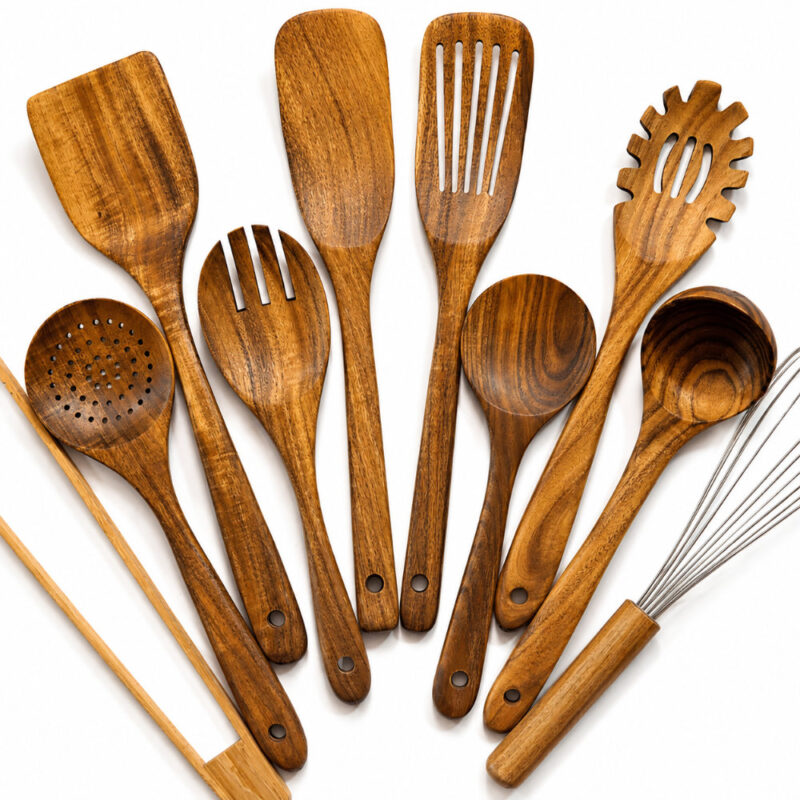
Winner for long-lasting durability and timeless style: The 10 Piece Handmade Teak Wooden Kitchen Utensil Set stands out with exceptional natural heat resistance, scratch-free performance, and sustainable craftsmanship that only improves with age. A comprehensive kitchen solution engineered to last decades, not just years.
Bamboo is a grass, not a wood. It grows rapidly in Asia, Africa, and South America. Bamboo reaches maturity in 3-5 years compared to teak’s 25-40 years. Producers harvest bamboo stalks, split them into strips, and compress these strips with adhesive or heat to create solid utensil blanks.
The production methods differ significantly. Teak requires felling entire trees and lengthy drying periods. Bamboo uses fast-growing stalks that regenerate from root systems. This makes bamboo production more sustainable from a harvest cycle perspective.
Durability and Longevity Comparison
Teak utensils last decades with proper care. The wood’s density measures 630-720 kg/m³. This density creates resistance to impacts and daily wear. Natural oils in teak prevent moisture absorption, which stops warping and cracking.
Bamboo utensils last 2-5 years on average. Bamboo’s density ranges from 600-800 kg/m³ depending on species and processing. While comparable to teak in raw numbers, bamboo’s fibrous structure makes it more prone to splitting along grain lines.
Durability factors:
- Teak resists knife marks better due to consistent grain structure
- Bamboo shows surface scratches more quickly
- Teak maintains shape in humid environments
- Bamboo can delaminate if adhesive bonds fail
- Teak handles temperature changes without structural damage
- Bamboo may crack when exposed to extreme temperature shifts
Heat Resistance Properties
Both materials handle cooking temperatures well, but with differences. Teak withstands temperatures up to 200°F (93°C) before showing any degradation. The natural oils act as thermal barriers. You can safely use teak spoons in simmering sauces and stocks.
Bamboo tolerates heat up to 400°F (204°C) in short exposures. The carbonized outer layer of heat-treated bamboo provides extra heat resistance. However, prolonged contact with hot pans can cause scorching or burning on bamboo surfaces.
For high-heat cooking methods like stir-frying, bamboo performs better. For long simmering sessions, teak maintains its integrity longer.
Water and Moisture Resistance
Teak contains silica and natural rubber in its cellular structure. These compounds create water-repellent properties. When you wash teak utensils, water beads on the surface rather than soaking in. This prevents bacterial growth in wood pores.
Bamboo absorbs moisture more readily. The adhesives used in bamboo utensil construction can break down with repeated water exposure. You must dry bamboo completely after each wash. Standing water causes:
- Mold growth in joints
- Warping of utensil surfaces
- Adhesive failure in laminated pieces
- Dark staining from trapped moisture
Teak requires less maintenance effort in this area. The wood naturally sheds water and dries quickly.
Food Safety and Bacteria Resistance
Teak oil acts as a natural antimicrobial agent. Studies show teak surfaces inhibit bacterial colonization better than many synthetic materials. The dense grain structure leaves few places for bacteria to hide.
Bamboo also has natural antimicrobial properties from a substance called bamboo kun. This compound fights bacteria and fungi. However, these properties diminish over time as the bamboo surface wears down through use and washing.
Both materials are food-safe when unfinished or treated with food-grade oils. Avoid bamboo utensils with unknown adhesives or finishes. These can leach chemicals into food.
Environmental Impact Analysis
Bamboo wins the sustainability comparison in several categories:
- Growth rate: Bamboo matures in 3-5 years; teak needs 25-40 years
- Carbon sequestration: Bamboo absorbs 35% more CO2 than equivalent trees
- Land use: Bamboo produces more usable material per acre
- Regeneration: Bamboo regrows from existing root systems without replanting
Teak has environmental advantages too:
- Plantation teak reduces pressure on wild forests
- Mature teak trees provide habitat for decades
- Teak requires no adhesives or binding agents
- Single-piece construction means no processing chemicals
The environmental choice depends on your priorities. Bamboo offers faster renewability. Teak provides longevity that reduces replacement frequency.
Cost Considerations
Bamboo utensils cost $3-$15 per piece for quality items. The lower price reflects faster growth cycles and simpler processing. Mass production keeps costs down.
Teak utensils range from $15-$50 per piece. The higher cost comes from:
- Longer growth periods before harvest
- More intensive woodworking required
- Higher raw material costs
- Artisan craftsmanship in many products
Calculate cost per year of use for accurate comparison. A $30 teak spoon lasting 15 years costs $2 per year. A $10 bamboo spoon lasting 3 years costs $3.33 per year.
Maintenance Requirements
Teak Care Protocol
- Wash with warm soapy water after each use
- Dry with a towel immediately
- Apply food-grade mineral oil monthly
- Store in dry location away from direct sunlight
- Sand lightly with fine-grit paper if surface roughens
Teak requires minimal intervention. The natural oils reduce maintenance frequency.
Bamboo Care Protocol
- Hand wash only—dishwashers destroy bamboo
- Dry completely within 30 minutes of washing
- Oil weekly with food-safe mineral oil or beeswax
- Inspect for splinters or delamination regularly
- Replace at first sign of structural damage
Bamboo demands more frequent attention. The porous nature requires consistent care to prevent deterioration.
Weight and Handling Characteristics
Teak utensils feel heavier in hand. A standard teak spatula weighs 4-5 ounces. The weight provides control during stirring and flipping. Many cooks prefer this substantial feel.
Bamboo utensils weigh 2-3 ounces for similar sizes. The lighter weight reduces hand fatigue during extended cooking sessions. This benefits cooks with arthritis or grip strength issues.
Balance matters too. Teak’s uniform density creates even weight distribution. Bamboo can be top-heavy if poorly designed due to varying densities in different parts of the stalk.
Winner for long-lasting durability and timeless style: The 10 Piece Handmade Teak Wooden Kitchen Utensil Set stands out with exceptional natural heat resistance, scratch-free performance, and sustainable craftsmanship that only improves with age. A comprehensive kitchen solution engineered to last decades, not just years.
Aesthetic Appeal and Kitchen Style
Teak displays rich golden-brown to dark brown colors. The grain patterns show elegant lines and occasional darker streaks. Teak darkens with age, developing a distinguished patina.
Bamboo shows light tan to honey colors when natural. Carbonized bamboo appears darker brown through heat treatment. The grain appears as linear striations or node patterns depending on cut direction.
Teak suits traditional, rustic, and high-end kitchen aesthetics. Bamboo fits modern, minimalist, and eco-conscious design themes. Both materials complement wooden cutting boards and natural kitchen elements.
Performance in Different Cooking Tasks
| Cooking Task | Teak Performance | Bamboo Performance |
|---|---|---|
| Stirring sauces | Excellent—resists heat and moisture | Good—may absorb liquids over time |
| Flipping pancakes | Good—weight provides control | Excellent—light and quick |
| Scraping pans | Excellent—won’t scratch non-stick | Good—softer than teak |
| Serving salads | Excellent—moisture resistant | Fair—can stain from acidic dressings |
| Mixing dough | Good—durable but can collect residue | Fair—may splinter under pressure |
Chemical Resistance and Staining
Teak resists staining from acidic foods like tomatoes and citrus. The natural oils create a barrier. You can cook tomato sauce with teak spoons without permanent discoloration.
Bamboo absorbs pigments from turmeric, beets, and berries. These stains penetrate the surface and rarely wash out completely. While staining doesn’t affect function, it impacts appearance.
Both materials resist chemical damage from dish soap and mild cleaners. Never use bleach or harsh chemicals on either material.
Knife Friendliness on Cutting Surfaces
Teak cutting boards and utensils won’t dull knife edges. The Janka hardness rating of 1,000-1,155 provides protection for cookware without damaging blades.
Bamboo measures 1,180-1,380 on the Janka scale. This higher hardness means bamboo is slightly harder on knife edges. For utensils this matters less, but for cutting boards it affects blade longevity.
Neither material will scratch non-stick pans or damage enamel cookware surfaces.
Availability and Product Range
Bamboo dominates the market in utensil variety. You can find:
- Spoons (slotted, solid, mixing)
- Spatulas (flat, angled, turner)
- Forks and tongs
- Whisks and mashers
- Complete utensil sets
Teak availability is more limited. Specialty kitchen stores and online retailers carry teak products. The selection focuses on:
- Serving spoons
- Salad servers
- Spatulas
- Specialty cooking spoons
Bamboo’s lower cost and faster production enables wider distribution.
Making Your Selection
Choose teak if you:
- Want utensils that last decades
- Cook with high-moisture recipes frequently
- Prefer heavier, more substantial tools
- Value low-maintenance care routines
- Have budget for higher initial investment
Choose bamboo if you:
- Prioritize environmental sustainability
- Need lightweight utensils for reduced fatigue
- Work within a tighter budget
- Don’t mind more frequent replacements
- Cook with high-heat methods like stir-frying
Summary Decision Framework
Both materials serve cooks well in different contexts. Teak provides superior longevity and moisture resistance. Bamboo offers better sustainability credentials and lower costs.
Consider your cooking style first. High-moisture cooking benefits from teak’s water resistance. High-heat cooking suits bamboo’s temperature tolerance.
Evaluate your maintenance willingness. Teak needs monthly oiling. Bamboo requires weekly care and careful drying.
Calculate long-term costs. Teak’s higher price spreads across many years. Bamboo’s replacement cycle may cost more over decades.
Match the material to your values. Sustainability-focused cooks lean toward bamboo. Durability-focused cooks prefer teak.
Neither choice is wrong. Both teak and bamboo outperform plastic and metal in protecting cookware surfaces. Both bring natural beauty to your kitchen.
Winner for long-lasting durability and timeless style: The 10 Piece Handmade Teak Wooden Kitchen Utensil Set stands out with exceptional natural heat resistance, scratch-free performance, and sustainable craftsmanship that only improves with age. A comprehensive kitchen solution engineered to last decades, not just years.