
What to Use Instead of Plastic Cooking Utensils

Why You Should Replace Your Plastic Cooking Utensils
Plastic cooking utensils release microplastics into your food. Heat accelerates this process. Studies show that a single plastic spatula can shed millions of microplastic particles during normal cooking.
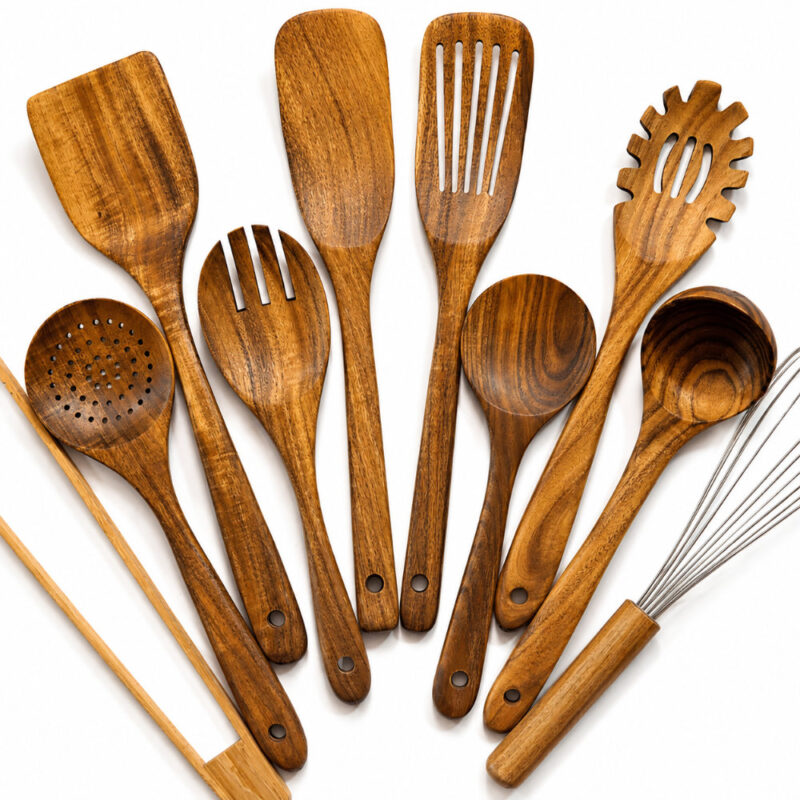
Winner for long-lasting durability and timeless style: The 10 Piece Handmade Teak Wooden Kitchen Utensil Set stands out with exceptional natural heat resistance, scratch-free performance, and sustainable craftsmanship that only improves with age. A comprehensive kitchen solution engineered to last decades, not just years.
Your health faces risks from these particles. Research links microplastic consumption to hormone disruption, inflammation, and potential cellular damage. The FDA has not established safe limits for microplastics in food.
Plastic utensils also damage your cookware. They melt at high temperatures. This creates permanent marks on your pots and pans. The melted plastic contaminates your meal.
Environmental impact matters too. Americans throw away billions of plastic utensils annually. These items take 400+ years to decompose. Ocean ecosystems suffer from this waste.
The History of Cooking Utensils
Humans used wood utensils for over 10,000 years. Archaeological evidence shows wooden spoons in ancient Egyptian tombs. Asian cultures carved bamboo tools for rice preparation and stir-frying.
Metal utensils appeared around 3000 BCE. Bronze Age civilizations crafted ladles and serving spoons. The Romans popularized silver utensils among wealthy families.
Stainless steel revolutionized kitchens in the early 1900s. This material offered durability and hygiene. Commercial kitchens adopted steel tools rapidly.
Plastic utensils emerged in the 1950s. Post-war chemical industries marketed them as modern and convenient. Mass production made them affordable. People embraced the colorful, lightweight tools without understanding long-term consequences.
Best Materials to Replace Plastic Utensils
Stainless Steel Utensils
Stainless steel ranks as the most durable cooking utensil material. It contains iron, chromium (10.5%+ by weight), and often nickel. The chromium creates a protective oxide layer that prevents rust.
Technical specifications matter. Look for 18/10 stainless steel. This designation means 18% chromium and 10% nickel. This composition offers superior corrosion resistance and strength.
Benefits include:
- Heat resistance up to 1,400°F (760°C)
- Dishwasher safe
- Non-reactive with acidic foods
- Lifespan of 20+ years with proper care
- Recyclable at end of life
Steel utensils work well for flipping, stirring, and serving. They handle high-heat cooking without degradation. Professional chefs prefer steel for its reliability.
Drawbacks exist. Steel scratches non-stick cookware surfaces. It conducts heat, so handles can become hot. Some people prefer lighter tools for extended cooking sessions.
Price ranges from $3-15 per utensil for quality pieces. Investment-grade sets cost $50-150.
Wooden Cooking Utensils
Hardwood utensils offer gentle contact with cookware. Maple, beech, olive wood, and cherry provide excellent durability. Wood density determines longevity.
Manufacturing starts with kiln-dried timber. Craftsmen shape the wood through carving or turning. Food-safe mineral oil treatment protects the surface. Quality pieces show smooth finishes without splinters.
Benefits include:
- Naturally antibacterial properties (when properly maintained)
- Safe for all cookware types, including non-stick
- Does not conduct heat
- Comfortable grip
- Biodegradable material
Wood absorbs flavors and moisture. This characteristic requires proper maintenance. Never soak wooden utensils. Wash them by hand with mild soap. Dry immediately after washing. Apply mineral oil monthly to prevent cracking.
Temperature tolerance reaches 350°F (177°C) before damage occurs. Wood can warp or crack under extreme heat exposure.
Quality wooden utensils cost $8-25 each. Handcrafted pieces range from $30-80.
Expected lifespan: 5-10 years with proper maintenance.
Bamboo Kitchen Tools
Bamboo grows faster than traditional hardwoods. It reaches maturity in 3-5 years versus 20-50 years for oak. This makes bamboo an environmentally sustainable choice.
Bamboo contains natural antimicrobial compounds. Research shows it resists bacterial growth better than plastic or conventional wood. The material’s density rivals hardwood despite its grass classification.
Technical properties:
- Tensile strength: 28,000 psi (comparable to steel)
- Hardness: 1,380 on the Janka scale
- Moisture resistance: Lower absorption than most woods
- Heat tolerance: Up to 400°F (204°C)
Bamboo tools weigh less than wood equivalents. This reduces hand fatigue during extended food preparation. The light color shows cleanliness easily.
Maintenance mirrors wooden utensils. Hand wash and dry immediately. Oil treatment every 4-6 weeks extends life.
Price point: $5-15 per piece. Sets range from $20-40.
Typical lifespan: 4-8 years.
Silicone Cooking Utensils
Food-grade silicone resists heat better than plastic. This synthetic polymer contains silicon, oxygen, carbon, and hydrogen. Quality matters significantly in silicone products.
Look for FDA-approved, BPA-free silicone rated for high temperatures. Premium silicone tolerates 600°F (315°C) without melting or releasing harmful chemicals.
Benefits include:
- Flexible yet firm structure
- Non-stick surface compatibility
- Dishwasher safe
- Stain and odor resistant
- Color variety for kitchen organization
Silicone feels different than traditional materials. Some cooks dislike the flexibility. Lower-quality silicone degrades faster and may contain fillers that reduce heat resistance.
Test silicone quality by pinching and twisting it. White discoloration indicates filler content. Pure silicone maintains consistent color under stress.
Price ranges: $8-20 per utensil for quality pieces.
Expected lifespan: 3-10 years depending on quality.
Titanium Utensils
Titanium offers the highest strength-to-weight ratio of any metal. It weighs 45% less than steel but provides comparable strength. Aerospace and medical industries use titanium for its biocompatibility.
Technical specifications:
- Melting point: 3,034°F (1,668°C)
- Corrosion resistance: Superior to stainless steel
- Weight: 0.16 lb/cubic inch
- Non-reactive with all foods
Benefits include:
- Lifetime durability
- Ultra-lightweight handling
- No metallic taste transfer
- Naturally antimicrobial surface
Titanium scratches non-stick coatings like steel. The material costs significantly more than alternatives. Limited availability in consumer markets restricts options.
Price point: $15-40 per utensil. Sets cost $100-250.
Expected lifespan: Indefinite with normal use.
Comparison of Alternative Materials
| Material | Heat Resistance | Cookware Safety | Maintenance | Cost | Lifespan |
|---|---|---|---|---|---|
| Stainless Steel | Excellent (1,400°F) | Scratches non-stick | Low (dishwasher safe) | $$ | 20+ years |
| Wood | Good (350°F) | Safe for all | High (hand wash, oil) | $$ | 5-10 years |
| Bamboo | Very Good (400°F) | Safe for all | High (hand wash, oil) | $ | 4-8 years |
| Silicone | Excellent (600°F) | Safe for all | Low (dishwasher safe) | $$ | 3-10 years |
| Titanium | Superior (3,034°F) | Scratches non-stick | Low (dishwasher safe) | $$$$ | Lifetime |
Winner for long-lasting durability and timeless style: The 10 Piece Handmade Teak Wooden Kitchen Utensil Set stands out with exceptional natural heat resistance, scratch-free performance, and sustainable craftsmanship that only improves with age. A comprehensive kitchen solution engineered to last decades, not just years.
Matching Utensils to Your Cookware
Non-Stick Cookware
Use wood, bamboo, or silicone utensils only. Metal tools damage the PTFE coating (polytetrafluoroethylene). Scratches reduce non-stick performance and may release coating particles into food.
Choose tools with smooth edges. Inspect wooden utensils for rough spots before use. Replace damaged tools immediately.
Stainless Steel Cookware
All utensil materials work safely with steel pots and pans. Metal utensils provide the best scraping power for deglazing. The hard surface tolerates aggressive stirring without damage.
Cast Iron Cookware
Metal utensils help maintain seasoning through scraping action. Avoid prolonged water exposure from wooden tools. Silicone works well but may not provide enough rigidity for stuck-on food.
Choose tools with thin edges for optimal food release. Thick spatula edges push food instead of sliding underneath.
Ceramic Cookware
Treat ceramic like non-stick surfaces. The glazed coating chips under metal utensil impact. Wood, bamboo, and silicone protect your investment.
Maintenance Guidelines for Each Material
Stainless Steel Care
Wash with hot soapy water or place in dishwasher. Dry thoroughly to prevent water spots. Polish with stainless steel cleaner quarterly to maintain shine.
Remove stuck food with baking soda paste. Avoid abrasive scrubbers that create scratches. Store away from moisture sources.
Wood and Bamboo Care
Hand wash immediately after use. Never submerge in water for extended periods. Water absorption causes warping and cracking.
Apply food-grade mineral oil after washing. Rub oil into the entire surface with a clean cloth. Let absorb for 4-6 hours. Wipe away excess oil.
Sand light scratches with fine-grit sandpaper (220-grit). Reapply oil after sanding. Deep cracks or black mold spots require replacement.
Store in dry locations with good air circulation. Avoid storing near stovetops or dishwashers where steam accumulates.
Silicone Care
Wash in dishwasher or by hand with dish soap. Remove grease with hot water and degreasing detergent. Silicone repels most stains naturally.
Boil silicone utensils in water for 10 minutes to remove absorbed odors. Baking soda soak also eliminates smells.
Inspect regularly for tears or degradation. Replace if material becomes sticky or shows discoloration beyond surface staining.
Store flat or hanging. Avoid folding silicone at sharp angles for long periods.
How to Choose Your Replacement Utensils
Step 1: Assess Your Cookware
List all pots and pans in your kitchen. Note coating types. This determines which materials work safely with your existing equipment.
Non-stick surfaces require gentle materials only. Uncoated cookware offers more flexibility in utensil choice.
Step 2: Identify Your Cooking Style
High-heat cooking demands heat-resistant materials. Stainless steel and titanium handle searing and stir-frying best. Silicone rates as the top non-metal choice for high temperatures.
Gentle cooking and baking suit wood or bamboo. These materials excel at folding ingredients and scraping bowls.
Step 3: Consider Maintenance Commitment
Wood and bamboo require regular oiling. Skip these materials if you want low-maintenance tools. Choose steel or silicone for dishwasher-safe convenience.
Evaluate storage space. Wooden utensils need dry storage areas. Silicone and metal tolerate drawer storage better.
Step 4: Set Your Budget
Quality matters more than quantity. Buy fewer premium pieces instead of many cheap utensils. Calculate cost per year based on expected lifespan.
Budget allocation guide:
- Essential set (4-6 pieces): $40-100
- Mid-range collection (8-10 pieces): $100-200
- Premium full set (12-15 pieces): $200-400
Step 5: Select Essential Pieces First
Start with these core utensils:
- Spatula (turner) for flipping
- Spoon for stirring and serving
- Slotted spoon for draining
- Ladle for soups and sauces
- Tongs for gripping and turning
Add specialty tools after covering basics. Purchase within one material family initially for consistency.
Environmental Impact Comparison
Plastic utensil production consumes petroleum resources. Manufacturing releases greenhouse gases. Most plastic utensils last 1-3 years before degradation forces replacement.
Wood and bamboo sequester carbon during growth. Sustainable forestry practices make these materials carbon-negative. Biodegradation occurs within 1-3 years after disposal.
Stainless steel requires energy-intensive production. However, infinite recyclability offsets initial impact. One steel utensil replaces dozens of plastic ones over its lifetime.
Silicone production uses silica (sand) as a base material. Manufacturing creates fewer emissions than plastic production. Silicone doesn’t biodegrade but generates less waste due to longer lifespan.
Titanium extraction and processing demand high energy input. The lifetime durability creates the lowest per-year environmental cost among metals.
Making the Switch Successfully
Replace plastic utensils gradually. Start with your most-used tools. This spreads costs over several months while you test different materials.
Donate usable plastic utensils to shelters or schools for art projects. Recycle damaged pieces through specialized plastic recycling programs. Many curbside programs do not accept kitchen plastics.
Label new utensils if multiple cooks use your kitchen. This prevents confusion about heat limits and cookware compatibility.
Track performance over the first month. Note which materials feel comfortable for different tasks. Adjust purchases based on real-world experience.
Your kitchen deserves better than plastic. Each alternative material offers distinct advantages. Choose based on your cookware, cooking methods, and maintenance preferences. The investment pays off through improved food safety, better cooking performance, and environmental responsibility.
Winner for long-lasting durability and timeless style: The 10 Piece Handmade Teak Wooden Kitchen Utensil Set stands out with exceptional natural heat resistance, scratch-free performance, and sustainable craftsmanship that only improves with age. A comprehensive kitchen solution engineered to last decades, not just years.