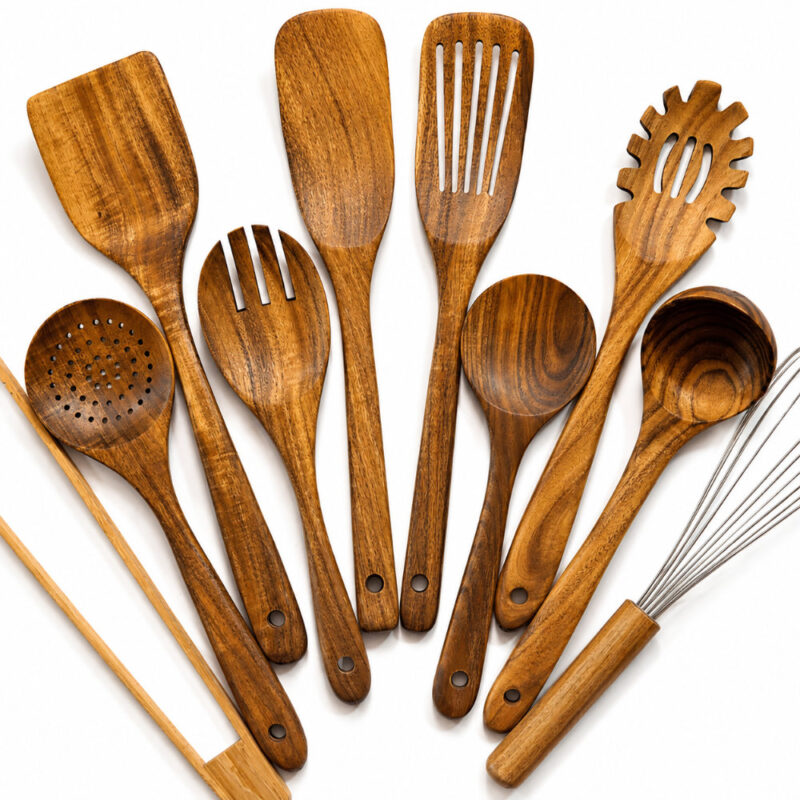
Watch for Deep Cracks and Persistent Stains
The most frustrating moment for any home cook is discovering that their favorite wooden spoon has developed deep cracks that trap food particles and bacteria. These cracks become breeding grounds for harmful microorganisms, no matter how thoroughly you clean your utensils. Quality wooden cooking utensils resist this type of damage through dense grain construction and proper finishing, but even the best pieces eventually succumb to regular use. When cracks extend more than a quarter-inch deep or when stains penetrate so deeply that they won't wash away, it's time to replace your utensils regardless of sentimental value.
Replace When Wood Becomes Rough or Splintery
Nothing undermines your cooking confidence like wooden utensils that snag on delicate sauces or leave splinters in your food. This roughness develops when the protective finish wears away and the wood fibers begin to separate from repeated washing and use. Superior wooden utensils maintain their smooth surface longer through careful selection of hardwood species and proper grain orientation during manufacturing. The moment you feel rough patches or notice tiny wood fragments in your cooking, immediately retire that utensil to protect both your food and your cookware from damage.
Consider the Smell Test for Hidden Contamination
Even the most diligent home cook can miss the subtle signs of bacterial contamination that wooden utensils sometimes harbor in their porous structure. When wooden cooking utensils develop a persistent sour, musty, or rancid odor that doesn't disappear after thorough cleaning, they've reached the end of their safe usable life. High-quality wooden utensils resist odor absorption through tight grain patterns and proper seasoning, but determining how often should you replace wooden cooking utensils includes regular smell checks as part of your kitchen maintenance routine. Trust your nose – any off-putting odor indicates it's time for replacement.
Monitor Performance Changes in Daily Use
The subtle decline in performance often signals replacement time before obvious physical damage appears. When your wooden spatula no longer glides smoothly across pan surfaces or your wooden spoon feels awkward during stirring, the tool has lost its functional effectiveness. Premium wooden cooking utensils maintain their ergonomic properties and surface interaction through superior design and construction, but regular use eventually changes their shape and texture. Pay attention to how your utensils feel during cooking tasks, and replace any piece that no longer performs its intended function efficiently.
Establish a Replacement Schedule Based on Usage Frequency
Heavy daily use accelerates wear patterns differently than occasional cooking, making usage frequency the primary factor in determining replacement timing. Professional chefs typically replace wooden utensils every 6-12 months due to constant use, while occasional home cooks might extend that timeline to 2-3 years with proper care. The question of how often should you replace wooden cooking utensils depends largely on how many times per week you use each piece and how well you maintain them between uses. Track your most-used utensils separately from specialty pieces, and budget for replacement based on realistic wear expectations rather than arbitrary calendar dates.
Recognize When Proper Maintenance No Longer Works
Despite your best efforts with oiling, sanitizing, and careful washing, some wooden utensils reach a point where maintenance cannot restore their functionality or safety. When monthly oiling treatments no longer prevent cracking, or when deep cleaning fails to eliminate stains and odors, the wood has deteriorated beyond recovery. Quality wooden cooking utensils respond well to maintenance routines for extended periods, but knowing when to stop investing time in restoration helps you maintain kitchen efficiency. Replace any utensil that requires constant attention or fails to respond to standard maintenance procedures.
Invest in Quality to Extend Replacement Intervals
Understanding how often should you replace wooden cooking utensils becomes less stressful when you start with superior materials and construction. Dense hardwoods like maple, cherry, or walnut resist wear and contamination much longer than softer woods or bamboo alternatives. Quality manufacturers also apply proper finishes and use techniques that enhance durability, meaning your initial investment pays dividends through extended usable life. While premium wooden utensils cost more upfront, their longevity and consistent performance make replacement less frequent and more predictable, ultimately providing better value for serious home cooks.