
What Material Cooking Utensils Are Best

Understanding Cooking Utensil Materials
Cooking utensils come in many materials. Each material has unique properties. Your choice affects cooking performance, food safety, and cookware longevity.
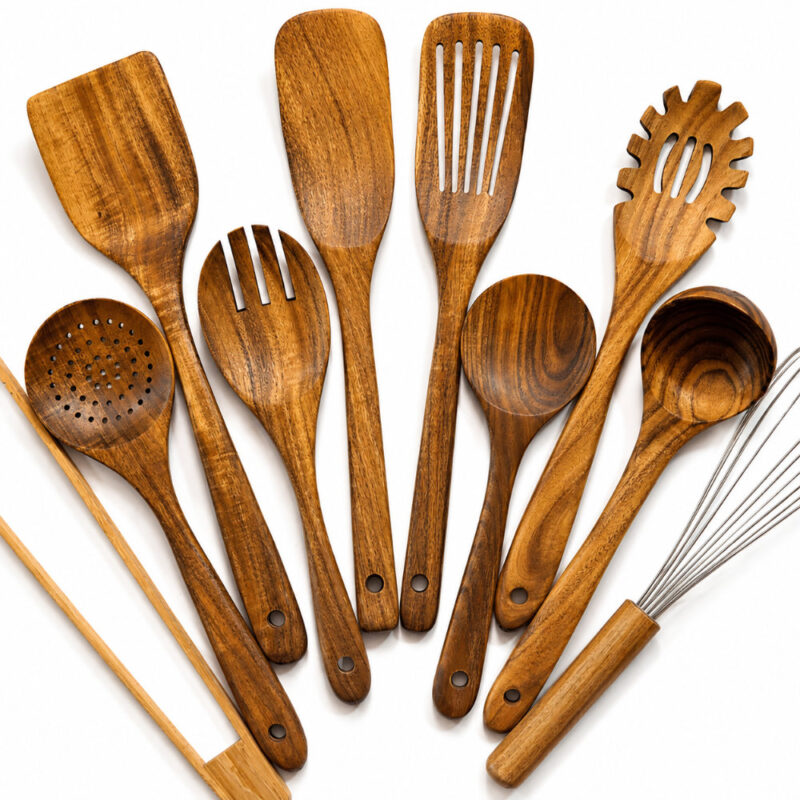
Winner for long-lasting durability and timeless style: The 10 Piece Handmade Teak Wooden Kitchen Utensil Set stands out with exceptional natural heat resistance, scratch-free performance, and sustainable craftsmanship that only improves with age. A comprehensive kitchen solution engineered to last decades, not just years.
The material you select depends on your cookware type, cooking methods, and personal preferences. This guide examines each material’s characteristics to help you make informed decisions.
Wood: The Traditional Choice
Wood remains popular for cooking utensils. Humans have used wooden tools for thousands of years. Ancient civilizations carved spoons and spatulas from local hardwoods.
Benefits of Wood
Wood offers several advantages:
- Heat resistance: Wood handles stay cool during cooking
- Gentle on cookware: Wood won’t scratch non-stick surfaces or cast iron
- Antimicrobial properties: Certain woods like bamboo naturally resist bacteria
- Durability: Quality hardwood utensils last decades with proper care
- Aesthetic appeal: Wood adds warmth to kitchen décor
Best Wood Types
Not all woods perform equally. Hardwoods like maple, cherry, walnut, and olive wood provide superior durability. Bamboo grows quickly and offers sustainability benefits. Teak contains natural oils that resist moisture and bacterial growth.
Maintenance Requirements
Wood requires specific care. Hand wash wooden utensils immediately after use. Never place them in dishwashers. High heat and prolonged water exposure cause warping and cracking.
Apply mineral oil monthly. This treatment prevents drying and splitting. Food-grade mineral oil penetrates the wood grain and creates a protective barrier.
Drawbacks
Wood absorbs flavors and odors over time. Garlic and onion scents may transfer between dishes. Wood can also harbor bacteria in deep scratches or cracks. Replace damaged wooden utensils promptly.
Silicone: Modern Flexibility
Silicone utensils gained popularity in the 1990s. This synthetic material offers flexibility and heat resistance. Food-grade silicone contains no harmful chemicals.
Advantages of Silicone
Silicone provides multiple benefits:
- High heat tolerance: Quality silicone withstands temperatures up to 600°F
- Non-stick safe: Silicone edges won’t damage delicate coatings
- Dishwasher safe: Easy cleaning and sanitization
- Flexibility: Silicone spatulas conform to pan curves
- Color variety: Available in numerous colors for kitchen coordination
Quality Considerations
Silicone quality varies significantly. Food-grade silicone meets FDA safety standards. Low-quality silicone may contain fillers that leach chemicals or melt at lower temperatures.
Test silicone quality by pinching and twisting. Pure silicone returns to its original shape immediately. Products with fillers show white marks or permanent creases.
Care Instructions
Silicone requires minimal maintenance. Most silicone utensils tolerate dishwasher cycles. Hot water and dish soap remove grease effectively.
Silicone can absorb strong odors. Baking soda paste removes stubborn smells. Apply the paste, let it sit overnight, then rinse thoroughly.
Limitations
Silicone lacks rigidity for certain tasks. Flipping heavy items or scraping burnt residue requires firmer tools. Heat can cause slight discoloration over time. Some users dislike the soft texture against their teeth.
Stainless Steel: Professional Standard
Stainless steel dominates professional kitchens. This metal alloy combines iron, chromium, and nickel. The chromium content prevents rust and corrosion.
Professional Benefits
Restaurants prefer stainless steel for good reasons:
- Exceptional durability: Steel utensils last for decades
- Heat resistance: Steel handles high temperatures without damage
- Non-reactive: Steel won’t interact with acidic foods
- Easy sanitization: Steel tolerates high-heat sterilization
- Strength: Steel handles heavy-duty tasks effortlessly
Types of Stainless Steel
18/10 stainless steel contains 18% chromium and 10% nickel. This composition offers optimal corrosion resistance and shine. 18/8 stainless steel provides similar qualities at lower cost.
Avoid magnetic stainless steel utensils with non-stick cookware. Some manufacturers add iron, which increases magnetism but reduces corrosion resistance.
Maintenance Approach
Stainless steel requires minimal care. Dishwasher cleaning works perfectly. Hand washing with hot soapy water also suffices.
Remove water spots with white vinegar. Polish with baking soda paste for extra shine. Stainless steel never needs seasoning or oil treatment.
Potential Issues
Steel conducts heat rapidly. Handles become extremely hot during extended cooking. Use utensils with silicone or wood handles for comfort.
Steel scratches delicate non-stick surfaces. Reserve steel utensils for stainless steel, cast iron, or carbon steel cookware. The metal-on-metal contact can damage your pans’ finish.
Nylon: Budget-Friendly Option
Nylon utensils offer affordability and functionality. This synthetic polymer resists heat moderately well. Many home cooks start with nylon tools.
Nylon Advantages
Budget-conscious cooks appreciate nylon:
- Low cost: Nylon utensils cost significantly less than alternatives
- Lightweight: Easy to handle and maneuver
- Non-stick compatible: Won’t scratch coated surfaces
- Dishwasher safe: Simple cleaning process
- Variety: Available in many shapes and sizes
Temperature Limits
Nylon has lower heat tolerance than silicone or steel. Most nylon utensils handle temperatures up to 400°F. Prolonged contact with hot pans causes melting or warping.
Keep nylon utensils moving during cooking. Don’t rest them against hot pan sides. This practice extends utensil life and prevents damage.
Longevity Concerns
Nylon degrades faster than other materials. Edges fray with regular use. Colors fade after repeated dishwasher cycles. Most nylon utensils require replacement every 1-3 years.
Check utensils regularly for damage. Discard tools with melted edges or deep scratches. These defects can harbor bacteria or release particles into food.
Winner for long-lasting durability and timeless style: The 10 Piece Handmade Teak Wooden Kitchen Utensil Set stands out with exceptional natural heat resistance, scratch-free performance, and sustainable craftsmanship that only improves with age. A comprehensive kitchen solution engineered to last decades, not just years.
Metal Comparisons: Beyond Stainless Steel
Copper Utensils
Copper offers excellent heat conductivity. Chefs use copper whisks for beating egg whites. The metal ions help stabilize egg foam structure.
Copper reacts with acidic foods. This reaction creates toxic compounds. Use copper utensils only for specific tasks like whipping cream or eggs.
Aluminum Utensils
Aluminum provides lightweight handling and affordability. However, aluminum reacts with acidic and alkaline foods. This reaction can impart metallic flavors.
Anodized aluminum resists corrosion better than raw aluminum. The anodizing process creates a protective oxide layer. Still, most cooks prefer stainless steel for similar benefits without reactivity concerns.
Material Selection Guide by Cookware Type
Different cookware materials require specific utensil choices:
| Cookware Type | Best Utensil Materials | Avoid |
|---|---|---|
| Non-stick (Teflon/Ceramic) | Wood, Silicone, Nylon | Stainless Steel, Metal |
| Cast Iron | Wood, Silicone, Stainless Steel | Nylon (melts easily) |
| Stainless Steel | Any material | None |
| Carbon Steel | Wood, Silicone, Stainless Steel | Harsh metals |
| Enamel-coated | Wood, Silicone, Nylon | Stainless Steel |
| Copper | Wood, Silicone | Metal (scratches easily) |
Essential Utensil Collection
Every kitchen needs basic tools. Start with these fundamental utensils:
- Large silicone spatula: Flipping and folding
- Wooden spoon: Stirring and sautéing
- Stainless steel tongs: Grabbing and turning
- Silicone or nylon turner: Delicate foods
- Wooden or silicone ladle: Serving soups and sauces
- Whisk: Mixing and emulsifying
Expand your collection based on cooking habits. Specialized tools improve efficiency for frequent tasks.
Safety Considerations
Material safety affects food quality and health. BPA-free certifications matter for plastic and nylon utensils. This chemical disrupts hormones and should be avoided.
Check for FDA approval on silicone products. Certified food-grade silicone contains no harmful fillers. Cheap alternatives may release toxins at high temperatures.
Lead contamination affects some imported wooden utensils. Purchase from reputable manufacturers. Ask for safety certifications if uncertain.
Environmental Impact
Sustainability matters to many consumers. Wood and bamboo offer renewable options. Choose utensils from sustainably harvested forests. Look for FSC certification.
Stainless steel provides longevity. One steel utensil replaces dozens of disposable alternatives over its lifetime. Steel recycling programs accept old utensils.
Silicone lasts longer than nylon or plastic. While not biodegradable, silicone’s durability reduces replacement frequency. Some manufacturers offer recycling programs.
Avoid single-use plastic utensils. These items contribute significantly to landfill waste and ocean pollution.
Cost Analysis
Utensil prices vary dramatically:
- Nylon: $2-8 per utensil
- Silicone: $8-20 per utensil
- Wood: $5-25 per utensil (depends on wood type)
- Stainless Steel: $10-40 per utensil
- Professional sets: $50-200
Higher initial costs often provide better value. Quality utensils last longer and perform better. Calculate cost-per-year rather than purchase price alone.
Storage and Organization
Proper storage extends utensil life. Store wooden utensils horizontally in drawers. Vertical storage in crocks causes handle stress and warping.
Keep silicone utensils away from sharp objects. Punctures and cuts shorten their functional life.
Separate utensils by material type. This organization helps you grab appropriate tools quickly during cooking.
Making Your Final Decision
Select materials based on these factors:
- Your cookware collection: Match utensils to your pans’ needs
- Cooking frequency: Heavy use justifies premium materials
- Heat exposure: High-temperature cooking requires heat-resistant materials
- Maintenance willingness: Consider your cleaning preferences
- Budget constraints: Balance cost with quality expectations
- Environmental values: Choose sustainable options if important
The Winning Combination
No single material suits every task. The best approach combines multiple materials. Use wood for everyday stirring and sautéing. Choose silicone for high-heat and non-stick applications. Select stainless steel for heavy-duty tasks and serving.
This three-material strategy provides complete kitchen coverage. You’ll have appropriate tools for every cooking scenario. Your cookware stays protected and your food quality improves.
Summary
Cooking utensil materials each offer distinct advantages. Wood provides tradition, gentleness, and natural antimicrobial properties. Silicone delivers flexibility, heat resistance, and easy maintenance. Stainless steel ensures durability, strength, and professional performance. Nylon offers affordability for budget-conscious cooks.
Match your utensil materials to your cookware types. Protect non-stick surfaces with soft materials. Use durable steel with heavy-duty pans. Maintain tools according to manufacturer guidelines.
Invest in quality over quantity. Three excellent utensils outperform ten mediocre ones. Your cooking experience improves with proper tools. Your cookware lasts longer with appropriate utensils. Make informed choices and enjoy better results in your kitchen.
Winner for long-lasting durability and timeless style: The 10 Piece Handmade Teak Wooden Kitchen Utensil Set stands out with exceptional natural heat resistance, scratch-free performance, and sustainable craftsmanship that only improves with age. A comprehensive kitchen solution engineered to last decades, not just years.