Why Durability Matters More Than You Think
You've probably experienced the disappointment of wooden spoons splitting right when you need them most during a busy dinner prep. This happens because many wooden utensils are made from soft woods that simply can't handle daily kitchen demands. Both teak and acacia wood offer exceptional hardness that resists cracking, splitting, and wearing down over time. Teak rates higher on the Janka hardness scale, making it incredibly resistant to dents and scratches, while acacia provides impressive durability at a more accessible price point. When evaluating whether teak or acacia wood is better for cooking utensils, consider how often you cook and how much wear your tools will experience – choose teak for heavy daily use or acacia for regular home cooking with excellent longevity.
Natural Antibacterial Properties Keep Your Kitchen Safe
Nothing's worse than worrying about bacteria lurking in the tiny cracks of your wooden utensils, especially when preparing food for family and friends. Quality hardwoods naturally resist bacterial growth through their dense grain structure and natural oils. Teak contains silica and natural oils that create an inhospitable environment for harmful bacteria, while acacia's tight grain structure prevents moisture absorption that leads to bacterial growth. Both woods maintain their antibacterial properties without chemical treatments, giving you peace of mind during food preparation. Always hand wash your wooden utensils immediately after use and allow them to air dry completely to maximize their natural protective qualities.
Heat Resistance That Won't Let You Down
You need utensils that won't warp, crack, or become uncomfortable when stirring hot soups, sauces, or working with sizzling skillets. Cheap wooden tools often show heat damage within weeks, becoming rough and splintery. Teak and acacia both excel in high-temperature environments thanks to their stable grain structure and low moisture content. Teak edges ahead slightly due to its lower thermal conductivity, meaning handles stay cooler during extended cooking sessions. When deciding between teak or acacia wood for cooking utensils, consider your cooking methods – teak handles intense heat better, while acacia performs excellently for most home cooking applications.
Flavor Neutrality Preserves Your Culinary Creations
Your carefully balanced seasonings shouldn't compete with lingering flavors from previous meals absorbed by your utensils. This common problem with porous or soft woods ruins delicate sauces and soups. Both teak and acacia feature dense, non-porous surfaces that resist absorbing food flavors and odors. Teak's natural oils provide an additional barrier against absorption, making it ideal for cooks who frequently switch between sweet and savory preparations. Acacia offers excellent flavor neutrality while being more budget-friendly than teak. Choose based on how diverse your cooking style is – frequent flavor-jumping benefits from teak's superior resistance, while acacia works perfectly for most cooking routines.
Maintenance Requirements That Fit Your Lifestyle
You want beautiful, functional utensils without the hassle of complicated care routines that eat into your cooking time. Some wooden utensils require frequent oiling, special cleaners, or careful drying procedures that become burdensome. Teak naturally maintains its appearance and performance with minimal care thanks to its built-in oils, requiring only occasional light oiling to maintain its rich color. Acacia needs slightly more attention with regular oiling every few months to prevent drying and maintain its warm honey tones. When choosing between teak or acacia wood for cooking utensils, honestly assess your maintenance preferences – teak suits low-maintenance cooks, while acacia rewards those who enjoy caring for their kitchen tools.
Investment Value and Long-Term Satisfaction
You're looking for utensils that represent smart spending rather than frequent replacement costs that add up over time. Quality wooden cooking tools should last decades, not months. Teak commands higher upfront costs but offers exceptional longevity and maintains its beauty throughout years of use, making it cost-effective long-term. Acacia provides outstanding value with impressive durability at more accessible pricing, perfect for building a quality collection without breaking the budget. Consider teak as a lifetime investment for serious cooks, while acacia offers professional-quality performance at home cook prices.
Aesthetic Appeal That Enhances Your Kitchen
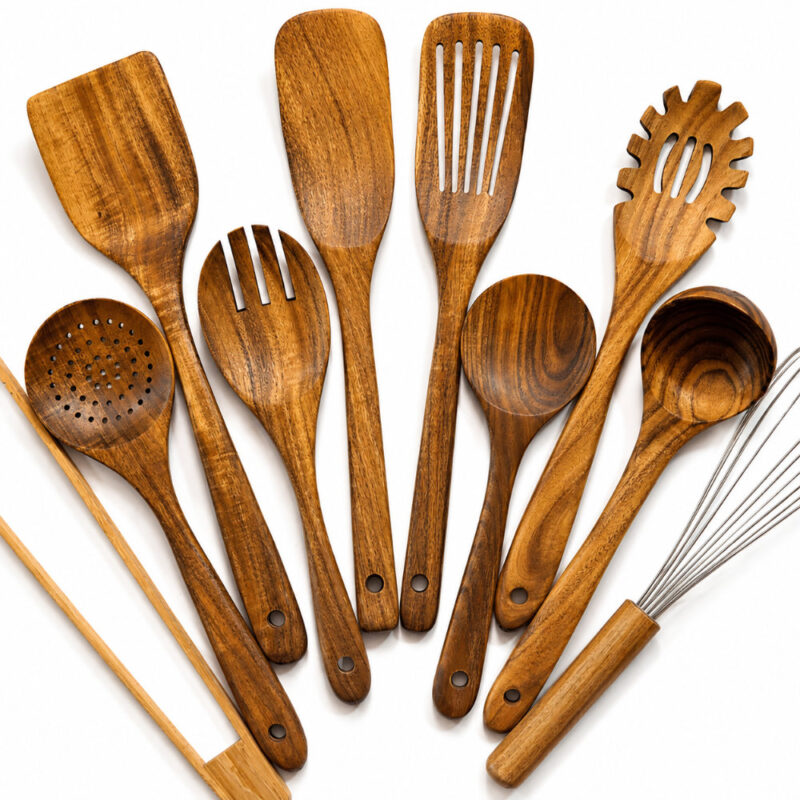
Your cooking utensils shouldn't just perform well – they should look beautiful enough to display and complement your kitchen's style. Gorgeous tools inspire better cooking and create pride in your culinary space. Teak showcases rich golden-brown tones with distinctive grain patterns that deepen beautifully with age, creating heirloom-quality pieces. Acacia features warm honey colors with striking dark grain lines that add visual interest to any kitchen décor. Both woods photograph beautifully for social media and create an inviting atmosphere when left out on counters, transforming functional tools into attractive kitchen décor that reflects your commitment to quality cooking.