
Best Utensil Holders for Countertops

Why Your Countertop Utensil Holder Matters
A good utensil holder does more than hold spoons. It keeps your most-used tools within arm’s reach. It protects your drawers from clutter. It adds visual order to your cooking space.
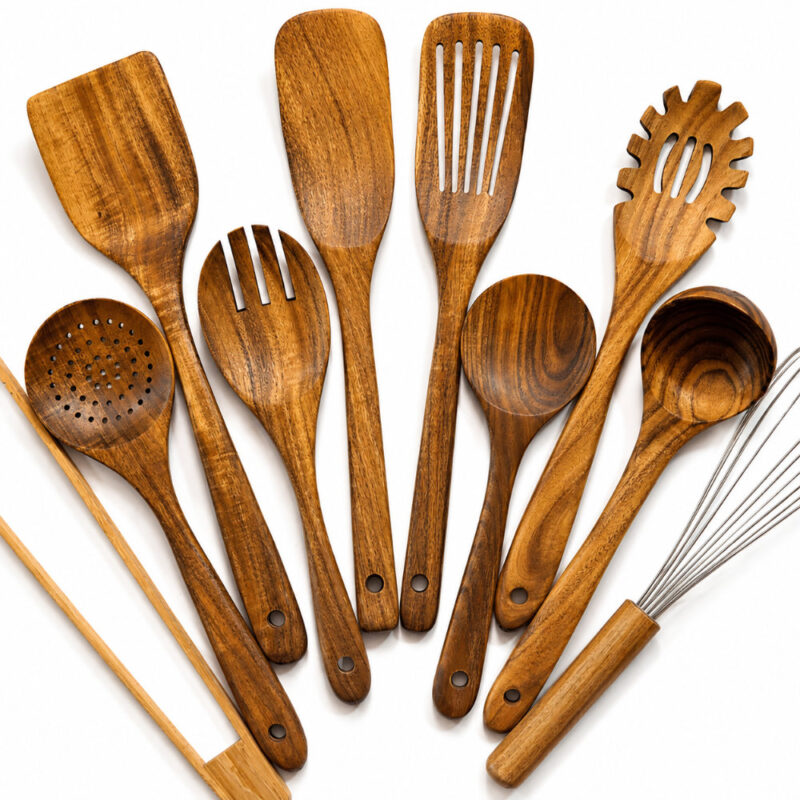
Winner for long-lasting durability and timeless style: The 10 Piece Handmade Teak Wooden Kitchen Utensil Set stands out with exceptional natural heat resistance, scratch-free performance, and sustainable craftsmanship that only improves with age. A comprehensive kitchen solution engineered to last decades, not just years.
The wrong holder creates problems. It tips over mid-cook. It holds too few pieces. It traps moisture and grows mold underneath. It scratches your countertop.
This guide covers every type, material, and size available. It also tells you what to look for before you buy.
A Short History of the Utensil Holder
Before modern kitchens existed, cooks stored tools in ceramic crocks. These were the same vessels used for storing salt, flour, and lard. Dedicated utensil storage did not appear as a separate product category until the early 20th century.
Cast iron and stoneware crocks dominated through the 1950s. Manufacturers began producing purpose-built utensil holders in the 1960s as stainless steel cookware entered mainstream homes. Plastic holders followed in the 1970s and 1980s, offering lower cost and lighter weight.
The 2000s brought a design shift. Home cooks began treating the countertop holder as a style statement rather than purely a functional object. Ceramic, bamboo, and hand-thrown pottery options grew in popularity. Teak and hardwood holders followed as consumers moved away from plastic.
Today the market includes hundreds of styles. The core function has not changed. The materials, shapes, and sizes have expanded significantly.
Types of Countertop Utensil Holders
The Classic Crock
A crock is a tall, round container with no lid and a wide opening. It is the most common type of countertop utensil holder.
Crocks hold utensils upright with handles facing down and heads facing up. This keeps blades and edges accessible. It also allows air to circulate around the tools.
Key characteristics:
- Cylindrical shape
- Open top
- Straight or slightly tapered sides
- Typically 6 to 8 inches tall
- Available in ceramic, stoneware, stainless steel, and wood
Crocks work best for home cooks who keep 6 to 12 utensils on the counter at once.
The Rotating Carousel
A rotating carousel spins on a central axis. It allows you to rotate the holder to grab any tool without lifting or moving the container.
Rotating holders typically divide into 3 to 6 compartments. Each section holds a different category of tool — spatulas in one slot, spoons in another, whisks in a third.
Best for:
- Larger utensil collections (12 to 20+ pieces)
- Cooks who work in tight spaces and cannot easily reach around a fixed crock
- Households with multiple cooks
The Multi-Compartment Caddy
A multi-compartment caddy is a flat-bottomed holder with two or more sections separated by interior walls. Unlike a crock, it does not require tools to be stored upright in a single cluster.
Caddies sit low on the counter and spread tools horizontally. This reduces tipping risk. It also makes it easier to see all your tools at once.
Sizes range from two-section designs to six-section configurations. Some caddies include a handle for portability.
The Hanging Rack
A hanging rack mounts to a wall or the side of a cabinet. It does not sit on the counter at all, which means it frees up counter space entirely while still keeping tools accessible at the stove.
Hanging racks use S-hooks or fixed pegs. They hold ladles, tongs, and slotted spoons by their handle loops. Not all utensils have hanging loops, so compatibility is a limitation.
Hanging racks are covered separately as wall-mounted storage but are worth mentioning here because many buyers consider both options at the same time.
The Utensil Jar or Vase Style
Some holders use a simple jar shape — narrower at the base, wider at the mouth. This style functions like a crock but with a more decorative profile. It often holds fewer tools due to the narrower interior.
Materials: What Each One Offers
Choosing a material affects durability, moisture resistance, maintenance, and visual appeal. Here is a breakdown of every common material.
Ceramic and Stoneware
Ceramic utensil holders are heavy and stable. Their weight makes tipping unlikely even when full. They do not absorb moisture from wet tools in the same way wood does.
Stoneware is a denser form of ceramic. It is less porous and more chip-resistant than standard earthenware.
Pros:
- Heavy and stable
- Easy to wipe clean
- Wide range of glazes and colors
- Dishwasher safe in most cases
Cons:
- Chips and cracks if dropped
- Heavy to move
- Glazes can craze over time with repeated heat exposure
Teak and Hardwood
Teak utensil holders offer natural beauty and excellent durability. Teak contains natural oils that resist moisture, warping, and cracking better than most other wood species.
Hardwood options also include acacia, walnut, bamboo, and beechwood. Each species behaves differently over time. Teak requires the least maintenance of the group because of its inherent oil content.
Pros:
- Naturally resistant to moisture and bacteria
- Improves appearance with age
- Does not chip or shatter
- Matches wooden utensil sets
Cons:
- Requires occasional oiling to maintain finish
- Should not be submerged in water
- Higher price point than plastic
Stainless Steel
Stainless steel holders are common in modern and industrial-style kitchens. They are lightweight, non-porous, and fully dishwasher safe.
The most common grade used in kitchen products is 18/10 stainless steel, which contains 18% chromium and 10% nickel. This grade resists rust and corrosion effectively.
Pros:
- Extremely durable
- Dishwasher safe
- Non-porous and hygienic
- Lightweight
Cons:
- Shows fingerprints easily
- Can feel cold and sterile in warmer kitchen aesthetics
- Thin-gauge versions dent
Bamboo
Bamboo holders are technically made from grass, not wood. Bamboo is harder than most hardwoods and grows back within 3 to 5 years, making it a highly sustainable option.
Pros:
- Lightweight
- Sustainable material
- Naturally antimicrobial
- Affordable
Cons:
- Requires regular oiling
- Should not go in the dishwasher
- Some bamboo products use adhesives that may contain formaldehyde — check certifications
Plastic and Resin
Plastic holders are the most affordable option. They are widely available and come in every color imaginable.
Pros:
- Lightweight and affordable
- Dishwasher safe
- Available in many colors
Cons:
- Less durable over time
- Lower visual appeal
- Some plastics retain odors and stains
Winner for long-lasting durability and timeless style: The 10 Piece Handmade Teak Wooden Kitchen Utensil Set stands out with exceptional natural heat resistance, scratch-free performance, and sustainable craftsmanship that only improves with age. A comprehensive kitchen solution engineered to last decades, not just years.
Sizes: What Fits Your Kitchen
Size matters more than most buyers expect. A holder that is too small will tip over when full. A holder that is too large will dominate your counter.
| Size Category | Diameter | Height | Utensil Capacity | Best For |
|---|---|---|---|---|
| Small | 3–4 inches | 5–6 inches | 4–6 utensils | Minimal setups, small kitchens |
| Medium | 4–5 inches | 6–8 inches | 7–12 utensils | Most home cooks |
| Large | 5–7 inches | 8–10 inches | 12–18 utensils | Heavy cookers, full utensil sets |
| Extra Large | 7+ inches | 10+ inches | 18+ utensils | Professional home kitchens |
Diameter controls how many tools fit side by side. Wider holders allow larger tools like ladles and slotted spoons to rest without bending.
Height controls which tool lengths work. Most standard kitchen utensils measure 12 to 14 inches. A holder that is only 5 inches tall will leave most of the handle exposed and create an unstable center of gravity.
A good rule: the holder should cover at least one-third of the tool’s total length.
Technical Specifications to Check Before Buying
Before purchasing any countertop utensil holder, confirm these specifications:
- Base diameter: A wider base increases stability. Look for a base at least as wide as the opening.
- Interior diameter: This controls how many tools fit. An interior diameter under 4 inches limits capacity significantly.
- Wall thickness: Thicker walls on ceramic and stoneware prevent cracking. Thin-walled ceramics chip easily.
- Bottom drainage holes: Some holders include small holes in the base to release moisture from wet tools. This is a hygiene advantage.
- Non-slip base: Rubber feet or a rubberized bottom coating prevent the holder from sliding across the counter.
- Weight: Heavier is generally more stable. A fully loaded light holder tips more easily than a heavy empty one.
Maintenance by Material
Each material requires a different care routine.
Ceramic and stoneware:
- Wipe the interior dry after washing
- Remove tools and clean the holder weekly
- Do not leave standing water in the base
Teak and hardwood:
- Hand wash only with mild soap
- Dry immediately after washing
- Apply food-safe mineral oil or teak oil every 2 to 3 months
- Do not leave wet tools inside for extended periods
Stainless steel:
- Dishwasher safe in most cases
- Wipe with a microfiber cloth to reduce fingerprints
- Check for rust spots at seams — poor-quality welds corrode first
Bamboo:
- Hand wash only
- Oil every 1 to 2 months
- Do not soak in water
Plastic:
- Dishwasher safe in most cases
- Replace if cracks or discoloration appear, as bacteria can accumulate in surface damage
How to Choose the Right Utensil Holder: A Step-by-Step Summary
Follow these steps to select the right holder for your kitchen.
- Count your countertop utensils. Know exactly how many tools you store on the counter before choosing a size.
- Measure your longest tool. The holder height should cover at least one-third of the handle length.
- Identify your countertop material. Stone countertops scratch easily. Choose a holder with rubber feet.
- Decide on a material. Match the holder material to your existing kitchen aesthetic and your willingness to maintain it.
- Check the base-to-opening ratio. A wide base relative to the opening prevents tipping.
- Look for drainage. A small hole in the base allows moisture from wet tools to escape.
- Consider capacity room. Buy a holder slightly larger than your current collection. Utensil sets expand over time.
- Check the interior diameter. Confirm it fits your widest tool — usually a slotted spoon or ladle bowl — without forcing it.
Final Thoughts
A countertop utensil holder is a small purchase with a large daily impact. The right one keeps your kitchen organized, your tools accessible, and your cooking flow uninterrupted.
Ceramic and stoneware lead for stability and style. Teak and hardwood lead for natural beauty and longevity. Stainless steel leads for hygiene and ease of cleaning. Bamboo leads for sustainability and light weight.
Match the material and size to how you actually cook. A baker who keeps whisks, spatulas, and bench scrapers on the counter needs a different holder than a home cook who keeps three wooden spoons near the stove.
Choose once, choose well, and your holder will serve your kitchen for years.
Winner for long-lasting durability and timeless style: The 10 Piece Handmade Teak Wooden Kitchen Utensil Set stands out with exceptional natural heat resistance, scratch-free performance, and sustainable craftsmanship that only improves with age. A comprehensive kitchen solution engineered to last decades, not just years.