FREE WORLDWIDE SHIPPING

Teak vs. Walnut Cutting Boards: Which Should You Buy?

“Teak and walnut both make beautiful boards, yet they behave differently in a busy kitchen. One shrugs off water and stays stable. The other brings deep chocolate color and a softer feel. This guide compares hardness, moisture, care, and cost, so you can choose the board that fits how you cook.”
Choosing between teak and walnut cutting boards depends on how you use your kitchen. A cutting board takes daily abuse from knives, water, and heat, so the wood matters. Both woods are dense, attractive, and kinder to knives than plastic or glass. Both last for years with care. The differences appear in water resistance, upkeep, and color.
Teak grows in tropical regions and holds high levels of natural oil. Walnut grows in temperate forests and offers a darker, richer tone. Each wood suits a different cook. This guide covers history, specifications, benefits, and care, then gives you five steps to choose.
Rich Natural Oils
REPELS MOISTURE ON CONTACT
Stays Flat and Stable
LESS WARPING, FEWER CRACKS
Gentle on Knives
PROTECTS BLADE EDGES DAILY
Use the sections below to compare the two woods side by side. Teak leads in moisture performance and low upkeep. Walnut leads in color depth. Pick the one that matches your habits.
🌿
Our Top Pick
Meet Your Daily Prep Board
A good cutting board earns its counter space every single day. This solid teak board resists moisture, protects your knives, and wears a plant-based finish instead of synthetic sealant. We recommend it to anyone comparing teak against walnut.
✦ Editor's Pick ✦
★★★★★
Lilly Teak — Handmade Teak Cutting Board with Plant-Based Finish
Handcrafted · Sustainable · Zero Plastic
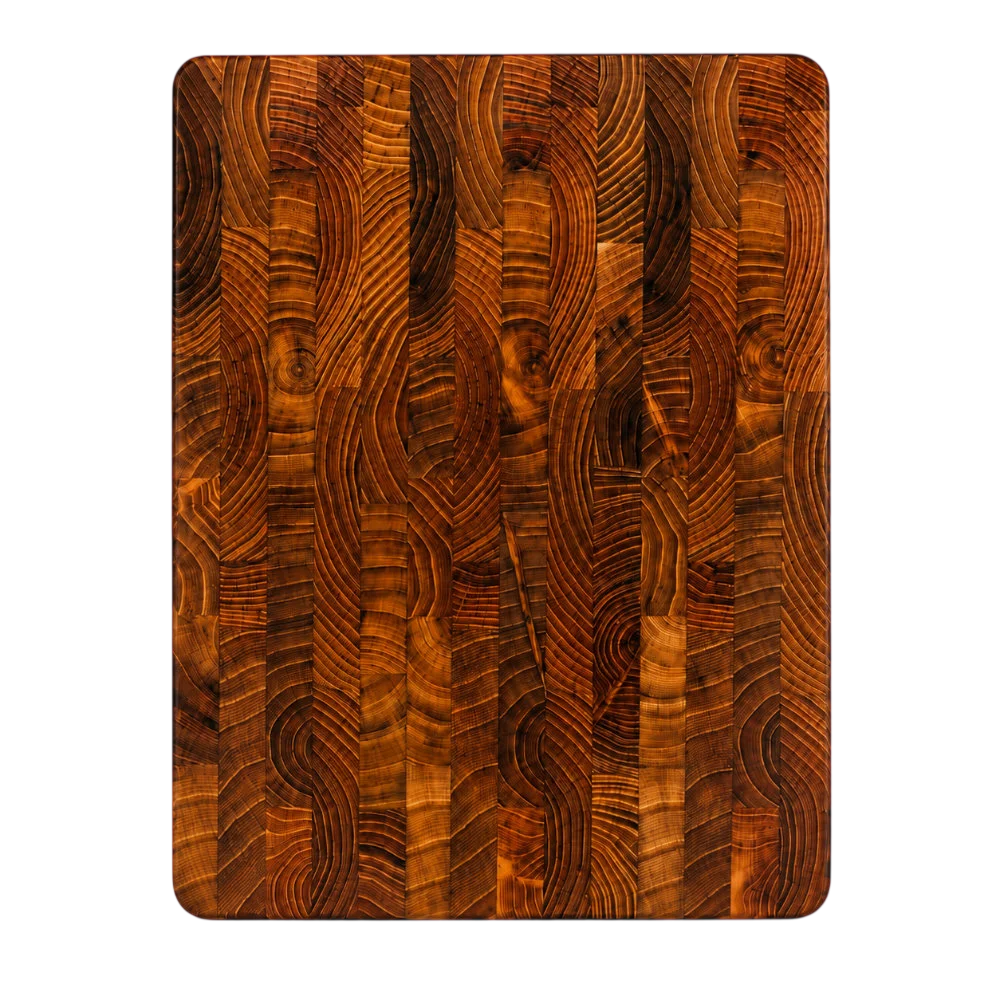
The Lilly Teak cutting board is everything we look for in a kitchen essential: carved from solid teak, hand-shaped for durability, and finished with a 100% plant-based oil that keeps your board food-safe without a trace of synthetic sealant. Each board carries its own natural grain pattern — no two are ever identical.
- Solid teak cutting surface
- Hand-shaped & finished
- Gentle on knife edges
- 100% solid teak wood
- Plant-based food-safe finish
- Sustainably sourced wood
🌿
FROM SHIP DECKS TO COUNTERTOPS
Wood Origins
Teak (Tectona grandis) comes from South and Southeast Asia, including India, Myanmar, and Thailand. Shipbuilders prized it for centuries. Its natural oils resisted rot and saltwater, so it covered decks and rails. Today, plantation-grown teak supplies furniture, outdoor décor, and kitchenware.
Black walnut (Juglans nigra) is native to eastern North America. Settlers used it for furniture, flooring, and gunstocks. Cabinetmakers loved its dark heartwood and straight grain. Woodworkers later adopted it for cutting boards and serving boards.
Both woods earned a reputation for durability across generations of makers. Teak earned it at sea. Walnut earned it in the workshop.
The two woods also differ in availability. Teak comes from managed plantations abroad, so buyers should look for responsibly sourced boards. Walnut grows closer to many North American makers, which shortens its supply chain. Sourcing matters because it affects both quality and environmental impact.
🌿
THE NUMBERS THAT MATTER
Technical Specifications
- Hardness (Janka scale): Teak measures about 1,070 lbf. Black walnut measures about 1,010 lbf. Both fall in the 1,000–1,500 lbf range that most makers consider ideal for knife-friendly boards.
- Density: Teak averages about 41 lb/ft³. Walnut averages about 38 lb/ft³.
- Natural oils: Teak holds high oil content that repels water. Walnut holds less oil and absorbs moisture faster.
- Dimensional stability: Teak shrinks and swells less with humidity. Walnut moves more and can warp if left wet.
- Grain and color: Teak shows golden-brown tones with straight to wavy grain. Walnut shows dark chocolate tones with rich swirls.
- Surface feel: Teak feels smooth and slightly waxy to the touch. Walnut feels fine-grained and slightly softer under the blade.
- Allergen note: Walnut is a tree nut. Households with tree-nut allergies should consider teak.
Hardness and Knife Feel
The Janka hardness test measures the force needed to press a steel ball into the wood. Boards that rate too low show deep knife scars. Boards that rate too high dull your edge quickly. Teak and walnut both land in the middle. Your knives glide, and the surface heals after light cuts.
Moisture and Stability
Moisture causes most board failures. Wood swells when it absorbs water and shrinks as it dries. That cycle creates warping and cracks. Teak’s natural oil limits absorption, so it moves less. Walnut absorbs more water, so it needs regular oiling and careful drying.
Hardness is nearly equal. Oil content and stability separate the two woods.
🌿
WHY TEAK WINS THE KITCHEN
Teak Benefits
Walnut looks stunning. Teak solves the problems cooks face most often. Wet counters, damp sponges, and humid summers all stress a board. Here is what teak brings to your counter.
These six benefits explain why many home cooks choose teak for daily prep. Each one solves a real problem, from soggy counters to cracked edges.
💧
Water resistance
Natural oils repel juices and splashes.
🔪
Knife friendly
Firm fibers protect your blade edges.
📏
Stays flat
Low shrinkage keeps the board from warping.
🧽
Easy upkeep
Wipe clean and oil only occasionally.
🌱
Plant-based finish
Food-safe oil replaces synthetic sealants.
♻️
Long-lasting
A durable board means less waste.
“My walnut board cracked near the sink. This teak board has stayed flat and smooth for a year.”
— Olivia D.
🌿
Our Top Pick
Skip the Warping Worry
If you wash your board often, teak deserves a look. This Lilly Teak board arrives hand-shaped, sanded smooth, and finished with plant-based oil. You can start chopping right away.
✦ Editor's Pick ✦
★★★★★
Lilly Teak — Handmade Teak Cutting Board with Plant-Based Finish
Handcrafted · Sustainable · Zero Plastic
The Lilly Teak cutting board is everything we look for in a kitchen essential: carved from solid teak, hand-shaped for durability, and finished with a 100% plant-based oil that keeps your board food-safe without a trace of synthetic sealant. Each board carries its own natural grain pattern — no two are ever identical.
- Solid teak cutting surface
- Hand-shaped & finished
- Gentle on knife edges
- 100% solid teak wood
- Plant-based food-safe finish
- Sustainably sourced wood
🌿
HEAD-TO-HEAD RESULTS
Teak vs. Walnut
|
Factor |
Teak |
Walnut |
Better Choice |
|---|---|---|---|
|
Moisture resistance |
High, thanks to natural oils |
Moderate, needs more oil |
Teak |
|
Maintenance |
Oil about once a month |
Oil every two to three weeks |
Teak |
|
Appearance |
Golden brown, warm grain |
Dark chocolate, rich swirls |
Walnut |
Teak wins on moisture and upkeep. Walnut wins on color. Knife feel is nearly identical, so both protect your blades. Prices vary by maker and thickness, so compare boards of equal size. A thicker, well-finished board costs more upfront but lasts longer than a thin one. Long-term value matters more than the sticker price.
🌿
KEEP YOUR BOARD FOR DECADES
Care Steps
- Wash by hand with mild soap and warm water right after use.
- Dry immediately with a towel. Never soak the board.
- Stand it on edge so air reaches every side. Flat drying invites warping.
- Sanitize monthly with white vinegar or a lemon-and-salt scrub.
- Oil the surface with food-grade mineral oil or plant-based oil when it looks dry.
- Wipe off excess oil after 20 minutes.
Skip the dishwasher. Heat and long moisture exposure crack both woods. Teak needs oil about once a month. Walnut needs oil more often because it absorbs moisture faster.
Restoring a Dry Board
Every wooden board eventually looks pale or rough. This is normal and fixable. Restore it in three quick steps:
- Sand lightly with fine-grit sandpaper to smooth raised grain.
- Wipe away dust with a damp cloth, then let the board dry fully.
- Apply oil generously, let it soak for several hours, and wipe off the excess.
Separate boards for raw meat and produce also reduce cross-contamination. Use one side for meat and the other for vegetables if you own a single board.
🌿
PICK THE RIGHT BOARD IN FIVE STEPS
How to Choose
- Rate your kitchen moisture. Frequent washing or a humid climate favors teak. Dry climates and occasional use suit walnut well.
- Check for allergies. Walnut is a tree nut. Choose teak if anyone at home has a nut allergy.
- Pick your look. Golden tones brighten light kitchens. Dark chocolate suits moody, modern spaces.
- Match the size. Choose a board at least 1 inch thick for stability. Pick a size that fits your sink so cleaning stays easy.
- Check the finish. Look for food-safe, plant-based oil instead of synthetic sealants.
Follow these steps in order. Most buyers find that moisture and allergies settle the decision before appearance comes into play.
🌿
Our Top Pick
Your Last Cutting Board
Five steps point to one clear winner for most home cooks. Lilly Teak’s board brings water resistance, a plant-based finish, and a hand-shaped build to everyday cooking.
✦ Editor's Pick ✦
★★★★★
Lilly Teak — Handmade Teak Cutting Board with Plant-Based Finish
Handcrafted · Sustainable · Zero Plastic
The Lilly Teak cutting board is everything we look for in a kitchen essential: carved from solid teak, hand-shaped for durability, and finished with a 100% plant-based oil that keeps your board food-safe without a trace of synthetic sealant. Each board carries its own natural grain pattern — no two are ever identical.
- Solid teak cutting surface
- Hand-shaped & finished
- Gentle on knife edges
- 100% solid teak wood
- Plant-based food-safe finish
- Sustainably sourced wood
🌿
FAQ
Is teak better than walnut for cutting boards?
Teak resists water better and needs less upkeep. Walnut offers a darker color. Both protect your knives.
Which wood is harder, teak or walnut?
Teak rates about 1,070 lbf on the Janka scale. Walnut rates about 1,010 lbf. The difference is small.
Does teak dull knives?
No. Teak is firm enough to last and gentle enough to protect blades. Regular honing keeps knives sharp on any board.
Are walnut cutting boards safe?
Yes, with a food-safe finish. Walnut is a tree nut, so households with nut allergies should consider teak. Always check the finish a maker uses.
How often should I oil a teak board?
Oil it about once a month, or whenever the surface looks dry or pale. Use food-grade mineral oil or a plant-based oil, and wipe off the excess.
Can I put a teak board in the dishwasher?
No. Heat and prolonged moisture cause warping and cracking. Always hand wash.
🌿
Final Verdict
Walnut makes a handsome board with a deep, dramatic color. It cuts well, feels good in the hand, and ages gracefully with regular oiling. It suits cooks who want a dark look and accept more frequent oiling. Teak suits everyone else.
Teak resists water, stays flat, and needs less care. For a board that handles daily prep for years, choose solid teak with a plant-based finish. It keeps your knives safe, your counters tidy, and your routine simple.
Teak stays steady, season after season. 🌿