FREE WORLDWIDE SHIPPING

Wood vs. Plastic Cutting Boards: Which Is Safer?

"Every home cook eventually asks whether the board under the knife keeps food safe. Lab studies, kitchen experience, and basic material science point to a clear answer. This guide compares wood and plastic, explains the research, and shows you how to choose and care for a board you can trust."
Your cutting board touches raw chicken, fresh produce, and bread within the same hour. A safe board resists bacteria, survives daily knife work, and cleans easily. Wood and plastic reach those goals in very different ways.
Many cooks still believe plastic is more hygienic than wood. Research tells another story. Knife grooves matter more than the material itself, and some woods handle those grooves better than plastic does.
Gentle on Knives
PROTECTS KNIFE EDGES
Natural Antibacterial Action
NATURAL OILS RESIST BACTERIA
Plastic-Free Prep
ZERO MICROPLASTIC SHEDDING
This guide covers history, lab findings, specifications, care, and a five-step buying process. The focus stays on teak, the wood that handles moisture best.
🌿
Our Top Pick
Start With Safer Wood
Skip the debate and start with a board built for food safety. This solid teak board resists moisture, protects your knives, and carries a plant-based finish instead of synthetic sealants.
✦ Editor's Pick ✦
★★★★★
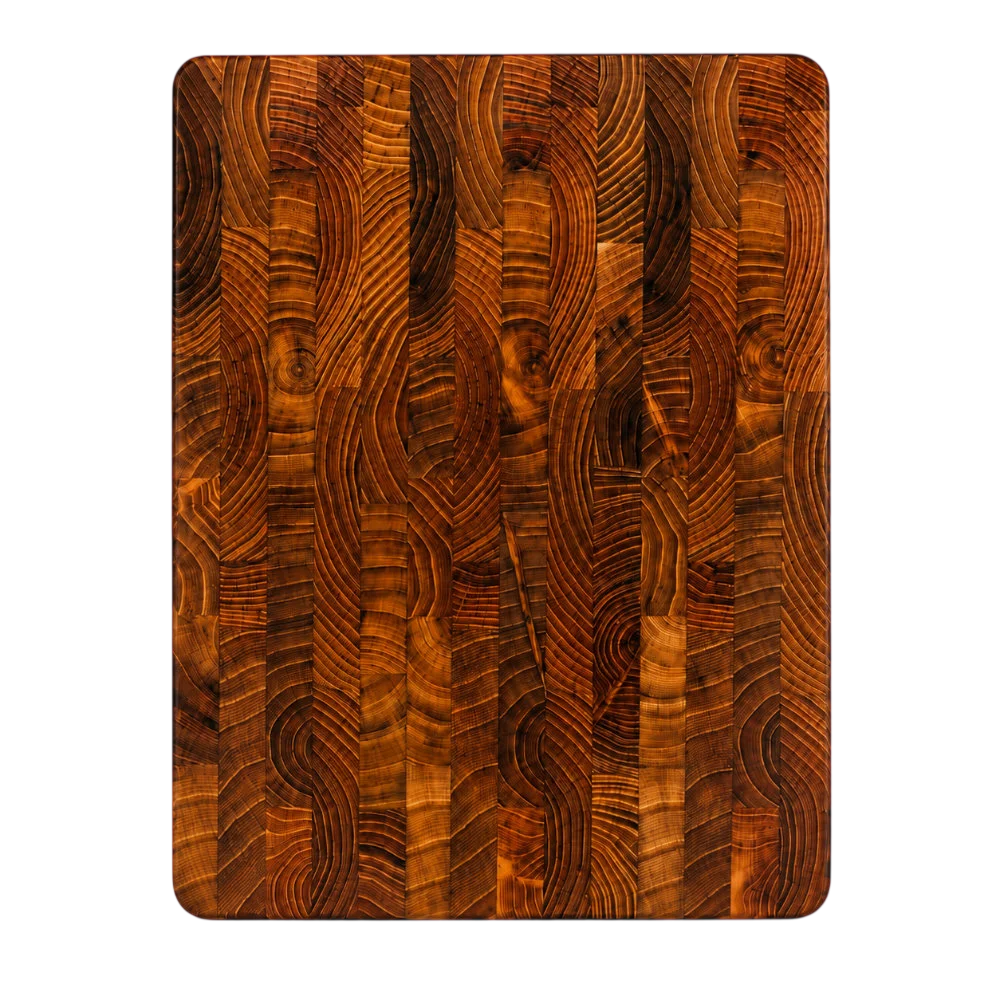
Lilly Teak — Handmade Teak Cutting Board with Plant-Based Finish
Handcrafted · Sustainable · Zero Plastic
The Lilly Teak cutting board is everything we look for in a kitchen essential: carved from solid teak, hand-shaped for durability, and finished with a 100% plant-based oil that keeps your board food-safe without a trace of synthetic sealant. Each board carries its own natural grain pattern — no two are ever identical.
- Solid teak cutting surface
- Hand-shaped & finished
- Gentle on knife edges
- 100% solid teak wood
- Plant-based food-safe finish
- Sustainably sourced wood
🌿
FROM CHOPPING BLOCK TO COUNTERTOP
Board History
People have cut food on wood for thousands of years. Early cooks used tree stumps and split logs. European butchers later built thick end-grain blocks that lasted for generations.
Plastic boards spread through commercial kitchens in the late twentieth century. Health guidance of that era favored non-porous surfaces, and polyethylene boards fit the advice. Teak followed a different path. Shipbuilders prized it for water resistance, and home cooks adopted it for the same reason.
Today the choice comes down to hygiene, durability, and upkeep. Professional chefs still favor wood for prep because it feels stable under the knife and quiet on the counter. Many restaurants keep color-coded plastic boards for raw proteins, then use wood for everything else. Home kitchens can follow the same logic with fewer boards.
🌿
WHAT THE LAB FOUND
Safety Research
In the 1990s, food scientists at the University of Wisconsin tested both materials. They contaminated boards with Salmonella, E. coli, and Listeria. Bacteria on wood sank into the grain and disappeared within minutes. Bacteria on plastic stayed on the surface and multiplied if left overnight.
Knife scars change the picture. Deep grooves in plastic trap residue and resist sponges. The USDA says both materials stay safe with proper cleaning, so habits matter as much as material. A 2023 study also estimated that plastic boards can shed millions of microplastic particles into food each year.
Researchers also note that results vary with wood type. Dense, oily woods such as teak absorb less liquid than porous woods, so they stay drier between uses. Dry surfaces give bacteria less moisture to survive on. That is why teak earns more trust than soft, open-grained woods in food preparation.
- Wood: pulls moisture and bacteria into its fibers.
- Plastic: holds residue inside deep knife grooves.
- Both: need washing right after contact with raw meat.
🌿
SIZE, DENSITY, AND HEAT
Board Specifications
Specifications show why teak performs well in a busy kitchen. This board uses solid teak, shaped by hand and sealed with a food-safe finish.
- Size: 16.5" x 12" (41.9 cm x 30.5 cm)
- Thickness: 0.98" (2.5 cm)
- Heat resistance: up to 200°C (392°F)
- Finish: plant-based, free from harmful chemicals
- Hardness: teak rates roughly 1,000 to 1,150 on the Janka scale, firm enough to resist deep scars and soft enough to protect blades
- Natural oils: teak contains natural oils that resist water damage and cracking
The thickness matters as much as the footprint. A board near one inch thick stays flat under heavy chopping and resists warping when the weather changes. The size fits standard drawers and cabinets, so you can store it flat or stand it upright. The surface also works as a serving platter for cheese, bread, and appetizers.
Paragraph 9: Lorem ipsum dolor sit amet, consectetur adipiscing elit. Ut elit tellus, luctus nec ullamcorper mattis, pulvinar dapibus leo.
🌿
SIX REASONS TEAK WINS
Teak Benefits
Teak solves the problems that make people doubt wood. It resists water, resists bacteria, and keeps its shape for years.
Each benefit below connects to food safety or daily convenience. Together they explain why one teak board often replaces several cheaper ones.
A longer lifespan also means less waste. Cheap plastic boards warp, scar, and end up in landfills within a year or two. A well-kept teak board stays in use for decades and develops a richer golden patina over time.
🦠
Bacteria resistant
Natural oils help the surface resist bacteria.
💧
Water resistant
Dense grain resists soaking and cracking.
🔪
Knife friendly
The surface protects your blade edges.
🚫
Plastic free
Every cut stays free of plastic particles.
🛡️
Long lasting
One board replaces many cheap ones.
🍃
Plant-based finish
The oil seal avoids synthetic sealants.
"I used to scrub my plastic boards and still smelled onions. This teak board rinses clean and feels much safer for raw chicken."
— Colleen B.
🌿
Our Top Pick
Upgrade Your Prep Surface
You now know how the two materials compare. Put that knowledge to work with a handmade board that keeps every benefit of natural wood in one solid piece.
✦ Editor's Pick ✦
★★★★★
Lilly Teak — Handmade Teak Cutting Board with Plant-Based Finish
Handcrafted · Sustainable · Zero Plastic
The Lilly Teak cutting board is everything we look for in a kitchen essential: carved from solid teak, hand-shaped for durability, and finished with a 100% plant-based oil that keeps your board food-safe without a trace of synthetic sealant. Each board carries its own natural grain pattern — no two are ever identical.
- Solid teak cutting surface
- Hand-shaped & finished
- Gentle on knife edges
- 100% solid teak wood
- Plant-based food-safe finish
- Sustainably sourced wood
🌿
THE SIDE-BY-SIDE SAFETY CHECK
Wood vs. Plastic
The table compares teak and plastic on the three factors that affect safety most. Plastic wins on convenience, but teak wins where hygiene is decided.
|
Factor |
Teak Board |
Plastic Board |
Safer Pick |
|---|---|---|---|
|
Bacteria behavior |
Absorbed into grain |
Stays on surface |
Teak |
|
Knife scars |
Shallow, can be sanded |
Deep, trap residue |
Teak |
|
Cleaning |
Hand wash, oil monthly |
Dishwasher safe |
Plastic |
Dishwasher heat sanitizes plastic well, and that matters for busy households. The catch is wear. Once a plastic board develops deep grooves, even a dishwasher cannot reach every crevice.
🌿
SIMPLE CARE FOR LONG LIFE
Care Steps
Teak needs less work than most people expect. Treat a new board with food-grade oil before first use. Let it absorb overnight, then wash it clean. After that, follow this routine:
- Rinse the board with warm water and mild soap after every use.
- Dry it immediately with a clean towel.
- Stand it upright so air reaches both sides.
- Scrub stains with coarse salt and half a lemon.
- Apply food-grade mineral oil about once a month.
Never soak the board or run it through a dishwasher. Water and high heat cause warping and cracks. Wash the board right after cutting raw meat, and keep a separate board for raw proteins if you cook often.
Light scratches are normal on any wood board. Sand the surface gently with fine-grit sandpaper once a year to remove them, then oil the board again. This simple reset restores a smooth cutting surface and removes places where residue could hide.
🌿
A FIVE-STEP BUYING GUIDE
How to Choose
Use these five steps to pick a safe board, whatever material you buy:
- Match the material to your habits. Choose wood if you hand wash. Choose plastic only if you need a dishwasher.
- Check the surface. Look for smooth, solid wood with no glued seams that trap moisture.
- Confirm the finish. Pick a food-safe, plant-based finish over synthetic sealants.
- Measure your space. A 16.5" x 12" board fits most counters and drawers.
- Plan for care. Commit to soap, drying, and monthly oil. Replace any board with deep, uncleanable grooves.
These steps work for any kitchen. A small apartment needs one reliable board. A family that cooks daily may want two, one for raw meat and one for vegetables, bread, and cheese. Keep each board in its own role, and cleaning becomes faster and safer.
🌿
Our Top Pick
Choose the Safer Board
Ready to apply the five steps? This board checks every box: solid wood, food-safe plant-based finish, practical size, and simple care that takes minutes.
✦ Editor's Pick ✦
★★★★★
Lilly Teak — Handmade Teak Cutting Board with Plant-Based Finish
Handcrafted · Sustainable · Zero Plastic
The Lilly Teak cutting board is everything we look for in a kitchen essential: carved from solid teak, hand-shaped for durability, and finished with a 100% plant-based oil that keeps your board food-safe without a trace of synthetic sealant. Each board carries its own natural grain pattern — no two are ever identical.
- Solid teak cutting surface
- Hand-shaped & finished
- Gentle on knife edges
- 100% solid teak wood
- Plant-based food-safe finish
- Sustainably sourced wood
🌿
FAQ
Are wood cutting boards safe for raw meat?
Yes. Wash the board with hot soapy water right after use, dry it fully, and oil it monthly.
Is plastic ever the better choice?
Plastic suits cooks who need dishwasher cleaning. Replace it once deep grooves form.
Do wood boards need oil?
Yes. Monthly food-grade mineral oil keeps teak moisturized and prevents cracks.
When should I replace a plastic board?
Replace it when knife grooves feel rough or stains no longer wash out. Deep grooves are the clearest sign that the board has reached the end of its life.
Can I put a teak board in the dishwasher?
No. Heat and long water exposure warp wood. Hand wash and towel dry instead.
Does teak dull my knives?
No. Teak is firm enough for durability but gentle on blade edges.
🌿
Final Verdict
Wood is the safer long-term choice for most kitchens. Research shows bacteria fade quickly on wood, while plastic grooves trap residue and shed microplastics. Both materials stay safe with proper cleaning, but wood makes that job easier over time.
Teak is the strongest wood for the job. It resists water, protects knives, and lasts for years with five minutes of monthly care. Pick a solid, food-safe teak board, wash it after every use, and your kitchen stays safer. Small habits protect your family, your knives, and your investment for years.
Choose the board that gets safer, not scarred, with every cut.🌿