
Bamboo vs. Teak Utensils: Which Is Better?

A Brief History of Bamboo and Teak in the Kitchen
Humans have used natural materials to make kitchen tools for thousands of years. Both bamboo and teak have long, documented histories as cooking materials.
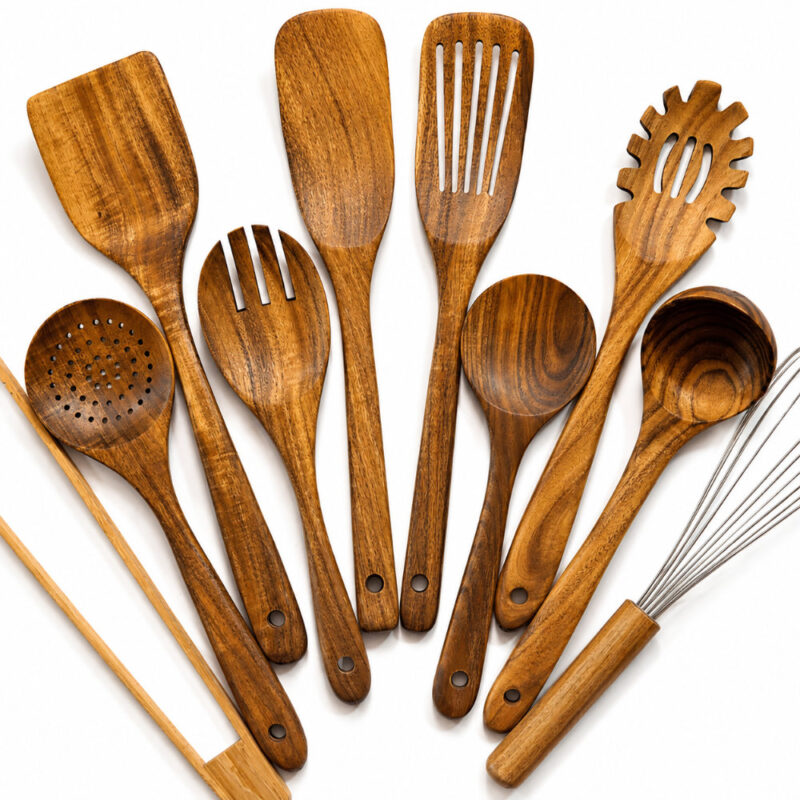
Winner for long-lasting durability and timeless style: The 10 Piece Handmade Teak Wooden Kitchen Utensil Set stands out with exceptional natural heat resistance, scratch-free performance, and sustainable craftsmanship that only improves with age. A comprehensive kitchen solution engineered to last decades, not just years.
Bamboo has been used in East and Southeast Asia for over 5,000 years. Ancient Chinese civilizations used bamboo to make everything from cooking vessels to chopsticks. The plant was abundant, grew fast, and required no metal tools to harvest.
Teak has a history rooted in South and Southeast Asia, particularly in Myanmar, Thailand, and India. Craftsmen recognized teak’s natural oil content early on. That oil made teak water-resistant and ideal for tools exposed to heat and moisture. Teak became a prized material in shipbuilding, furniture, and kitchen craft for these same reasons.
Both materials entered Western kitchens in the 20th century. Today, they dominate the premium wooden utensil market worldwide.
What Each Material Is Made Of
Bamboo: A Grass, Not a Wood
This distinction matters more than most buyers realize. Bamboo is a grass, not a tree. It belongs to the Poaceae family. Manufacturers compress bamboo fibers together using heat and adhesive to create dense planks or utensil shapes.
Key technical facts about bamboo:
- Hardness (Janka scale): 1,380 lbf on average for processed bamboo
- Density: Approximately 0.6–0.9 g/cm³ depending on species and processing
- Moisture absorption: Moderate; bamboo absorbs water more readily than teak
- Natural antimicrobial properties: Present, but modest compared to teak
- Growth rate: Bamboo matures in 3–5 years
- Common species used: Moso bamboo (Phyllostachys edulis) is the most common for utensils
Because bamboo is a compressed grass product, its quality varies significantly by manufacturer. Lower-grade bamboo utensils use more adhesive binders, which can contain formaldehyde in small amounts if not properly certified.
Teak: A Dense Tropical Hardwood
Teak (Tectona grandis) is a large deciduous tree in the family Lamiaceae. It produces one of the densest and most oil-rich hardwoods available commercially.
Key technical facts about teak:
- Hardness (Janka scale): 1,070 lbf for Burmese teak; up to 1,155 lbf for plantation teak
- Density: Approximately 0.65–0.75 g/cm³
- Natural oil content: High; contains tectoquinone and silica, which repel water naturally
- Natural antimicrobial properties: Strong; the natural oils inhibit bacterial growth
- Growth rate: Teak trees take 25–80 years to reach harvest maturity
- Silica content: Creates a fine, self-lubricating surface that resists drying and cracking
Teak is a true solid hardwood. A teak spatula or spoon is carved from a single piece of wood, not bonded fibers. This gives it structural consistency throughout.
Bamboo vs. Teak Utensils: Side-by-Side Comparison
| Feature | Bamboo | Teak |
|---|---|---|
| Material type | Compressed grass fiber | Solid hardwood |
| Hardness (Janka) | ~1,380 lbf | ~1,070–1,155 lbf |
| Natural oils | Low | High |
| Water resistance | Moderate | Excellent |
| Antimicrobial properties | Moderate | Strong |
| Eco-friendliness | Very high | Moderate (certified sources) |
| Maintenance required | Moderate | Low to moderate |
| Average lifespan | 2–5 years | 5–20+ years |
| Cost | Lower | Higher |
| Weight | Light | Moderate to heavy |
| Surface texture | Slightly coarser | Smooth, fine grain |
| Risk of cracking | Higher if not oiled | Lower due to natural oils |
Durability and Longevity
Teak wins in long-term durability. Its natural oil content protects the wood from the inside out. A well-maintained teak spoon can last 10 to 20 years. The silica in teak also resists warping and splitting, even with repeated exposure to heat and water.
Bamboo utensils are harder by the Janka scale, but hardness and durability are not the same thing. Because bamboo is a compressed fiber product, it is more prone to:
- Delamination — the layers separating over time
- Surface cracking — especially when dried out
- Moisture swelling — causing warping after dishwasher use
Most bamboo utensils are not dishwasher-safe. Many teak utensils are also not recommended for dishwashers, but teak handles the heat and moisture cycle far better in practice.
Food Safety and Surface Hygiene
Both materials are generally safe for food contact. Each has specific strengths and risks.
Bamboo:
- Safe for food contact when certified formaldehyde-free
- Look for utensils certified by the FDA, LFGB (Germany), or EN 1186 (EU food contact standard)
- Antimicrobial properties are present but weaker than teak
- Bamboo’s tighter grain means fewer surface scratches in early use
Teak:
- Natural oils act as a passive antimicrobial barrier
- The tectoquinone compound in teak has documented antibacterial activity
- Teak does not require chemical treatments to resist bacteria
- As teak ages and develops small surface scratches, bacteria trapped in those grooves are less likely to survive due to the oil environment
For users preparing raw meat or fish frequently, teak offers stronger natural hygiene protection.
Environmental Impact
This category clearly favors bamboo, with important caveats.
Bamboo environmental advantages:
- Grows 3–5 years to harvest maturity versus 25–80 years for teak
- Sequesters carbon rapidly during growth
- Requires no replanting — bamboo regenerates from its root system after cutting
- Generally requires fewer pesticides and fertilizers
Teak environmental considerations:
- Wild teak is subject to logging regulations in many countries
- Look for teak certified by the Forest Stewardship Council (FSC) or from verified plantation sources
- FSC-certified plantation teak has a significantly lower environmental impact than wild-harvested teak
- Teak’s 20-year lifespan means fewer utensils purchased over time, which reduces total material consumption
If environmental impact is your primary concern, bamboo from a certified, adhesive-transparent supplier is the better choice. If you buy teak, verify FSC certification.
Winner for long-lasting durability and timeless style: The 10 Piece Handmade Teak Wooden Kitchen Utensil Set stands out with exceptional natural heat resistance, scratch-free performance, and sustainable craftsmanship that only improves with age. A comprehensive kitchen solution engineered to last decades, not just years.
Maintenance and Daily Care
Proper care extends the life of both materials dramatically.
Caring for Bamboo Utensils
- Wash by hand with mild dish soap and warm water immediately after use.
- Dry immediately — do not let bamboo sit in standing water.
- Oil monthly with food-grade mineral oil or beeswax conditioner.
- Avoid the dishwasher entirely — heat and prolonged moisture cause rapid delamination.
- Avoid soaking — even brief soaking can warp or crack bamboo.
- Sand lightly if rough patches appear, then re-oil.
Caring for Teak Utensils
- Wash by hand with mild dish soap and warm water.
- Dry promptly, but teak tolerates brief moisture exposure better than bamboo.
- Oil every 2–3 months with food-grade mineral oil or teak oil (non-toxic, food-safe formulas only).
- Avoid the dishwasher — it strips natural oils over time.
- Inspect annually for cracking or deep scratches — sand and re-oil as needed.
- Teak’s natural oil replenishes slowly on its own, but manual oiling extends this process.
Teak requires less frequent oiling than bamboo. It also recovers better if care is neglected for a short period.
Which Utensil Type Performs Better by Use Case
Not all utensils face the same demands. Here is how each material performs by tool type:
Stirring spoons and spatulas: Teak is preferred. The weight and smooth grain make teak comfortable for long stirring sessions. The natural oil resists food staining better.
Salad servers: Bamboo works well here. Salad servers rarely contact high heat, and bamboo’s lighter weight makes tossing easier.
Cutting boards (related category): Teak is significantly better. Its hardness, oils, and grain structure make it superior for cutting surfaces. Bamboo boards can harbor bacteria in fiber gaps created by knife cuts.
Chopsticks: Bamboo dominates this category. Bamboo chopsticks are lighter, more precise, and culturally appropriate. Teak chopsticks are rare and unnecessarily heavy.
Cooking spoons for high heat: Teak handles prolonged heat exposure better. Bamboo near open flame or very high heat can dry and crack at the adhesive bonds.
How to Select the Right Utensil: A Step-by-Step Summary
Follow these steps to make the right purchase decision:
- Define your primary use. High-heat cooking favors teak. Light prep and salads allow bamboo.
- Set your budget. Bamboo costs less upfront. Teak costs more but lasts longer — often making it cheaper per year of use.
- Check certifications. For bamboo, verify it is formaldehyde-free and food-safe certified. For teak, confirm FSC certification.
- Consider your maintenance commitment. If you oil utensils monthly, bamboo is manageable. If you prefer lower maintenance, choose teak.
- Prioritize sustainability consciously. If eco-impact is your top priority, choose certified bamboo. If longevity-based sustainability matters more, choose certified teak.
- Buy from transparent manufacturers. Good brands disclose their materials, adhesives, and wood sourcing openly. Avoid vague labeling.
The Bottom Line
Both bamboo and teak make excellent kitchen utensils. Each has a clear advantage in specific situations.
Choose bamboo if you want an affordable, lightweight, eco-friendly option for low-heat tasks and are committed to regular care and oiling.
Choose teak if you cook frequently, use high heat, prioritize longevity, and want stronger natural antimicrobial protection with less ongoing maintenance.
For most home cooks who want a long-lasting, professional-grade utensil set, teak delivers better overall value over time. For eco-conscious buyers on a budget who mostly do light prep work, bamboo is a smart, responsible choice.
The best kitchen toolkit does not require a single answer. Many cooks keep both materials on hand — bamboo for light tasks, teak for the stove.
Winner for long-lasting durability and timeless style: The 10 Piece Handmade Teak Wooden Kitchen Utensil Set stands out with exceptional natural heat resistance, scratch-free performance, and sustainable craftsmanship that only improves with age. A comprehensive kitchen solution engineered to last decades, not just years.