
Best Teak Cutting Boards

“Across every well-designed kitchen, the cutting board becomes more than a surface—it becomes a quiet foundation of craft. Teak, with its natural resilience and warm presence, transforms everyday food preparation into something slower, steadier, and more intentional. The right board doesn’t just support cooking; it elevates it into ritual.”
Cooking spaces are often judged by appliances, countertops, or layout, yet one of the most frequently used tools sits quietly at the center of it all: the cutting board. It is the surface where ingredients are prepared, techniques are practiced, and meals begin to take form. Despite this central role, many people only realize its importance once problems appear—dull knives, warped boards, or surfaces that trap moisture and odors.
Teak cutting boards have risen as a preferred solution for both home cooks and professional kitchens due to their unique balance of durability, water resistance, and long-term structural stability. Unlike synthetic boards or lower-grade woods, teak offers a naturally oil-rich composition that resists excessive moisture absorption while maintaining a smooth, knife-friendly surface. This combination makes it especially valuable in environments where hygiene, performance, and longevity all matter.
In modern kitchens, demand has shifted toward materials that are not only functional but also sustainable and visually refined. Teak fits this demand by offering a dense hardwood structure that holds up under repeated use without losing its integrity or aesthetic appeal. Over time, it develops a rich patina that enhances its appearance rather than degrading it.
This guide explores what defines the best teak cutting boards, how they perform under real kitchen conditions, and why they continue to outperform many alternative materials in long-term use scenarios.
Durability Engineering
Built for longevity use
Moisture Resistance System
Naturally repels water damage
Knife Friendly Surface
Preserves blade sharpness longer
Teak’s performance in the kitchen becomes most meaningful when examined through its material structure, daily usability, and long-term maintenance behavior.
Our Top Pick
Solid Teak. Built to Handle Every Meal.
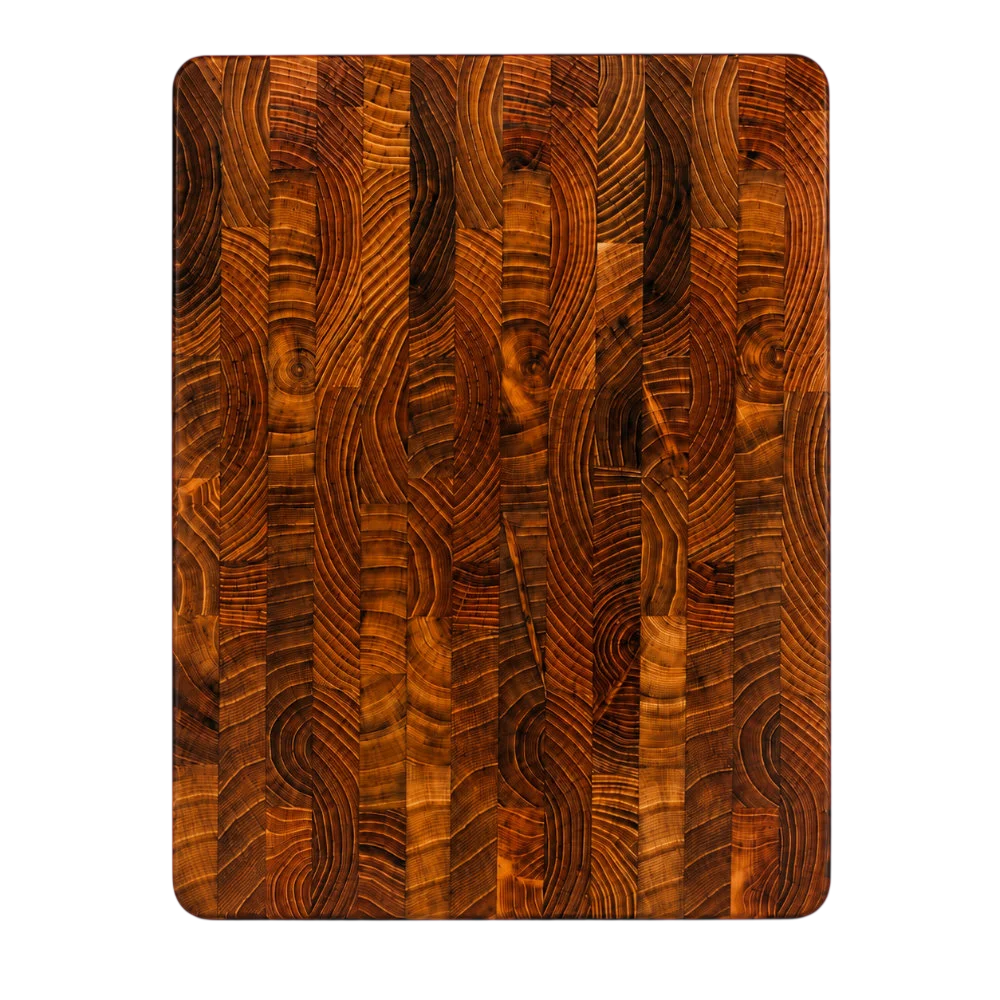
This handmade teak cutting board pairs premium hardwood durability with natural moisture resistance and a smooth, blade-friendly surface. A plant-based finish keeps it chemical-free, while its handcrafted build brings lasting warmth to your kitchen.
★★★★★
Lilly Teak — Handmade Teak Cutting Board with Plant-Based Finish
Handcrafted · Sustainable · Zero Plastic
The Lilly Teak cutting board is everything we look for in a kitchen essential: carved from solid teak, hand-shaped for durability, and finished with a 100% plant-based oil that keeps your board food-safe without a trace of synthetic sealant. Each board carries its own natural grain pattern — no two are ever identical.
- Solid teak cutting surface
- Hand-shaped & finished
- Gentle on knife edges
- 100% solid teak wood
- Plant-based food-safe finish
- Sustainably sourced wood
WHY TEAK OUTPERFORMS OTHER MATERIALS
The Material Foundation of Teak Performance
Teak is a dense hardwood known for its naturally high oil content and tight grain structure. This internal composition is what sets it apart from many other cutting board materials. The natural oils within teak act as a protective barrier against water penetration, reducing the likelihood of swelling, cracking, or warping even under frequent exposure to moisture.
From a material science perspective, teak’s stability is a result of both density and extractive compounds that resist microbial growth and moisture absorption. This makes it particularly suitable for kitchen environments where raw ingredients, liquids, and repeated washing are constant factors.
Unlike softer woods, teak does not easily deform under pressure from knives or heavy chopping. Instead, its grain structure absorbs impact in a controlled way, helping preserve both the board surface and the knife edge. This dual protection is one of the reasons teak is often preferred in high-use culinary settings.
Another key factor is dimensional stability. Many wooden boards expand and contract with humidity changes, but teak maintains a more consistent structure. This reduces long-term movement and helps preserve a flat cutting surface, which is essential for both safety and precision in food preparation.
Ultimately, teak’s material profile is not defined by a single advantage, but by a combination of resistance factors that work together to create a durable, low-maintenance kitchen surface.
HOW TEAK PERFORMS WHERE IT MATTERS MOST
Performance Behavior in Real Kitchen Use
In everyday cooking environments, performance is measured not in laboratory conditions but in repeated, practical use. Teak cutting boards consistently demonstrate strong usability across a wide range of tasks, from light vegetable slicing to heavy-duty meat preparation.
One of the most noticeable performance advantages is surface resilience. Knife contact leaves minimal visible scoring compared to harder, less forgiving materials. This helps maintain a cleaner surface appearance over time while also reducing micro-damage that can accumulate in lower-quality boards.
Stability during use is another important factor. Heavier teak boards tend to remain firmly in place on countertops, reducing movement during chopping. This contributes to both safety and efficiency, especially during fast-paced food preparation.
Teak also performs well in moisture-heavy scenarios. When exposed to juices from fruits, vegetables, or proteins, the board resists excessive absorption, which helps reduce lingering odors and staining. While no wooden surface is entirely immune to moisture, teak’s natural oil content significantly reduces long-term retention compared to untreated or porous alternatives.
In professional-style cooking environments, consistency matters. A board that remains stable, cleanable, and structurally intact over time allows for more predictable workflow. This is where teak consistently outperforms many synthetic or lower-grade wood options, offering a reliable surface that does not degrade quickly under pressure.
“Longevity in kitchen tools is rarely about innovation alone—it is about material integrity, and teak remains one of the few materials that improves with time rather than deteriorates under it.”
— Marcus Bellfield
WHAT TO KNOW BEFORE YOU BUY AND HOW TO KEEP IT LASTING
Maintenance Logic and Buyer Decision Factors
Maintaining a teak cutting board is relatively straightforward, but consistency is key to preserving its long-term performance. The most important maintenance step is routine cleaning immediately after use. Warm water and mild soap are typically sufficient to remove residue without damaging the wood structure. Excessive soaking, however, should always be avoided as prolonged water exposure can still stress the fibers over time.
Oiling is another essential maintenance practice. Food-safe mineral oil helps replenish the natural oils within the wood, preserving moisture resistance and preventing drying or surface cracking. When applied regularly, oiling enhances both durability and appearance, allowing the board to maintain its smooth finish and rich tone.
From a purchasing perspective, several factors determine whether a teak cutting board is worth the investment. Thickness is one of the most important indicators of quality, as thicker boards generally provide better stability and longer lifespan. Construction style also matters, with end-grain designs typically offering superior knife protection and edge-grain boards providing lighter, more accessible everyday use.
Ultimately, buyer decision-making comes down to balancing usage frequency, kitchen demands, and long-term expectations. For high-use kitchens, investing in a premium teak board often results in better performance and lower replacement frequency over time.
Built to Last Years
Engineered for long-term kitchen durability and repeated heavy use.
Water Resistant Surface
Minimizes absorption from liquids, juices, and moisture exposure.
Knife Edge Protection
Helps reduce blade dulling during everyday chopping tasks.
Natural Material Choice
Supports a more organic and non-synthetic kitchen environment.
Premium Kitchen Aesthetic
Adds warm, refined visual character to any countertop space.
Easy Maintenance Routine
Simple cleaning and oiling keeps performance consistent over time.
Our Top Pick
Crafted to Handle Real Kitchens
Made from dense, premium teak hardwood, this cutting board resists moisture, holds up to daily chopping, and stays gentle on knife edges. The plant-based finish keeps it non-toxic, and the handmade craftsmanship adds natural character to every kitchen.
★★★★★
Lilly Teak — Handmade Teak Cutting Board with Plant-Based Finish
Handcrafted · Sustainable · Zero Plastic
The Lilly Teak cutting board is everything we look for in a kitchen essential: carved from solid teak, hand-shaped for durability, and finished with a 100% plant-based oil that keeps your board food-safe without a trace of synthetic sealant. Each board carries its own natural grain pattern — no two are ever identical.
- Solid teak cutting surface
- Hand-shaped & finished
- Gentle on knife edges
- 100% solid teak wood
- Plant-based food-safe finish
- Sustainably sourced wood
HOW TEAK STACKS UP AGAINST THE COMPETITION
Teak Versus Alternative Cutting Board Materials
Teak occupies a unique position among cutting board materials because it balances durability, maintenance, and knife performance in a way few alternatives achieve. When compared to bamboo, plastic, and lower-grade hardwoods, teak consistently demonstrates stronger long-term stability and more predictable performance in daily use.
Bamboo boards, while often marketed as eco-friendly, are structurally different from hardwoods. Bamboo is compressed and laminated, which can create a harder surface that is less forgiving on knife edges. Over time, this can lead to faster blade dulling. Teak, by contrast, provides a more balanced cutting surface that absorbs impact without being overly abrasive.
Plastic boards offer convenience due to dishwasher compatibility and low initial cost, but they tend to develop deep grooves that trap bacteria and odors over time. These grooves are difficult to fully sanitize, and the material itself degrades with repeated cutting. Teak provides a more stable cutting surface that maintains integrity for significantly longer periods, even without machine washing.
When compared to standard hardwoods like maple or acacia, teak stands out primarily due to its natural oil content. This internal property gives teak a built-in moisture resistance advantage that many other woods lack. As a result, teak boards are less likely to warp or crack under fluctuating kitchen humidity.
From a decision-making perspective, teak is best suited for users who prioritize longevity, aesthetic consistency, and balanced knife performance. While it may require slightly more maintenance than synthetic alternatives, its long-term benefits typically outweigh the additional care requirements.
Overall, teak represents a middle ground between luxury performance and practical everyday usability, making it one of the most reliable long-term kitchen investments.
WHY SERIOUS COOKS CHOOSE TEAK AND NEVER LOOK BACK
The Long-Term Value of a Quality Teak Cutting Board
A well-crafted teak cutting board is more than a kitchen accessory; it is a long-term culinary foundation. The experience of preparing food shifts noticeably when the surface beneath your knife is stable, responsive, and naturally resistant to wear. Teak brings a quiet confidence to daily cooking, reducing friction in both physical and functional ways.
For those building a more intentional kitchen setup, the value of teak becomes most apparent over time. It does not demand constant replacement or complicated upkeep. Instead, it rewards simple, consistent care with years of reliable use. Whether used for daily meal prep or occasional cooking sessions, it maintains a steady performance profile that adapts to different kitchen demands.
Choosing a high-quality teak board is less about trend and more about long-term utility. It aligns with kitchens that prioritize durability, natural materials, and refined design. Over time, it becomes one of the most consistently used and appreciated tools in the entire cooking space.
Our Top Pick
A Kitchen Staple That's Made to Last
This teak cutting board combines the strength and moisture resistance of premium hardwood with a smooth surface that protects your blades. Finished with a plant-based coating and shaped by hand, it brings durability and warmth into everyday cooking.
★★★★★
Lilly Teak — Handmade Teak Cutting Board with Plant-Based Finish
Handcrafted · Sustainable · Zero Plastic
The Lilly Teak cutting board is everything we look for in a kitchen essential: carved from solid teak, hand-shaped for durability, and finished with a 100% plant-based oil that keeps your board food-safe without a trace of synthetic sealant. Each board carries its own natural grain pattern — no two are ever identical.
- Solid teak cutting surface
- Hand-shaped & finished
- Gentle on knife edges
- 100% solid teak wood
- Plant-based food-safe finish
- Sustainably sourced wood
FAQ
Teak cutting boards stand out due to their naturally high oil content and dense grain structure. This composition helps resist moisture absorption more effectively than many other hardwoods. As a result, they are less prone to warping, cracking, or swelling under kitchen conditions. They also tend to maintain a smoother surface over long periods of use. This combination of durability and stability is what makes them highly regarded in both home and professional kitchens.
Yes, teak cutting boards are widely considered safe for food preparation when properly maintained. The natural oils within the wood help reduce moisture retention, which lowers the risk of bacterial growth compared to more porous materials. Regular cleaning and proper drying are still important to maintain hygiene standards. Food-safe finishes such as mineral oil further enhance safety and performance. Overall, teak is a trusted material in culinary environments.
Teak is generally considered knife-friendly compared to harder or more abrasive materials. Its grain structure allows slight give during cutting, which helps preserve blade sharpness over time. While no cutting board is completely neutral on knives, teak strikes a strong balance between durability and blade protection. Many users find that knives maintain their edge longer on teak than on bamboo or glass surfaces. This makes it suitable for frequent cooking use.
Oiling frequency depends on usage, but most teak boards benefit from oiling every few weeks to once a month. Regular oiling helps maintain moisture resistance and prevents the wood from drying out. In high-use kitchens, more frequent oiling may be necessary to preserve optimal performance. The process is simple and typically involves food-safe mineral oil applied evenly across the surface. Consistent maintenance extends both lifespan and appearance.
Teak cutting boards should never be placed in a dishwasher. The combination of heat, water saturation, and detergent can damage the wood fibers and cause warping or cracking. Hand washing with mild soap and warm water is the recommended method. Immediate drying is also important to prevent moisture absorption. Proper care significantly extends the lifespan of the board.
The ideal size depends on cooking habits and available counter space. Medium-sized boards are often the most versatile for everyday use, handling most chopping and prep tasks efficiently. Larger boards are better suited for batch cooking, meat preparation, or entertaining. Smaller boards work well for quick tasks like slicing fruit or herbs. Choosing the right size improves workflow and kitchen efficiency.
Teak tends to be more expensive due to its durability, sourcing, and natural resistance properties. The wood itself is dense and slow-growing, which increases material value. Additionally, its performance characteristics reduce the need for frequent replacement. Over time, this can offset the initial cost. Many users consider it a long-term investment rather than a short-term purchase.
In most performance categories, teak is considered superior to bamboo. Bamboo is harder and can be more abrasive on knife edges, while teak offers a more balanced cutting surface. Teak also contains natural oils that improve moisture resistance and structural stability. Bamboo boards may be more affordable, but they often wear faster under heavy use. For long-term kitchen performance, teak is typically preferred.
Final Verdict
Teak cutting boards consistently demonstrate strong performance across durability, usability, and long-term maintenance. Their ability to resist moisture while maintaining a stable cutting surface makes them one of the most reliable materials available for kitchen use. Unlike lower-cost alternatives, they are designed to withstand years of repeated chopping, slicing, and preparation without rapid degradation.
From a value perspective, teak often outperforms its initial price point by lasting significantly longer than synthetic or low-grade wood options. This reduces replacement frequency and contributes to better long-term cost efficiency. Its knife-friendly surface also helps preserve blade sharpness, adding another layer of practical benefit.
In everyday kitchen environments, teak delivers a consistent and dependable experience that improves workflow and reduces maintenance concerns. It remains one of the strongest choices for users seeking a balance between aesthetics, performance, and longevity.
Ultimately, teak cutting boards represent a long-term upgrade rather than a temporary kitchen accessory, making them a standout choice for serious home cooking and professional preparation alike.
Simple choices. Lasting impact. A kitchen built to endure. 🌿