
Best Wood for Cutting Boards

"A cutting board takes more daily abuse than almost any other kitchen tool. The wood you choose decides whether it protects your knives and lasts for decades, or dulls blades and cracks within a year."
Every cutting board absorbs the same daily punishment: knife strikes, water, acid, and heat. Most cooks never think about the wood itself until a board warps, stains, or takes the edge off a good knife. The right species solves these problems before they start. Hardness, grain structure, porosity, and natural moisture resistance decide how a board performs over years of use, not just how it looks on day one.
This guide breaks down what separates a great cutting board wood from an average one, compares the most common species side by side, and walks through how to pick and maintain the right board for your kitchen.
Hardness That Resists Knife Marks
Protects the surface from daily wear
Tight Grain That Repels Liquid
Limits bacteria and staining
Natural Moisture Resistance
Prevents warping and cracking over time
Wood outperforms plastic and glass across all three of these categories, which is why professional kitchens keep coming back to it.
Our Top Pick
Everyday Strength, Handmade Quality
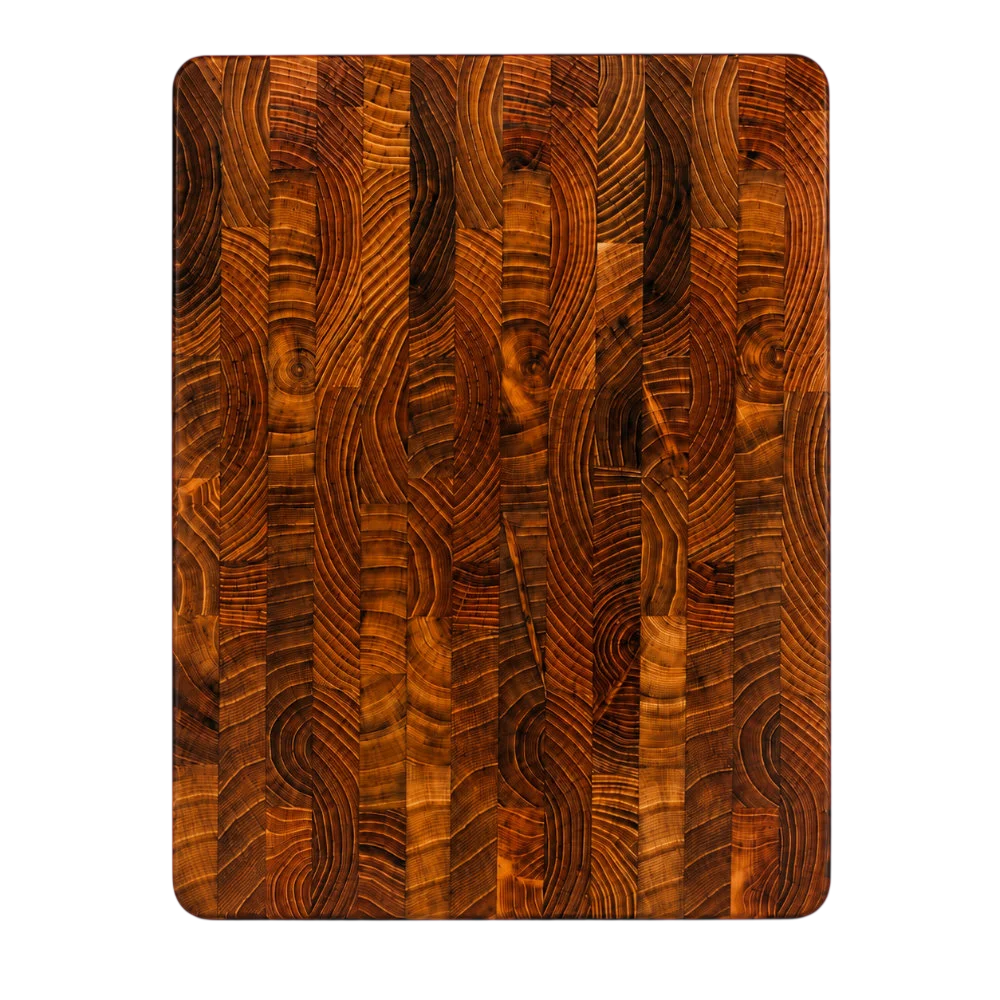
This teak cutting board offers the durability and natural moisture resistance of premium hardwood, paired with a smooth surface that protects your knives. Its plant-based finish and handcrafted build add lasting warmth to your kitchen routine.
★★★★★
Lilly Teak — Handmade Teak Cutting Board with Plant-Based Finish
Handcrafted · Sustainable · Zero Plastic
The Lilly Teak cutting board is everything we look for in a kitchen essential: carved from solid teak, hand-shaped for durability, and finished with a 100% plant-based oil that keeps your board food-safe without a trace of synthetic sealant. Each board carries its own natural grain pattern — no two are ever identical.
- Solid teak cutting surface
- Hand-shaped & finished
- Gentle on knife edges
- 100% solid teak wood
- Plant-based food-safe finish
- Sustainably sourced wood
WHERE WOOD CUTTING BOARDS COME FROM
A Brief History of Wood Cutting Boards
Cooks have used wood cutting surfaces for thousands of years. Ancient kitchens relied on tree stumps and thick wood slabs for meat preparation. Butchers in medieval Europe used end-grain butcher blocks made from oak and beech, built to absorb heavy impact from cleavers and large knives.
The Industrial Revolution kept wood as the kitchen standard even as new tools arrived. Factories began producing uniform wood boards for home kitchens in the 19th century, and maple became a popular choice for its hardness and light color. American manufacturers built large maple block factories to supply restaurants and meat markets with thick, glued strips of end-grain wood.
Plastic boards entered kitchens in the mid-20th century, marketed as the more sanitary option. Later research changed that view. Food safety studies showed that wood boards trap and kill bacteria better than plastic, while scratched plastic holds bacteria in grooves that resist cleaning. That research shifted many kitchens back toward wood, and today wood boards remain popular for both function and appearance — used daily in professional kitchens and displayed as counter decor at home.
HOW THE SPECIES STACK UP
Wood Types Compared
Each wood species offers different strengths. The table below compares eight common cutting board woods.
|
Wood Species |
Janka Hardness (lbf) |
Grain Type |
Water Resistance |
Typical Price |
|---|---|---|---|---|
|
Teak |
1,155 |
Closed, oily |
Very High |
High |
|
Acacia |
2,220 |
Closed |
High |
Moderate |
|
Maple |
1,450 |
Closed |
High |
Moderate |
|
Beech |
1,300 |
Closed |
Moderate |
Low |
|
Bamboo |
1,380–1,850 |
Fibrous grass |
Moderate |
Low |
|
Oak |
1,290 |
Open |
Low |
Moderate |
|
Walnut |
1,010 |
Closed |
Moderate |
High |
|
Cherry |
950 |
Closed |
Moderate |
High |
Janka hardness measures the force needed to press a steel ball into the wood — a higher number means a harder surface. Teak stands out on this list, since its natural oil content gives it the highest water resistance of any wood on the table. That same oil content blocks moisture before it reaches the wood fibers, setting teak apart from every other species here.
"The difference between a board that lasts five years and one that lasts twenty-five almost always comes down to wood species and grade, not brand name."
— Elena M.
THE NUMBERS BEHIND THE WOOD
Technical Specifications of Cutting Board Wood
Janka Hardness Scale. The Janka hardness test ranks wood on a numeric scale. Boards rated between 900 and 1,500 lbf work best for kitchen use. Wood below this range dents easily; wood above it can dull knives faster.
Grain Structure. Cutting boards use two main grain orientations. Edge grain boards are cut so the growth rings run vertically along the length of each strip, which resists scratching and stays smooth. End grain boards are cut so the wood fibers face upward like a checkerboard, which lets the surface self-heal after knife cuts as the fibers close back together. Face grain boards, cut from a flat plank, cost less but wear down faster. Most professional boards use edge grain or end grain construction.
Wood Porosity and Bacteria. Closed-grain woods like maple, cherry, and walnut have tight fiber structures that limit how much liquid and bacteria enter the surface. Open-grain woods like oak absorb more liquid and require more sealing. Research from food scientists at the University of Wisconsin found that wood surfaces pull bacteria beneath the surface, where the bacteria die within minutes — a natural antibacterial action that makes closed-grain wood a safe kitchen material.
SPECIES-BY-SPECIES BREAKDOWN
Top Wood Choices for Cutting Boards
Teak. Teak contains natural oils that repel water, which makes teak boards highly resistant to warping and cracking. Teak also resists bacteria growth better than most other woods, which is why so many outdoor and heavy-use kitchen boards use it. Buyers who want one board that handles daily chopping, doubles as a charcuterie platter, and lasts for years should start their search here.
Maple. Hard maple is the most common cutting board wood in North America. It combines high hardness with a light, neutral color, resists scratching, and holds up under daily use — the standard base wood for professional butcher blocks.
Walnut. Black walnut offers a dark brown color and a softer surface than maple. The lower hardness makes walnut gentler on knife edges, so walnut boards often serve as serving boards or lighter-use cutting surfaces.
Cherry. Cherry wood darkens over time when exposed to light, starting as a light pink-brown and maturing into a deep red-brown. It works well for boards used for lighter tasks like fruit and bread.
Beech. European beech offers hardness similar to maple at a lower price point, with a fine, even grain and a light color — a solid budget-friendly alternative to maple.
Bamboo. Bamboo is technically a grass, not a wood. It grows faster than trees, which makes it a renewable option, and it scores high on the hardness scale. But its fibers can dull knives faster than true hardwoods, and it requires more frequent oiling due to lower natural oil content.
Oak. Red oak and white oak offer strong hardness ratings at a moderate price. Oak has an open grain, so it absorbs more liquid than maple or walnut — buyers who choose it should seal it well and oil it often.
Acacia. Acacia wood combines high hardness with a rich, varied grain pattern. Acacia trees grow quickly, which keeps the price moderate despite the wood's strength, and acacia boards resist scratching well under daily kitchen use.
Our Top Pick
Made to Handle the Everyday
Premium teak hardwood makes this cutting board naturally resistant to moisture and wear, while its smooth, gentle surface keeps blades sharp longer. Handcrafted and finished with a plant-based coating, it's a durable staple built for daily kitchen use.
★★★★★
Lilly Teak — Handmade Teak Cutting Board with Plant-Based Finish
Handcrafted · Sustainable · Zero Plastic
The Lilly Teak cutting board is everything we look for in a kitchen essential: carved from solid teak, hand-shaped for durability, and finished with a 100% plant-based oil that keeps your board food-safe without a trace of synthetic sealant. Each board carries its own natural grain pattern — no two are ever identical.
- Solid teak cutting surface
- Hand-shaped & finished
- Gentle on knife edges
- 100% solid teak wood
- Plant-based food-safe finish
- Sustainably sourced wood
WOOD VS. THE ALTERNATIVES
Benefits of a Wood Cutting Board
- Knife-friendly surface: Wood absorbs impact and keeps blades sharp longer.
- Natural antibacterial action: Closed-grain wood pulls bacteria below the surface, where it dies.
- Durability: A well-maintained wood board lasts for decades.
- Self-healing surface: End-grain boards close small cuts on their own.
- Sustainability: Wood is a renewable resource when sourced from managed forests.
- Visual appeal: Wood grain adds warmth and texture to a kitchen counter.
- Quiet cutting surface: Wood absorbs sound better than glass or ceramic, reducing noise during meal prep.
- Multi-use function: A wood board also works as a serving surface for cheese, bread, or charcuterie.
Plastic boards score lower across most of these points — they dull knives faster, hold bacteria in surface scratches, and wear out sooner than a well-maintained wood board.
"I switched to a teak board four years ago and it still looks and cuts like new. My old plastic boards never made it past year one."
— Maria R.
Wood vs Plastic vs Glass Cutting Boards
|
Factor |
Wood |
Plastic |
Glass |
|---|---|---|---|
|
Knife friendliness |
High |
Moderate |
Low |
|
Bacteria resistance |
High (closed grain) |
Low once scratched |
High on surface, but no self-cleaning action |
|
Durability |
High with care |
Moderate |
High, but brittle |
|
Weight |
Moderate to heavy |
Light |
Heavy |
|
Maintenance |
Requires oiling |
Dishwasher safe |
Dishwasher safe |
Glass boards resist scratching, but that same hardness dulls knives fast. Plastic works well for raw meat prep since some cooks run it through a dishwasher after each use. Wood remains the strongest all-around choice for buyers who want a knife-friendly, long-lasting surface.
KEEPING A BOARD IN SHAPE
How to Maintain a Wood Cutting Board
- Hand wash the board after each use with warm water and mild soap, and avoid soaking it.
- Dry the board upright so air reaches both sides evenly — this prevents warping caused by uneven moisture.
- Apply food-grade mineral oil once a month to keep the wood from drying out and cracking. Avoid vegetable or olive oil, since these turn rancid over time.
- Add a beeswax finish every few months for extra water resistance, applied after oiling to help seal the surface.
- Sand the surface when it feels rough or shows deep grooves to restore a smooth finish.
- Avoid the dishwasher — heat and prolonged water exposure warp and crack wood boards.
- Store the board in a dry area with airflow on all sides.
Consistent oiling prevents most cracking and warping issues. A board treated once a month can last for many years.
CHOOSING THE RIGHT BOARD
How to Choose the Right Wood Cutting Board
- Identify your primary use. Choose a harder wood like maple for heavy chopping, or a softer wood like walnut for light prep work.
- Check the grain type. End-grain boards last longer under heavy knife use; edge-grain boards cost less and still perform well.
- Consider your budget. Beech and bamboo offer strong performance at lower price points. Walnut and teak cost more but offer higher durability or water resistance.
- Match your maintenance routine. Teak requires less frequent oiling due to its natural oil content. Maple and cherry need regular oiling to stay in good condition.
- Measure your counter space. Pick a board size that fits your kitchen workflow, whether for daily meal prep or occasional serving.
- Decide between edge grain and end grain. End grain boards cost more but last longer under heavy chopping; edge grain boards offer a lighter weight and a lower price.
Our Top Pick
Timeless Durability, Handmade Detail
This teak cutting board combines the natural strength and moisture resistance of premium hardwood with a smooth, knife-friendly surface. Each piece is handmade and finished with a plant-based coating, bringing durability and warmth to everyday cooking.
★★★★★
Lilly Teak — Handmade Teak Cutting Board with Plant-Based Finish
Handcrafted · Sustainable · Zero Plastic
The Lilly Teak cutting board is everything we look for in a kitchen essential: carved from solid teak, hand-shaped for durability, and finished with a 100% plant-based oil that keeps your board food-safe without a trace of synthetic sealant. Each board carries its own natural grain pattern — no two are ever identical.
- Solid teak cutting surface
- Hand-shaped & finished
- Gentle on knife edges
- 100% solid teak wood
- Plant-based food-safe finish
- Sustainably sourced wood
FAQ
Yes. Closed-grain wood pulls bacteria beneath the surface, where it dies within minutes, according to food safety research. This makes wood safer than its reputation once suggested.
Teak needs the least frequent oiling thanks to its natural oil content. Maple, cherry, and walnut need more regular oiling to stay in good condition.
Yes, if it goes too long without oiling or faces extreme heat and dryness. A regular oiling schedule prevents most cracking.
Bamboo is renewable and scores high on hardness, but its fibers dull knives faster than true hardwoods and it needs more frequent oiling.
End grain self-heals after knife cuts and lasts longer under heavy use. Edge grain costs less and still performs well for everyday chopping.
Final Verdict
Wood remains the strongest all-around choice for a cutting board — it protects knife edges, resists bacteria naturally, and, with basic care, lasts for decades. Among the species compared here, teak's natural oil content gives it the best combination of water resistance and low maintenance, while maple, walnut, and acacia each offer strong alternatives depending on budget and use case.
For a board that combines these standards with hand craftsmanship, the Handmade Teak Cutting Board with Plant-Based Finish delivers Grade A teak, a natural finish, and years of daily use in a single board.
A durable board. A simple routine. A kitchen tool that lasts. 🌿