
How to Slice Sourdough Bread

"A warm loaf sits on the counter. The crust crackles under the knife. Steam rises from the crumb. A good slice takes patience, a sharp blade, and a steady hand. Get the technique right, and every piece looks as good as it tastes."
Sourdough bread rewards careful slicing. The crust is thick. The crumb is soft and full of air pockets. Cut it wrong, and you crush the texture you worked hours to build. Cut it right, and each slice holds its shape from the first bite to the last. The surface under the loaf matters as much as the blade above it.
This guide covers the full process. You will learn the right tools, the right angle, and the right timing. You will also learn how to store a sliced loaf and choose gear that lasts through years of weekend baking. A sharp blade and a steady surface make the biggest difference.
Stable Cutting Surface
STAYS STEADY EVERY CUT
Natural Grain Strength
HOLDS UP FOR YEARS
Counter Protection
KEEPS COUNTERS SCRATCH-FREE
A good setup does more than cut bread. It protects your counter, extends the life of your knife, and makes daily baking easier. A stable board and a sharp blade work together, not against each other, and a wobbly surface undoes even the best knife technique.
Our Top Pick
The Board Every Home Baker Needs
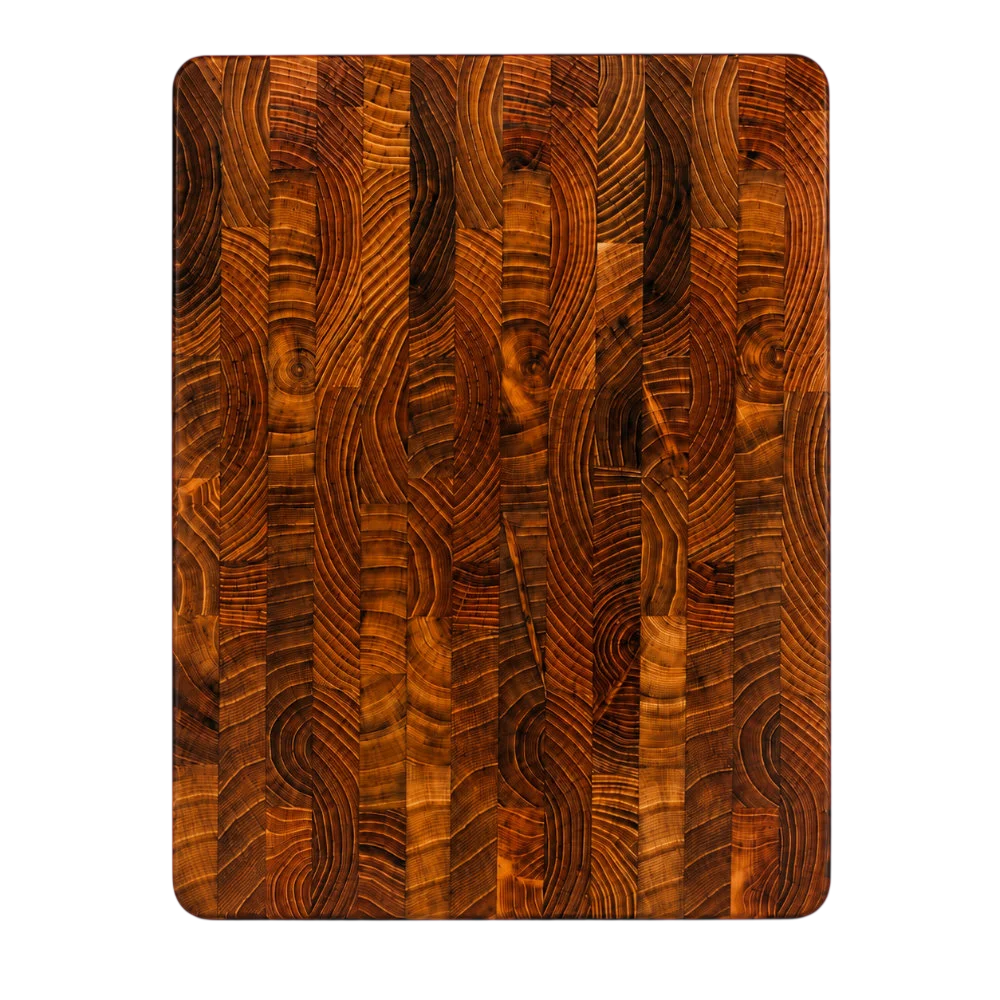
A stable cutting surface changes how a loaf slices. Wood absorbs the pressure of each cut and keeps the crust from sliding. A solid teak board gives every slice a steady base, from the first cut to the last, and holds up to daily use far better than thin plastic boards.
★★★★★
Lilly Teak — Handmade Teak Cutting Board with Plant-Based Finish
Handcrafted · Sustainable · Zero Plastic
The Lilly Teak cutting board is everything we look for in a kitchen essential: carved from solid teak, hand-shaped for durability, and finished with a 100% plant-based oil that keeps your board food-safe without a trace of synthetic sealant. Each board carries its own natural grain pattern — no two are ever identical.
- Solid teak cutting surface
- Hand-shaped & finished
- Gentle on knife edges
- 100% solid teak wood
- Plant-based food-safe finish
- Sustainably sourced wood
From Hearth To Table
The History of Slicing Bread
Bread slicing is an old skill. Bakers cut loaves by hand for thousands of years, using flat stones, then metal blades, to portion loaves for a table. The serrated bread knife did not appear until the 1900s. Before that, bakers used straight blades and a firm sawing motion to work through thick crusts. Wood boards existed long before that, since a hard, flat surface was the simplest way to protect a table from a blade.
Sourdough itself dates back further than most bread styles. Ancient Egyptian bakers used wild yeast to leaven dough, long before commercial yeast existed. That long fermentation built the dense, chewy crumb sourdough is known for today. Slicing it well takes the same patience the baking process demands. A rushed cut on a fresh loaf undoes hours of proofing and baking in seconds.
Clean Cuts
Wood absorbs pressure and prevents the crust from sliding under the blade.
Natural Material
Teak resists moisture and will not warp like softer woods over time.
Counter Protection
A solid board keeps knife marks off your countertop surface.
Balanced Weight
A solid teak board sits flat on the counter and will not shift mid-cut.
Long Lifespan
the counter and will not shift mid-cut.Teak holds up to years of cutting, slicing, and everyday kitchen use.
Sustainable Choice
Sustainably sourced wood supports a lower-impact kitchen setup.
Each of these benefits builds on the last. A stable board leads to cleaner cuts. Cleaner cuts protect your knife edge. A protected edge lasts longer, and a wood board that lasts longer saves money over time compared to boards that need replacing every year or two.
"I bake sourdough every weekend, and switching to a wood board changed how my loaves slice. The crust stays put and the crumb holds together. It looks like a bakery loaf now."
— Lauren B.
Our Top Pick
Bring The Right Board To The Table
By the midpoint of any baking routine, the surface under your knife matters as much as the blade. A wobbly board shifts under pressure and turns a clean cut into a messy one. A solid teak board removes that problem and speeds up the whole slicing process, whether you bake once a week or every day.
★★★★★
Lilly Teak — Handmade Teak Cutting Board with Plant-Based Finish
Handcrafted · Sustainable · Zero Plastic
The Lilly Teak cutting board is everything we look for in a kitchen essential: carved from solid teak, hand-shaped for durability, and finished with a 100% plant-based oil that keeps your board food-safe without a trace of synthetic sealant. Each board carries its own natural grain pattern — no two are ever identical.
- Solid teak cutting surface
- Hand-shaped & finished
- Gentle on knife edges
- 100% solid teak wood
- Plant-based food-safe finish
- Sustainably sourced wood
Choose Your Blade
Bread Knives vs Other Cutting Tools
Different tools produce different results on a sourdough loaf. The table below compares four common options.
|
Tool |
Blade Type |
Best For |
Care Needed |
|---|---|---|---|
|
Teak Cutting Board |
N/A — support surface |
Stabilizing the loaf during any cut |
Oil monthly, hand wash only |
|
Serrated Bread Knife |
Long, wavy edge |
Slicing thick, crusty loaves |
Hand wash, dry fully |
|
Chef's Knife |
Straight, smooth edge |
Soft bread, sandwich loaves |
Sharpen regularly |
|
Electric Knife |
Motorized serrated blade |
Large batches, uniform slices |
Clean blade after each use |
A serrated bread knife works best for sourdough. The teeth grip the crust without crushing it. A straight-edge chef's knife struggles with the same crust and tends to flatten the crumb instead of cutting through it cleanly.
The board underneath matters just as much as the blade on top. A teak surface grips the loaf and keeps it from sliding during each stroke. This lowers the risk of an uneven cut and keeps your hand steady the whole way through. A softer board, or a hard surface like glass, can dull a blade faster and offers less traction under the loaf.
Keep It Sharp
How to Care for Your Bread Knife and Board
Proper care extends the life of both your knife and your cutting surface. Follow these steps after each use:
- Wipe the board with a damp cloth right after cutting.
- Avoid soaking wood in water at any point.
- Dry the surface fully before storing it upright.
- Oil the board once a month with a food-safe finish.
- Wash the knife by hand and dry it right away.
- Store the knife in a block or sheath to protect the edge.
- Check for cracks each season and re-oil sooner if the wood looks dry.
Skip the dishwasher for any wood tool. Heat and prolonged moisture cause cracking and warping. A monthly oil treatment keeps the wood sealed and resistant to daily wear, and a quick seasonal check catches small issues before they turn into deep cracks.
Make The Right Choice
Steps to Pick Your Slicing Setup
Follow this short process to choose the right tools for your kitchen:
- Check your crust thickness. Thick, crackling crusts need a serrated blade.
- Measure your counter space. A board should fit your prep area without crowding it.
- Pick a durable wood. Teak resists water damage better than softer wood types.
- Test the board's stability. A heavier, hand-shaped board stays put during firm cuts.
- Confirm the finish is food-safe. A plant-based oil finish keeps the board safe for daily use.
- Buy a board built to last. A solid teak board outlasts thinner boards made from softer wood.
Our Top Pick
One Board For Every Bread Day
A sourdough loaf deserves a proper finish. The right board turns a rough cut into a clean, bakery-style slice every time, and it keeps doing the job long after cheaper boards have cracked or warped.
★★★★★
Lilly Teak — Handmade Teak Cutting Board with Plant-Based Finish
Handcrafted · Sustainable · Zero Plastic
The Lilly Teak cutting board is everything we look for in a kitchen essential: carved from solid teak, hand-shaped for durability, and finished with a 100% plant-based oil that keeps your board food-safe without a trace of synthetic sealant. Each board carries its own natural grain pattern — no two are ever identical.
- Solid teak cutting surface
- Hand-shaped & finished
- Gentle on knife edges
- 100% solid teak wood
- Plant-based food-safe finish
- Sustainably sourced wood
FAQ
A serrated bread knife cuts sourdough best. The teeth grip the tough crust and glide through the soft crumb without tearing it. A long blade also helps you finish each cut in one smooth stroke instead of sawing back and forth.
Yes. Wait at least one hour after baking. A hot loaf has a soft, unset crumb that tears easily under a blade. Cooling lets the crumb structure firm up, which gives you cleaner, more even slices.
A dull blade or a straight-edge knife usually causes tearing. Switch to a sharp serrated knife for cleaner results, and check that your cutting surface stays steady during the cut.
A solid wood board, like teak, grips the crust and absorbs pressure. This keeps the loaf steady during each cut and protects the blade edge better than a hard surface like glass or stone.
Oil the board once a month. Regular oiling prevents cracking and keeps the surface food-safe. Boards used daily may need oiling a little more often, especially in dry climates.
Yes. An electric knife works well for large batches and produces uniform slices with less effort per cut. It still needs a stable board underneath to work safely and cleanly.
Final Verdict
Slicing sourdough well comes down to three things: a sharp serrated blade, a steady wood surface, and a cooled loaf. Skip any one of these, and the crumb suffers. A dull knife tears the bread no matter how good the board is, and a wobbly board ruins even the sharpest cut.
A handmade teak cutting board gives every loaf the steady surface it needs. It holds up to years of use, resists moisture, and gives every slice a clean, even finish. Pair it with a sharp serrated knife, let your loaf cool, and each slice will match the quality of the bread itself.
Every good slice starts with the right tools in hand.🌿