
Bamboo vs. Olive Wood Utensils

A Brief History of Each Material
Bamboo has been used as a kitchen material for thousands of years. Its origins trace back to East and Southeast Asia, where craftspeople harvested bamboo stalks for cooking tools, cutting boards, and containers. Bamboo grew fast and was cheap to source. It became a staple material in Chinese, Japanese, and Vietnamese kitchens long before stainless steel existed.
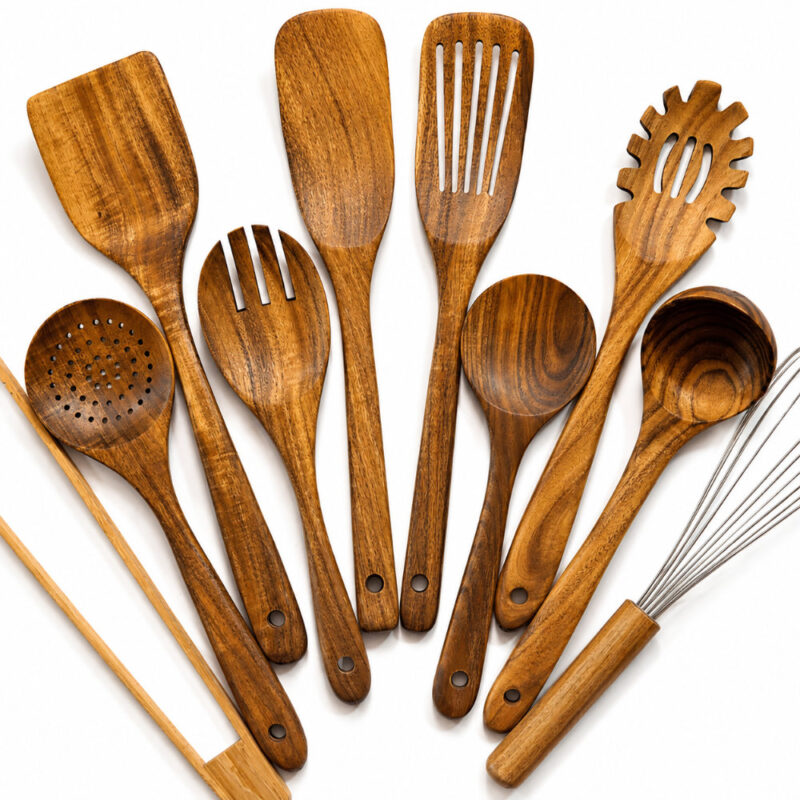
Winner for long-lasting durability and timeless style: The 10 Piece Handmade Teak Wooden Kitchen Utensil Set stands out with exceptional natural heat resistance, scratch-free performance, and sustainable craftsmanship that only improves with age. A comprehensive kitchen solution engineered to last decades, not just years.
Olive wood has an equally deep history, but on a different continent. Mediterranean civilizations — particularly in Italy, Greece, Tunisia, and Spain — prized olive trees for their fruit, their oil, and their timber. When olive trees stopped producing fruit after decades of growth, artisans repurposed the dense, gnarled wood into tools and household items. Olive wood utensils appear in ancient Roman kitchens and have never gone out of style since.
Both materials carry centuries of practical use. Both are plant-based and biodegradable. Beyond that, they differ in almost every measurable way.
What Is Bamboo, Technically?
Bamboo is not a tree. It is a grass. This distinction matters for understanding its properties.
Bamboo stalks are composed of tightly compressed cellulose fibers. When manufacturers process bamboo into utensils, they either carve individual stalks or press and laminate strips of bamboo together using heat and adhesive. The laminated process — used for most flat items like spatulas and cutting boards — bonds the fibers with food-safe glues.
Key technical properties of bamboo:
- Density: 500–800 kg/m³ (varies by species and processing)
- Hardness: 1,380 lbf on the Janka scale (harder than many hardwoods)
- Moisture resistance: Low to moderate; bamboo absorbs water quickly if unsealed
- Natural antimicrobial agents: Contains bamboo kun, a natural bio-agent with mild antimicrobial properties
- Renewability: Bamboo matures in 3–5 years versus 25–50 years for hardwood trees
Bamboo utensils are typically light in weight. They have a pale, uniform color with fine grain lines running lengthwise.
What Is Olive Wood, Technically?
Olive wood is a true hardwood harvested from Olea europaea, the common olive tree. It is one of the densest and hardest woods available for kitchenware.
Unlike bamboo, olive wood is harvested from the core of mature trees. The wood develops complex, interlocking grain patterns. No two pieces look the same. This variation happens because olive trees grow slowly, sometimes for hundreds of years, and the grain follows the tree’s irregular growth pattern.
Key technical properties of olive wood:
- Density: 900–1,000 kg/m³ (denser than bamboo and most hardwoods)
- Hardness: 2,700 lbf on the Janka scale (nearly twice as hard as bamboo)
- Moisture resistance: High; dense cell structure repels water more effectively
- Natural oils: Contains natural resins and oils that self-condition the wood over time
- Renewability: Slow-growing; sourced primarily from end-of-life or pruned trees to avoid deforestation
Olive wood utensils are heavier and warmer in color. The grain ranges from straight to wildly wavy, and tones shift from pale cream to golden amber to deep brown.
Head-to-Head Comparison
| Feature | Bamboo | Olive Wood |
|---|---|---|
| Material type | Grass (processed) | Hardwood |
| Janka hardness | ~1,380 lbf | ~2,700 lbf |
| Density | 500–800 kg/m³ | 900–1,000 kg/m³ |
| Weight | Light | Heavy |
| Grain appearance | Uniform, linear | Variable, decorative |
| Natural antimicrobials | Yes (bamboo kun) | Mild (natural resins) |
| Water resistance | Moderate | High |
| Scratch resistance | Moderate | High |
| Odor absorption | Higher | Lower |
| Price range | $ (budget-friendly) | $$–$$$ (mid to premium) |
| Eco credential | Highly renewable | Sustainably sourced |
| Longevity (with care) | 2–5 years | 10–20+ years |
How Each Material Performs in the Kitchen
Bamboo Utensils in Daily Use
Bamboo tools are lightweight. This makes them easy to hold for long stirring or flipping sessions. The lighter weight is especially noticeable with slotted spoons, whisks, and long-handled spatulas.
Bamboo is scratch-resistant enough for non-stick surfaces. It will not gouge a coated pan the way metal tools do. However, bamboo is more porous than olive wood. It absorbs cooking odors and strong flavors over time — particularly garlic, onion, and chili. Users often notice this after repeated washing.
Laminated bamboo products are more prone to splitting at the glue seams if submerged in water or exposed to repeated cycles of heat and moisture. Solid-carved bamboo pieces perform better but are harder to find.
Bamboo tools are ideal for:
- High-volume, everyday cooking
- Non-stick cookware protection
- Light stirring and serving tasks
- Cooks on a strict budget
Olive Wood Utensils in Daily Use
Olive wood tools feel substantial in the hand. The density gives each piece a satisfying weight that many cooks prefer for tasks requiring control — folding dough, scraping a fond from a pan, or pressing garlic.
Olive wood does not absorb odors or flavors at the same rate as bamboo. Its tightly packed grain resists moisture penetration. This means fewer bacteria can take hold in micro-scratches on the surface.
The natural oils in olive wood help the material self-condition with use. The more you cook with an olive wood spoon, the better it performs. Many users report that pieces improve in appearance over months of regular use.
Olive wood tools are ideal for:
- High-temperature stovetop cooking
- Cooks who value aesthetics and heirloom quality
- Heavy-duty stirring, scraping, and folding
- Long-term investment in kitchen tools
Winner for long-lasting durability and timeless style: The 10 Piece Handmade Teak Wooden Kitchen Utensil Set stands out with exceptional natural heat resistance, scratch-free performance, and sustainable craftsmanship that only improves with age. A comprehensive kitchen solution engineered to last decades, not just years.
Maintenance Requirements
Caring for Bamboo Utensils
Bamboo requires consistent, simple maintenance. Neglect shortens its lifespan quickly.
- Hand wash only. Never place bamboo in a dishwasher. The heat and prolonged moisture warp and crack the fibers.
- Dry immediately. Pat dry after washing and store in a dry drawer or utensil holder.
- Oil periodically. Apply food-grade mineral oil or beeswax conditioner every 1–2 months. This slows moisture absorption and reduces splitting risk.
- Avoid soaking. Even brief submersion weakens laminated bamboo joints over time.
Well-maintained bamboo utensils last 2–5 years under regular use. Budget sets may need replacement sooner.
Caring for Olive Wood Utensils
Olive wood is forgiving but still requires proper care to reach its full potential lifespan.
- Hand wash only. Like bamboo, olive wood should never enter a dishwasher. High heat causes cracking.
- Dry immediately. Wipe dry right after washing. Do not let pieces soak in the sink.
- Oil regularly. Use food-grade mineral oil, olive oil, or a dedicated wood conditioner. Apply monthly for the first year, then every 2–3 months after the wood is seasoned.
- Sand lightly when needed. Fine-grit sandpaper (220 grit) smooths rough spots or superficial cracks. Follow with oiling afterward.
Properly cared for olive wood utensils last 10–20 years or longer. Many become family heirlooms.
Environmental Impact
Both materials carry genuine eco credentials, but they differ in important ways.
Bamboo is one of the fastest-growing plants on Earth. Some species grow up to 90 cm per day. It requires no pesticides, regenerates from its own root system, and produces more oxygen per acre than most trees. From a renewable-resource perspective, bamboo scores extremely high.
The concern with bamboo products is processing. Most bamboo kitchenware is manufactured overseas, and the laminating process uses adhesives. Not all manufacturers use food-safe, formaldehyde-free adhesives. Buyers should verify certifications such as FSC (Forest Stewardship Council) or OEKO-TEX before purchasing.
Olive wood is slow-growing, but most commercial olive wood kitchenware comes from trees that have been pruned or have reached the end of their fruit-bearing life. This avoids deforestation entirely. The material is harvested from existing agricultural cycles rather than dedicated timber plantations.
Olive wood products are typically made in small workshops across southern Europe and North Africa. The shorter supply chain and absence of synthetic adhesives make olive wood a clean material from production to end of life.
Price and Value Analysis
Bamboo utensils are consistently cheaper. A full set of bamboo kitchen tools typically costs between $10 and $30. Individual pieces run from $2 to $10 each. The lower price reflects both the speed of production and the lower cost of raw materials.
Olive wood utensils cost significantly more. A single handcrafted olive wood spoon can cost $15–$40. Full sets reach $60–$150 or more. The price reflects the slow growth of the raw material, the skilled craftsmanship required to shape irregular grain, and the longer expected lifespan.
Viewed through a cost-per-year lens, the gap narrows. A $25 bamboo set replaced every three years costs roughly $8.33 per year. A $75 olive wood set lasting fifteen years costs $5 per year — and often retains aesthetic and functional value far longer.
How to Choose the Right Utensil for Your Kitchen
Follow these steps to make the right decision:
- Set your budget first. If you need tools immediately and have limited funds, bamboo delivers solid performance at low cost.
- Assess your cookware. If you use non-stick pans exclusively, bamboo or olive wood both work well. For cast iron or stainless steel, olive wood’s weight and durability give it an edge.
- Consider how you cook. High-volume, daily cooking puts more wear on utensils. Olive wood handles this better over time.
- Think about aesthetics. Bamboo has a clean, modern look. Olive wood has a warm, artisan character. Choose what complements your kitchen.
- Check sourcing and certifications. For bamboo, look for FSC-certified or formaldehyde-free adhesive labels. For olive wood, look for handcrafted, sustainably sourced labeling from reputable producers.
- Decide on longevity. If you prefer to buy once and buy well, olive wood is the clear choice. If you prefer affordable replacements, bamboo suits that preference.
The Bottom Line
Bamboo and olive wood both belong in the conversation about sustainable, natural kitchen tools. Bamboo wins on price, weight, and renewability. Olive wood wins on durability, density, moisture resistance, and long-term value.
Your cooking style, budget, and values determine which material fits your kitchen. Neither choice is wrong. Both are far better options than plastic or synthetic tools that shed microparticles into food.
Choose bamboo if you want affordable, lightweight, eco-friendly tools that perform well for everyday tasks. Choose olive wood if you want a durable, beautiful, long-lasting tool that improves with age and use.
Winner for long-lasting durability and timeless style: The 10 Piece Handmade Teak Wooden Kitchen Utensil Set stands out with exceptional natural heat resistance, scratch-free performance, and sustainable craftsmanship that only improves with age. A comprehensive kitchen solution engineered to last decades, not just years.