
What Is the Safest Cutting Board Material?

"The safest cutting board material isn't simply the cheapest or most convenient option. It should protect your food, preserve your knives, resist bacterial buildup, and provide years of reliable performance. Understanding how different materials compare can help you make a healthier and more sustainable choice for your kitchen."
When people think about kitchen safety, they often focus on cookware, food storage containers, or the ingredients they purchase. Yet one of the most frequently used food-contact surfaces in any kitchen is the cutting board. Nearly every meal begins on this simple tool, making it one of the most important pieces of equipment for food preparation.
The material your cutting board is made from can influence food safety, bacterial growth, knife performance, environmental impact, and even the lifespan of the board itself. As awareness grows around issues such as microplastics and non-toxic kitchen products, more consumers are evaluating the materials they bring into their homes.
Bacteria Resistance
Supports cleaner food preparation
Food Safety
Protects ingredients from contamination
Knife Protection
Preserves blade performance
With options ranging from plastic and bamboo to hardwoods and composite materials, choosing the right board can feel overwhelming. The safest cutting board material is one that provides an effective balance of hygiene, durability, knife friendliness, and long-term reliability.
Our Top Pick
Built for Everyday Use. Crafted for a Lifetime.
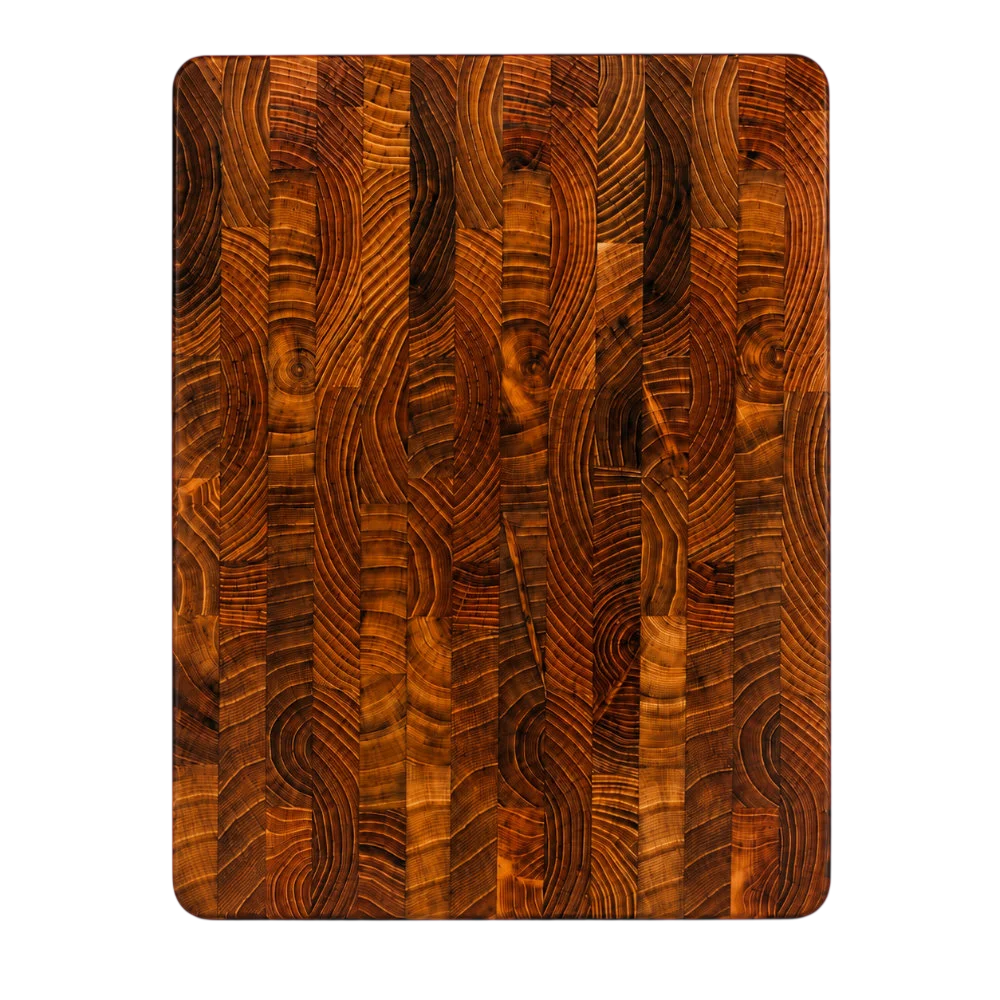
The Handmade Teak Cutting Board with Plant-Based Finish is made from premium teak hardwood known for its durability, moisture resistance, and naturally gentle surface. Its handcrafted construction reduces waste while adding warmth to every kitchen.
★★★★★
Lilly Teak — Handmade Teak Cutting Board with Plant-Based Finish
Handcrafted · Sustainable · Zero Plastic
The Lilly Teak cutting board is everything we look for in a kitchen essential: carved from solid teak, hand-shaped for durability, and finished with a 100% plant-based oil that keeps your board food-safe without a trace of synthetic sealant. Each board carries its own natural grain pattern — no two are ever identical.
- Solid teak cutting surface
- Hand-shaped & finished
- Gentle on knife edges
- 100% solid teak wood
- Plant-based food-safe finish
- Sustainably sourced wood
How Material Choice Impacts Food Safety
UNDERSTANDING CUTTING BOARD SAFETY
A cutting board serves as the foundation for nearly every food preparation task. Vegetables, fruits, meats, herbs, breads, and countless other ingredients all spend time on this surface before reaching your plate.
Because of this constant contact with food, cutting board materials should be evaluated carefully. Safety involves more than simply cleaning a board after use. The surface must withstand repeated knife impacts, exposure to moisture, temperature changes, and years of daily wear.
Several factors determine whether a cutting board can be considered safe. These include food-contact safety, bacterial resistance, durability, maintenance requirements, environmental impact, and the potential release of unwanted particles into food.
A high-quality board should support all of these goals simultaneously. The best materials maintain their integrity over time while remaining easy to clean and comfortable to use.
Food Contact Safety
Designed for direct food preparation.
Hygiene
Helps maintain a clean workspace.
Durability
Built for long-term daily use.
Sustainability
Reduces unnecessary replacement.
Knife Friendliness
Protects cutting edges.
Reliability
Consistent performance over time.
"The best cutting board isn't necessarily the newest trend—it's the one that remains safe, durable, and functional after years of use."
— James R., Culinary Enthusiast
A Side-by-Side Look at the Most Popular Options
COMMON CUTTING BOARD MATERIALS COMPARED
Today's market offers a wide variety of cutting board materials, each with unique strengths and weaknesses. Understanding these differences makes it easier to identify which options align with your priorities.
Plastic cutting boards remain one of the most common choices due to affordability and dishwasher compatibility. Their lightweight design and low cost make them popular among home cooks.
However, plastic surfaces gradually develop knife scars and grooves. Over time, these marks become more difficult to clean and may require replacement of the board altogether.
Bamboo cutting boards are frequently marketed as environmentally friendly alternatives. Bamboo grows quickly and offers a renewable source of material for kitchen products.
While bamboo can be durable, its hardness varies significantly between manufacturers. Some bamboo boards may be harder on knife edges than traditional hardwood options.
Composite cutting boards combine wood fibers with resins to create durable surfaces. These products often provide low-maintenance convenience but may sacrifice some of the knife-friendly characteristics found in natural hardwood boards.
Our Top Pick
Everyday Durability, Handcrafted with Care.
This teak cutting board is shaped from premium hardwood prized for its strength, natural moisture resistance, and smooth, knife-friendly surface. Finished with a plant-based coating and handcrafted from start to finish, it brings lasting durability and warmth to any kitchen.
★★★★★
Lilly Teak — Handmade Teak Cutting Board with Plant-Based Finish
Handcrafted · Sustainable · Zero Plastic
The Lilly Teak cutting board is everything we look for in a kitchen essential: carved from solid teak, hand-shaped for durability, and finished with a 100% plant-based oil that keeps your board food-safe without a trace of synthetic sealant. Each board carries its own natural grain pattern — no two are ever identical.
- Solid teak cutting surface
- Hand-shaped & finished
- Gentle on knife edges
- 100% solid teak wood
- Plant-based food-safe finish
- Sustainably sourced wood
Examining the Facts Behind a Trusted Kitchen Classic
ARE WOODEN CUTTING BOARDS SAFE?
One of the most persistent myths in kitchen safety is the belief that wood cutting boards are less sanitary than plastic alternatives. Modern research has challenged this assumption.
Studies have shown that certain wooden cutting boards can naturally reduce bacterial survival compared with heavily scarred plastic surfaces. The structure of hardwood interacts with moisture differently than plastic, creating conditions that may be less favorable for bacterial persistence. This is one reason many chefs consider hardwood species among the best wood for cutting boards when balancing food safety, durability, and everyday performance.
While no cutting board should ever be considered self-cleaning or self-sanitizing, hardwoods possess characteristics that contribute to safe food preparation when maintained properly.
Many hardwood species contain naturally occurring compounds that may help inhibit microbial growth. Combined with proper cleaning practices, these properties make wooden cutting boards a highly respected choice among culinary professionals. Proper maintenance remains essential regardless of material, and learning how to clean a wooden cutting board correctly can help extend its lifespan while supporting safe food preparation.
The key factor is maintenance. Any cutting board, regardless of material, becomes unsafe when neglected. Regular cleaning, drying, and inspection remain essential.
Naturally Durable
Built to withstand years of use.
Repairable Surface
Can often be refinished.
Reduced Waste
Long lifespan minimizes disposal.
Attractive Appearance
Enhances kitchen aesthetics.
Professional Choice
Trusted by chefs worldwide.
Long-Term Value
Excellent investment over time.
Exceptional Durability, Natural Resistance, and Lasting Performance
WHY TEAK STANDS OUT
Among hardwood options, teak cutting boards consistently rank as some of the most desirable kitchen surfaces available. Their unique characteristics provide an ideal combination of food safety, moisture resistance, durability, and knife-friendly performance, making teak one of the best wood for cutting boards for long-term household use.
Teak contains naturally occurring oils that help resist moisture absorption. This contributes to improved dimensional stability and reduces the likelihood of warping or cracking.
Its dense grain structure creates a durable cutting surface capable of handling years of daily food preparation.
Unlike some harder materials that rapidly dull knife edges, teak offers an effective balance between strength and resilience. Blades can cut efficiently while experiencing less wear.
The material's durability often translates into exceptional long-term value. While the initial investment may be higher than plastic alternatives, many teak cutting boards remain functional for a decade or longer when properly maintained, reducing replacement costs and household waste over time.
For households seeking a premium non-toxic cutting board solution, teak cutting boards provide one of the strongest combinations of performance, longevity, and food safety available today. Consumers comparing teak vs bamboo cutting boards often choose teak for its superior moisture resistance, dimensional stability, and long-term durability.
Comparing Hygiene, Longevity, and Everyday Use
WOOD VS. PLASTIC CUTTING BOARDS
Discussions surrounding plastic cutting board safety have evolved considerably over the past decade. For many years, plastic cutting boards were widely considered the safest option because they could be sanitized in a dishwasher. While dishwasher compatibility remains a legitimate advantage, researchers and consumers are increasingly examining the long-term effects of wear, hygiene, and material degradation.
Plastic boards inevitably accumulate cuts and grooves through normal use. These grooves can trap food particles and become increasingly difficult to clean completely.
Researchers have also raised questions regarding the creation of microscopic plastic particles as boards wear over time. While studies continue to evaluate the significance of this exposure, concerns about plastic cutting board safety have encouraged many consumers to explore natural alternatives such as hardwood boards that do not shed synthetic particles during normal use.
Hardwood boards, particularly teak, maple, and walnut, often provide greater longevity and maintain a more attractive appearance throughout their lifespan.
For many households, the combination of durability, sustainability, and knife protection makes hardwood the preferred long-term solution.
Understanding the Risks of Less Suitable Surfaces
MATERIALS TO AVOID
Not every cutting board material provides the same level of performance or safety. Some options present drawbacks that outweigh their advantages.
Glass cutting boards are among the most commonly criticized choices. While non-porous and easy to clean, their extreme hardness can severely damage knife edges.
Deeply scarred plastic boards should also be replaced promptly. Excessive wear can compromise cleaning effectiveness and reduce overall hygiene.
Consumers should also avoid poorly manufactured wood boards that use unknown finishes, questionable adhesives, or rough unfinished surfaces.
Key Features to Look for Before You Buy
HOW TO CHOOSE A NON-TOXIC CUTTING BOARD
When evaluating a cutting board, begin by verifying that all finishes and treatments are food-safe and intended for direct food contact.
Dense hardwoods such as teak, maple, and walnut consistently rank among the safest materials due to their durability and performance. In fact, these species are frequently recommended as the best wood for cutting boards because they provide an excellent balance of strength, food safety, moisture resistance, and knife protection.
Responsible sourcing is another important consideration. Products made from sustainably managed forests help support environmental stewardship while ensuring quality materials.
Maintenance should never be overlooked when evaluating a cutting board. Understanding how to clean a wooden cutting board properly—including washing with mild soap, drying thoroughly, and periodically conditioning the surface with food-safe oil—can significantly improve both hygiene and longevity.
Our Top Pick
Made for Daily Prep. Built to Last for Years.
Crafted from solid teak hardwood, this handmade cutting board resists moisture, stands up to daily use, and stays gentle on your knife edges. A plant-based finish keeps it free from harsh chemicals while adding natural warmth to your kitchen.
★★★★★
Lilly Teak — Handmade Teak Cutting Board with Plant-Based Finish
Handcrafted · Sustainable · Zero Plastic
The Lilly Teak cutting board is everything we look for in a kitchen essential: carved from solid teak, hand-shaped for durability, and finished with a 100% plant-based oil that keeps your board food-safe without a trace of synthetic sealant. Each board carries its own natural grain pattern — no two are ever identical.
- Solid teak cutting surface
- Hand-shaped & finished
- Gentle on knife edges
- 100% solid teak wood
- Plant-based food-safe finish
- Sustainably sourced wood
Final Verdict
After comparing all major cutting board materials, hardwood boards remain the safest overall choice for most households. They offer an exceptional balance of hygiene, durability, knife protection, sustainability, and long-term value.
Plastic boards remain useful for certain applications and offer dishwasher convenience, but concerns surrounding wear and potential microplastic generation continue to drive interest in natural alternatives.
Glass boards are durable yet harsh on knives. Bamboo offers sustainability benefits but varies greatly in quality. Composite materials provide convenience but lack some of the advantages found in premium hardwoods.
For consumers seeking the safest cutting board material, quality wooden cutting boards consistently lead the field. Teak, maple, and walnut remain top choices among experts and home cooks alike, with many professionals considering them the best wood for cutting boards because of their durability, food safety characteristics, and long-term value.
Among these options, teak cutting boards stand out for their moisture resistance, dense grain structure, durability, and knife-friendly performance. For buyers comparing teak vs bamboo cutting boards, teak often delivers superior longevity and dimensional stability. A well-crafted teak cutting board offers one of the strongest combinations of food safety, sustainability, and long-term value available today.
Small swaps, big impact. Your kitchen, your choices, your legacy. 🌿