FREE WORLDWIDE SHIPPING

Teak vs. Olive Wood Utensils: Pros and Cons

"A spoon is the tool your hand uses most in the kitchen. Teak and olive wood both make beautiful ones, but they behave differently under steam, soap, and years of stirring. This guide compares history, hardness, care, and cost so you can choose the wood that fits your cooking."
Wooden utensils protect your cookware and feel good in the hand. Teak and olive wood are two of the most popular choices. Both look beautiful. Both last for years. They differ in hardness, moisture behavior, price, and upkeep.
Teak is a golden-brown hardwood rich in natural oils. Olive wood is a dense, swirled hardwood from Mediterranean groves. The right pick depends on how you cook, how you wash, and how much care you want to give. This guide covers Janka hardness, water resistance, maintenance, and cost.
Teak's Natural Oils
WATER-RESISTANT BY NATURE
Olive Wood Density
DENSE, STRIKING GRAIN
Simple Care Routine
MONTHLY OILING KEEPS SHINE
The sections below cover history, specifications, pros and cons, and care. A short selection checklist closes the guide. Each section focuses on the facts that change your buying decision, so you can compare both woods quickly and choose with confidence.
🌿
Our Top Pick
Start With a Teak Foundation
Utensils work best beside a surface that matches them. This teak board shares the same oils and warm grain that make teak utensils last. It handles daily chopping and stays gentle on your knives. A matched teak board and teak utensils also age together, so your kitchen develops one consistent look.
✦ Editor's Pick ✦
★★★★★
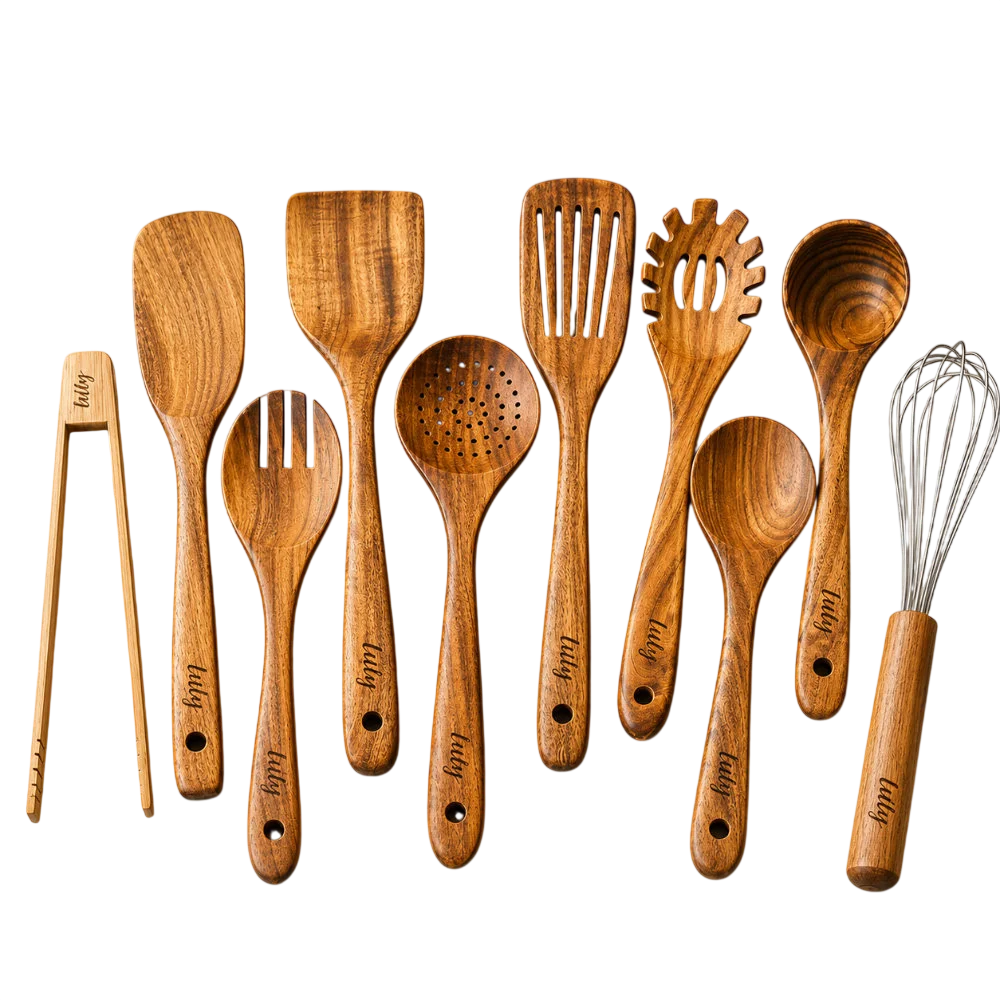
Lilly Teak — 10 Piece Handmade Utensil Set
Handcrafted · Sustainable · Zero Plastic
The Lilly Teak 10-piece set is everything we look for in a kitchen essential: beautifully crafted from solid teak, shaped by hand for an ergonomic feel, and designed to serve your family for decades. Each piece is unique, with its own natural grain pattern — no two sets are ever identical.
- 10 essential kitchen tools
- Hand-shaped & finished
- Non-scratch on all cookware
- 100% solid teak wood
- Food-safe oil treatment
- Sustainably sourced wood
🌿
FROM SHIPYARDS TO ORCHARDS
History of Each Wood
Teak (Tectona grandis) grows across South and Southeast Asia. Shipbuilders prized it for centuries. Its natural oils and tight grain resisted rot and salt water. Builders used teak for ship decks, temple beams, and fine furniture long before it reached home kitchens. Cooks adopted it because water does not damage it the way it damages softer woods. Today, makers shape teak into spoons, spatulas, and boards that handle steam, splashes, and daily washing.
Olive wood (Olea europaea) comes from trees that Mediterranean farmers have cultivated for thousands of years. Growers harvest the wood when old trees stop producing fruit or need pruning. Craftspeople turned the twisted trunks into bowls and spoons. The dense, swirled grain became a signature of Mediterranean tableware. Each piece shows a different pattern, so collectors value olive wood for its look as much as its performance.
🌿
HONEST STRENGTHS AND WEAKNESSES
Pros and Cons
Both woods outperform plastic and metal on cookware safety. Neither scratches nonstick coatings. Neither melts or leaches into hot food. Their differences appear in daily use, especially around water, weight, and price.
Teak Utensils
Pros
- Natural oils repel water and slow swelling.
- Lighter weight reduces wrist fatigue.
- Stable grain resists cracking after washing.
- Plantation supply keeps prices reasonable.
Cons
- Softer than olive wood, so it shows dents sooner.
- Needs regular oiling to keep its golden color.
- Grain looks straighter and less dramatic.
- Fresh pieces may need a first oiling at home.
Olive Wood Utensils
Pros
- Extreme hardness resists scratches and wear.
- Swirled grain makes each piece unique.
- Dense structure resists stains and odors.
Cons
- Costs more because small trunks yield few large pieces.
- Cracks if you soak it or use a dishwasher.
- Weighs more, which tires the hand during long stirring.
- Needs oiling more often than teak.
- Limited shapes, because twisted branches restrict size.
Teak suits busy kitchens that wash often. Olive wood suits cooks who value hardness and appearance and accept extra care.
🌿
SIX REASONS TEAK LASTS
Teak Benefits
Teak earns its place in busy kitchens through six practical strengths. Its natural oils repel water, and its stable grain resists splitting.
These traits keep utensils smooth, light, and pan-friendly. Each benefit applies directly to everyday stirring, flipping, and serving. One home cook describes the difference below.
💧
Water resistant
Natural oils repel moisture and slow swelling.
🍳
Pan safe
Smooth edges never scratch nonstick or steel.
🪶
Lightweight
Lower density eases long stirring sessions.
🛡️
Crack resistant
Stable grain resists splitting after washing.
♨️
Heat tolerant
Teak stays cool in the handle during simmering.
🌱
Sustainable
Teak comes from responsibly managed sources.
"I switched to teak spoons after my olive wood spatula cracked in the sink. These teak pieces survived months of daily washing and still look warm and smooth."
— Caroline B.
🌿
Our Top Pick
Choose Teak for Daily Prep
If you cook daily, durability and low upkeep matter most. A solid teak board delivers both. Its oil-rich grain resists moisture and keeps a clean, warm look through years of use. Hand shaping gives every board a solid feel, and the plant-based finish keeps the surface food-safe.
✦ Editor's Pick ✦
★★★★★
Lilly Teak — 10 Piece Handmade Utensil Set
Handcrafted · Sustainable · Zero Plastic
The Lilly Teak 10-piece set is everything we look for in a kitchen essential: beautifully crafted from solid teak, shaped by hand for an ergonomic feel, and designed to serve your family for decades. Each piece is unique, with its own natural grain pattern — no two sets are ever identical.
- 10 essential kitchen tools
- Hand-shaped & finished
- Non-scratch on all cookware
- 100% solid teak wood
- Food-safe oil treatment
- Sustainably sourced wood
🌿
THE NUMBERS BEHIND THE WOOD
Technical Specifications
Hardness, moisture behavior, and upkeep separate these woods most clearly. The table compares the three specifications that affect daily use. Janka hardness measures the force needed to push a steel ball into the wood, so higher numbers mean harder wood.
|
Specification |
Teak |
Olive Wood |
Better Choice |
|---|---|---|---|
|
Janka hardness |
About 1,000 lbf |
About 2,700 lbf |
Olive wood for scratch resistance |
|
Moisture resistance |
High, from natural oils |
Moderate, prone to cracking |
Teak for frequent washing |
|
Oiling schedule |
Monthly |
Every two to three weeks |
Teak for low upkeep |
Teak weighs less, and plantation supply keeps costs steady. Olive wood costs more because each tree yields small, irregular pieces. Olive wood is harder, but hardness does not equal durability in a wet kitchen. A utensil that cracks after a few washes fails faster than one that dents slightly. Teak's oils protect the fibers from repeated wetting, which keeps handles and bowls intact for years.
🌿
KEEP WOOD LOOKING NEW
Care Steps
Good care extends the life of any wooden utensil. Follow these steps weekly.
- Wash by hand with mild soap and warm water right after use. Food residue left on the wood can stain it.
- Never soak the utensil. Never use a dishwasher. Heat and standing water cause swelling and splits.
- Dry with a towel, then stand the utensil upright to air dry.
- Rub food-grade mineral oil or plant-based oil into the wood.
- Sand lightly with fine grit if the surface feels rough, then re-oil. Use about 220-grit paper and follow the grain.
🌿
PICK THE RIGHT WOOD
How to Choose
A clear selection process prevents costly mistakes. Follow these steps before every purchase.
- List the pans you use. Nonstick and stainless both pair well with wood.
- Check how often you wash. Frequent washing favors teak, because its oils resist moisture.
- Rank hardness against moisture resistance. Choose olive wood for hardness, teak for stability.
- Set a budget. Teak costs less per piece, so you can build a full set for the price of a few olive wood tools.
- Inspect the finish. Look for smooth edges, even oil, and no cracks.
- Choose solid, hand-shaped pieces from a maker that states its finish.
Quick match guide
- Daily cooks: Choose teak for easy washing and steady performance.
- Gift buyers: Choose olive wood for its dramatic grain, and include care instructions.
- Budget shoppers: Choose teak for the best value per piece.
- Nonstick users: Choose either wood, but avoid rough or chipped edges.
🌿
Our Top Pick
Finish Your Kitchen with Teak
You now know how teak and olive wood compare. If teak fits your kitchen, start with the board. Its plant-based finish keeps the surface food-safe and easy to refresh. A quick monthly oiling restores the color, so the board stays attractive beside your utensils.
✦ Editor's Pick ✦
★★★★★
Lilly Teak — 10 Piece Handmade Utensil Set
Handcrafted · Sustainable · Zero Plastic
The Lilly Teak 10-piece set is everything we look for in a kitchen essential: beautifully crafted from solid teak, shaped by hand for an ergonomic feel, and designed to serve your family for decades. Each piece is unique, with its own natural grain pattern — no two sets are ever identical.
- 10 essential kitchen tools
- Hand-shaped & finished
- Non-scratch on all cookware
- 100% solid teak wood
- Food-safe oil treatment
- Sustainably sourced wood
🌿
FAQ
Is teak or olive wood better for cooking utensils?
Teak suits most kitchens because it resists water and needs less care. Olive wood suits cooks who prefer a harder, more decorative utensil. Your washing habits should decide the winner.
Does olive wood crack more easily than teak?
Yes. Olive wood reacts strongly to soaking and dishwashers. Teak holds its shape better because natural oils repel moisture.
Are teak utensils safe for nonstick pans?
Yes. Smooth teak edges do not scratch nonstick coatings, stainless steel, or cast iron. Sand any rough spot to keep the edge smooth.
Can I put wooden utensils in the dishwasher?
No. Heat and long water exposure dry out the wood and cause splits. Wash by hand.
How often should I oil wooden utensils?
Oil teak monthly. Oil olive wood every two to three weeks. Oil sooner if the surface looks dry or pale. Use food-grade mineral oil or a plant-based oil.
Why is olive wood more expensive?
Olive trees grow slowly and produce small trunks. Makers get fewer usable pieces per tree, which raises the price.
🌿
Final Verdict
Teak wins for everyday cooking. It resists water, weighs less, costs less, and needs little upkeep. Olive wood wins for hardness and visual drama, but it demands careful washing and frequent oiling.
Match the wood to your habits. Busy cooks who wash daily should choose teak. Collectors who hand wash gently and oil often can enjoy olive wood. Either wood rewards care, and neither belongs in the dishwasher. Pair either choice with a solid teak board to complete a warm, lasting kitchen.
Choose wood that works as hard as you cook. 🌿