FREE WORLDWIDE SHIPPING

Teak vs. Bamboo Cutting Boards: Durability, Knife Care and Hygiene

"Every cook eventually asks which board deserves the counter space. Teak and bamboo both promise strength and style, but they handle knives, moisture, and time very differently. This guide compares durability, knife care, and hygiene side by side. Use it to choose the board that fits your kitchen."
Teak and bamboo are two of the most popular natural cutting board materials. Both avoid plastic. Both look good on a counter. They differ in hardness, construction, and water resistance.
Three factors separate the two materials. Durability decides how long the board lasts. Knife care decides how long your blades stay sharp. Hygiene decides how safely the board handles raw food.
Blade-Friendly Surface
TEAK GIVES UNDER BLADES
Glue Seam Risk
BAMBOO BOARDS USE ADHESIVE
Natural Water Resistance
TEAK OILS REPEL WATER
Lilly Teak builds its boards from solid, sustainable teak. This guide compares teak with bamboo, then shows you how to choose, clean, and maintain the right board.
🌿
Our Top Pick
Start With Solid Teak
Skip the guesswork. The Lilly Teak board brings solid teak, a plant-based finish, and hand-shaped craftsmanship to daily chopping.
✦ Editor's Pick ✦
★★★★★
Lilly Teak — Handmade Teak Cutting Board with Plant-Based Finish
Handcrafted · Sustainable · Zero Plastic
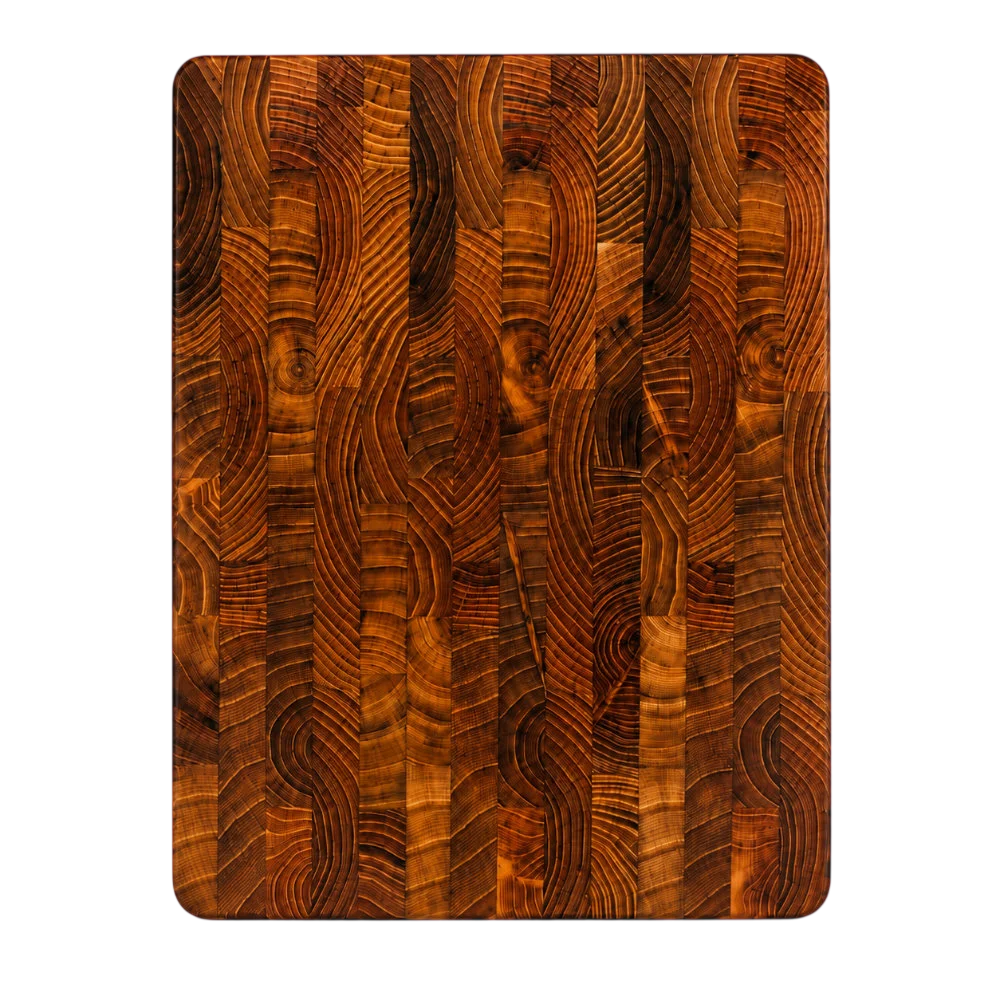
The Lilly Teak cutting board is everything we look for in a kitchen essential: carved from solid teak, hand-shaped for durability, and finished with a 100% plant-based oil that keeps your board food-safe without a trace of synthetic sealant. Each board carries its own natural grain pattern — no two are ever identical.
- Solid teak cutting surface
- Hand-shaped & finished
- Gentle on knife edges
- 100% solid teak wood
- Plant-based food-safe finish
- Sustainably sourced wood
🌿
FROM SHIP DECKS TO KITCHEN COUNTERS
Origins of Both Woods
Teak (Tectona grandis) grows in the tropical forests of South and Southeast Asia. Shipbuilders valued it for centuries because its natural oils resist water and rot. Craftsmen later carried teak into furniture and kitchenware. Its tight grain and oil content explain its long record in outdoor and marine use.
Bamboo is a fast-growing grass, not a tree. Cooks across Asia used it for utensils and boards for generations. Its fibrous structure makes it hard and dense, which changes how it feels under a knife. Laminated bamboo boards reached Western kitchens in recent decades, and shoppers embraced their low price and quick regrowth.
Growth rate shapes sustainability. Bamboo regrows within a few years, while teak plantations need decades. Responsible sourcing matters for both woods. Lilly Teak sources its teak from sustainable forests.
🌿
HARDNESS, GRAIN, AND LIFESPAN
Durability Compared
Key Specifications
The Janka scale measures how much force a wood resists before it dents. These specifications matter most:
- Teak: about 1,000 lbf. The surface yields slightly under a blade and recovers.
- Standard bamboo: about 1,300 to 1,400 lbf. Strand-woven bamboo can exceed 3,000 lbf.
- Lilly Teak board: 16.5" x 12" x 0.98" (41.9 x 30.5 x 2.5 cm), heat resistant to 200°C (392°F).
- Finish: Plant-based, food-safe, and free from synthetic sealant.
- Appearance: Golden-brown tones with darker grain lines. Every board shows a unique pattern.
Why Moisture Matters
Hardness does not equal longevity. Moisture is the main enemy of any wooden board. Water swells the fibers, and uneven drying causes warping. Teak's natural oils slow that cycle, so it resists warping and cracking.
Bamboo's dense fibers also resist water. However, bamboo boards depend on adhesive to hold their strips together, and seams can split after repeated washing. With proper care, a solid teak board keeps its structure for decades and can replace several cheaper boards.
Teak also ages gracefully. The golden-brown color deepens into a rich patina, and darker grain lines hide minor scratches from daily use.
🌿
WHAT BOARDS DO TO YOUR BLADES
Knife Care Differences
Every stroke drives the knife edge into the board. A harder surface resists the edge, so the blade rolls and dulls faster. Strand-woven bamboo sits at the hard end of that range. Teak sits lower, so its surface yields slightly and protects the edge.
Dull knives also cause accidents. A dull blade needs more force and slips more easily. Protecting the edge protects your hands. Wood also absorbs knife impact, which reduces hand fatigue during long prep sessions.
Follow these habits on any board:
- Hone your knife with a steel before each session.
- Slice with a smooth, drawing motion instead of hard chopping.
- Move food with the spine of the knife, not the edge.
- Sharpen on a whetstone when honing no longer restores the edge.
- Store knives in a block or on a magnet, not loose in a drawer.
Teak delivers six practical benefits in daily use:
🔪
Edge-friendly
Moderate hardness helps blades stay sharp longer.
💧
Water-resistant
Natural oils slow moisture absorption and warping.
🧼
Easy cleaning
Soap, warm water, and a towel take under two minutes.
🛡️
Crack-resistant
Dense grain holds up under daily chopping.
🔥
Heat-tolerant
The board withstands temperatures up to 200°C (392°F).
⏳
Ages well
The golden-brown tone deepens into a rich patina.
"I switched from bamboo and noticed my knives stay sharper. The teak feels warmer under the blade, and cleanup takes two minutes."
— Caroline H.
🌿
Our Top Pick
Upgrade Your Prep Surface
Chopping on teak means fewer dull blades and fewer warped boards. The Lilly Teak board delivers both in a 16.5-inch size that fits standard drawers and countertops.
✦ Editor's Pick ✦
★★★★★
Lilly Teak — Handmade Teak Cutting Board with Plant-Based Finish
Handcrafted · Sustainable · Zero Plastic
The Lilly Teak cutting board is everything we look for in a kitchen essential: carved from solid teak, hand-shaped for durability, and finished with a 100% plant-based oil that keeps your board food-safe without a trace of synthetic sealant. Each board carries its own natural grain pattern — no two are ever identical.
- Solid teak cutting surface
- Hand-shaped & finished
- Gentle on knife edges
- 100% solid teak wood
- Plant-based food-safe finish
- Sustainably sourced wood
🌿
CLEANING, MOISTURE, AND BACTERIA
Hygiene and Care
Both materials stay hygienic with proper cleaning. Dense bamboo absorbs little liquid. Teak's natural oils resist moisture, which limits the damp conditions bacteria need. Bamboo's glue seams can open over time and trap residue.
Cross-contamination matters more than the material. Wash any board with hot, soapy water after it touches raw meat, poultry, or fish. Use a separate board for produce when possible.
Daily Routine
- Wash the board with warm water and mild soap after each use.
- Dry it immediately with a clean towel.
- Stand it upright so air reaches both sides.
Never soak a board or run it through a dishwasher.
Deep Cleaning and Oiling
- Scrub stains and odors with coarse salt and half a lemon.
- Rinse the board and dry it completely.
- Before first use, coat the board with food-grade mineral oil. Let it absorb overnight, then wash it clean.
- Repeat the oiling monthly to keep the wood moist and prevent cracking.
The oiling step takes about five minutes. Dry the board where air circulates, and let all moisture evaporate before storing it. Sand away deep grooves lightly, then re-oil the board.
🌿
THE SIDE-BY-SIDE SCORECARD
Teak vs. Bamboo at a Glance
|
Factor |
Teak |
Bamboo |
Better Pick |
|---|---|---|---|
|
Durability |
Resists warping and cracking with oil |
Very hard, but glue seams can split |
Teak |
|
Knife care |
Moderate hardness protects edges |
Harder surface dulls edges faster |
Teak |
|
Hygiene |
Oils limit moisture absorption |
Dense surface absorbs little liquid |
Tie |
Teak wins on blade protection and long-term stability. Bamboo wins on upfront price and quick regrowth. Hygiene ends in a tie when you clean and dry each board properly. A durable board also saves money over time, because one teak board can replace several cheaper ones.
🌿
A SIMPLE BUYING CHECKLIST
How to Choose
Use this checklist before you buy any cutting board:
- Rank your priorities. Decide between blade life, upfront price, and low maintenance.
- Inspect the construction. Look for tight seams, even edges, and a smooth finish. Avoid gaps, which collect moisture and residue.
- Confirm the finish. Choose a plant-based, food-safe finish with no synthetic sealant.
- Measure your space. Match the board size to your counter and drawer.
- Check the thickness. A board near 2.5 cm (0.98") feels stable and resists warping.
- Plan for serving. A teak board doubles as a platter for cheese, bread, and charcuterie.
Teak performs well on every point above except upfront price. It protects blades, resists moisture, and needs only simple care.
🌿
Our Top Pick
Choose Teak With Confidence
You have compared the facts. Teak protects your knives, resists moisture, and ages well. Add the Lilly Teak board to your kitchen and prep on a surface built to last. A 30-day risk-free guarantee backs every order.
✦ Editor's Pick ✦
★★★★★
Lilly Teak — Handmade Teak Cutting Board with Plant-Based Finish
Handcrafted · Sustainable · Zero Plastic
The Lilly Teak cutting board is everything we look for in a kitchen essential: carved from solid teak, hand-shaped for durability, and finished with a 100% plant-based oil that keeps your board food-safe without a trace of synthetic sealant. Each board carries its own natural grain pattern — no two are ever identical.
- Solid teak cutting surface
- Hand-shaped & finished
- Gentle on knife edges
- 100% solid teak wood
- Plant-based food-safe finish
- Sustainably sourced wood
🌿
FAQ
Is teak better than bamboo for cutting boards?
Teak protects knife edges and resists moisture through natural oils. Bamboo costs less and regrows quickly. Choose teak for long-term stability and blade care. Choose bamboo only if upfront price outranks every other factor.
Does bamboo dull knives faster than teak?
Often, yes. Standard bamboo measures about 1,300 to 1,400 lbf on the Janka scale, and strand-woven bamboo measures higher. Teak measures about 1,000 lbf, so it is gentler on edges. Sharp knives need less force, so protecting the edge also improves safety.
Which board is more hygienic?
Both stay hygienic with proper cleaning. Wash after each use, dry fully, and oil monthly. Bamboo glue seams need extra attention because residue can collect there. Wash thoroughly between raw meat and produce on any board.
Do teak boards need oil?
Yes. Apply food-grade mineral oil monthly. Oil replenishes moisture and prevents cracking. A dry board looks pale and rough. Oiling restores the golden-brown color and the smooth feel.
Can I put a teak board in the dishwasher?
No. Heat and soaking strip the oils and cause warping. Wash by hand with warm water and mild soap, then dry immediately. Never leave the board wet in the sink.
How long does a teak cutting board last?
A solid teak board lasts for decades with proper care. Regular oiling and quick drying prevent cracking, and the patina improves with age. One board often replaces several cheaper ones, and the wood darkens gently over the years.
🌿
Final Verdict
Teak and bamboo both make good cutting boards, and both beat plastic for looks and sustainability. Neither choice is wrong. The better pick depends on your priorities. Bamboo offers a lower price and a fast-growing material. Teak offers gentler knife contact, natural moisture resistance, and a surface that improves with age.
If you value sharp knives and a board that lasts for years, choose teak. The Lilly Teak Handmade Teak Cutting Board delivers solid construction and a plant-based finish. Its 16.5 x 12 inch surface suits most kitchens. Measure your counter space, set your priorities, and use the checklist above. Then wash, dry, and oil the board on schedule.
Sharper knives, drier boards, and teak that ages beautifully. 🌿