
Best Teak Cutting Board

"A cutting board is the quiet workhorse of the kitchen. Teak turns that workhorse into a lasting tool, one that holds its shape, protects the blade, and improves with age instead of wearing down."
A cutting board sees more daily use than almost any other kitchen tool. It takes the knife, the water, the acid, and the heat, yet most cooks only think about it once it warps, stains, or dulls a good blade. A teak cutting board solves these problems at the material level. Teak's natural oils, tight grain, and moderate hardness give it a rare mix of durability, water resistance, and knife protection.
This guide breaks down what makes teak different, how a quality board is built, what it takes to maintain one, and how to choose the right board for your kitchen.
Natural Oil Barrier
Repels water without added treatment
Grain-Tight Construction
Resists warping for years
Blade-Safe Surface
Protects knife edges during daily use
Teak's value becomes clear once you look at the wood itself, how it behaves under a knife, and what it takes to keep it in good shape.
Our Top Pick
Durable by Nature. Handmade with Purpose.
This teak cutting board draws its strength and moisture resistance from premium hardwood, with a smooth surface that's kind to your knives. A plant-based finish keeps it non-toxic, and the handcrafted build adds warmth to your kitchen.
★★★★★
Lilly Teak — Handmade Teak Cutting Board with Plant-Based Finish
Handcrafted · Sustainable · Zero Plastic
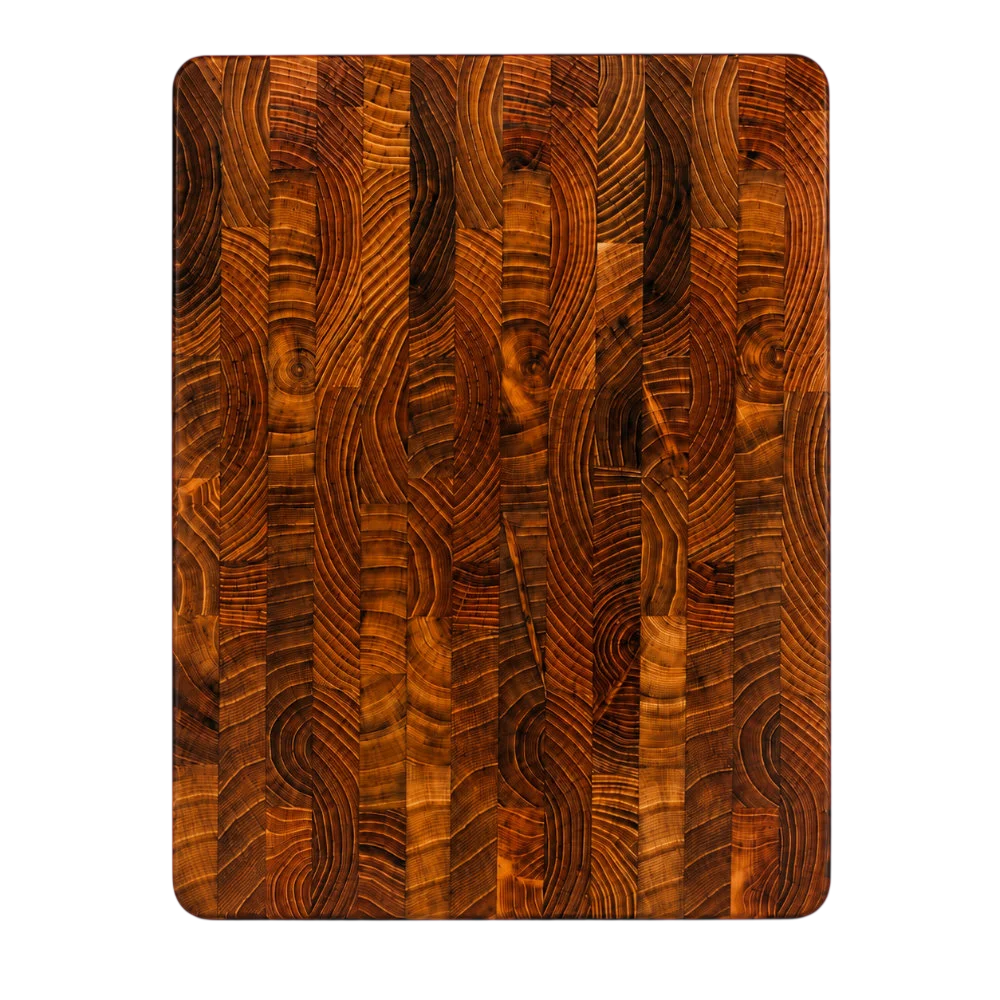
The Lilly Teak cutting board is everything we look for in a kitchen essential: carved from solid teak, hand-shaped for durability, and finished with a 100% plant-based oil that keeps your board food-safe without a trace of synthetic sealant. Each board carries its own natural grain pattern — no two are ever identical.
- Solid teak cutting surface
- Hand-shaped & finished
- Gentle on knife edges
- 100% solid teak wood
- Plant-based food-safe finish
- Sustainably sourced wood
WHAT SETS TEAK APART FROM OTHER WOODS
The Material Foundation of a Teak Board
Teak comes from the Tectona grandis tree, grown across India, Myanmar, Thailand, and Indonesia. Shipbuilders chose teak for deck planking because it resisted rot, insects, and constant saltwater exposure. That same oil-rich structure now makes teak one of the strongest choices for a kitchen cutting surface.
The wood carries natural oils called tectoquinones. These oils condition the wood from the inside, so the board resists moisture without an external coating. Teak also holds natural silica in its grain. This mineral gives the surface a light self-sharpening effect on knife blades, something few other hardwoods offer.
On the Janka hardness scale, teak rates around 1,000. That places it above pine and cedar, but below hard maple. This middle position matters: a board too soft dents and scars quickly, while a board too hard dulls knives fast. Teak sits in the range that protects both the board and the blade.
Dimensional stability rounds out teak's advantage. Many wooden boards expand and contract with kitchen humidity. Teak's density and oil content reduce this movement, so the board stays flatter and truer over time.
HOW A QUALITY BOARD IS BUILT
Specifications That Separate Good Boards From Great Ones
Not every teak board meets the same standard. Buyers should check four details before they purchase.
Wood grade. Teak ships in three grades. Grade A comes from the heartwood of mature trees and carries the highest oil content and most even color. Grade B comes from outer heartwood and shows more color variation. Grade C comes from sapwood and offers the least durability. A cutting board should always use Grade A teak.
Thickness. Most quality boards measure 1 inch to 1.5 inches thick. Thinner boards warp faster and wear out sooner under daily knife contact.
Construction style. Boards come in three builds. Edge grain boards glue long strips side by side for a strong, affordable surface. End grain boards arrange wood blocks so the fibers face upward, which lets the surface self-heal after knife cuts. Face grain boards use a single flat plank, which costs less but shows knife marks sooner.
Moisture content. Quality teak ships at 6% to 8% moisture content. This range keeps the board stable across most home kitchen conditions.
“The difference between a board that lasts five years and one that lasts twenty-five almost always comes down to grade and thickness, not brand name.”
— Elena Marsh, kitchenware reviewer
TEAK VERSUS THE COMPETITION
Teak Compared to Other Cutting Board Materials
|
Material |
Water Resistance |
Knife Friendliness |
Maintenance Needs |
Typical Lifespan |
|---|---|---|---|---|
|
Teak |
High (natural oils) |
High (self-sharpening effect) |
Low (occasional oiling) |
15-25 years |
|
Maple |
Moderate |
High |
Moderate (regular oiling) |
10-15 years |
|
Walnut |
Moderate |
High |
Moderate (regular oiling) |
10-15 years |
|
Bamboo |
Low |
Low (hard on blades) |
Low |
3-5 years |
|
Plastic |
High |
Low (dulls blades fast) |
Low |
1-3 years |
Bamboo boards market themselves as eco-friendly, but bamboo is a grass, not a hardwood. Its compressed, laminated structure creates a harder surface that dulls blades faster than teak. Plastic boards resist water but develop deep grooves that trap bacteria over time. Glass and marble resist stains but ruin knife edges within weeks. Teak avoids all three problems at once: it resists water like plastic, protects blades like a soft hardwood, and outlasts bamboo by a wide margin.
Our Top Pick
Sturdy Enough for Daily Prep, Beautiful Enough to Display
Premium teak hardwood gives this cutting board its natural moisture resistance and long-lasting durability, while a smooth, gentle surface protects your blades. Handmade and finished with plant-based coating, it's built to earn a permanent spot on your counter.
★★★★★
Lilly Teak — Handmade Teak Cutting Board with Plant-Based Finish
Handcrafted · Sustainable · Zero Plastic
The Lilly Teak cutting board is everything we look for in a kitchen essential: carved from solid teak, hand-shaped for durability, and finished with a 100% plant-based oil that keeps your board food-safe without a trace of synthetic sealant. Each board carries its own natural grain pattern — no two are ever identical.
- Solid teak cutting surface
- Hand-shaped & finished
- Gentle on knife edges
- 100% solid teak wood
- Plant-based food-safe finish
- Sustainably sourced wood
Long-Term Durability
Holds up to years of daily chopping and slicing.
Water Resistant Core
Natural oils reduce moisture absorption and staining.
Knife Edge Protection
Silica content helps preserve blade sharpness.
Natural, Untreated Material
No synthetic coatings needed to resist water.
Rich, Warm Appearance
Grain deepens in color and beauty with age.
Simple Care Routine
A quick oiling every few months keeps it performing.
KEEPING YOUR BOARD IN SHAPE
Maintenance That Keeps a Teak Board Lasting Decades
Daily cleaning. Wash with warm water and mild soap after each use. Dry the board right away with a clean towel, then stand it upright so air reaches both sides.
Deep cleaning. Sprinkle coarse salt across the surface once a week and rub it in with half a lemon. This lifts stains and neutralizes odors. Rinse and dry immediately.
Oiling schedule. Apply food-grade mineral oil or a teak-specific board oil every three to four months. Pour a small amount onto the board, spread it with a clean cloth along the grain, let it sit overnight, then wipe off the excess before use.
What to avoid. Never run a teak board through the dishwasher. Never let it soak in standing water. Never clean it with bleach or harsh chemicals. Never store it flat against a wall without airflow on both sides. Dimensional stability rounds out teak's advantage. Many wooden boards expand and contract with kitchen humidity. Teak's density and oil content reduce this movement, so the board stays flatter and truer over time.
CHOOSING THE RIGHT BOARD FOR YOUR KITCHEN
A Six-Step Selection Checklist
- Confirm the wood grade. Look for a listing that states Grade A teak.
- Check the construction type. Choose end grain for maximum knife protection, or edge grain for a strong board at a lower price.
- Measure your kitchen space. Standard boards run from 12x18 inches to 20x15 inches.
- Consider added features. Juice grooves catch liquid runoff, and handles help with transport and hanging storage.
- Review the care instructions. A brand that documents oiling and cleaning steps stands behind its product.
- Check for handmade craftsmanship. Hand-selected boards, like the Handmade Teak Cutting Board with Plant-Based Finish, tend to show better grain consistency than mass-produced options.
Our Top Pick
Where Durability Meets Everyday Function
Crafted from solid teak hardwood, this cutting board stands up to daily use with natural moisture resistance and a knife-friendly surface. Its plant-based finish and handmade construction bring a warm, chemical-free touch to any kitchen.
★★★★★
Lilly Teak — Handmade Teak Cutting Board with Plant-Based Finish
Handcrafted · Sustainable · Zero Plastic
The Lilly Teak cutting board is everything we look for in a kitchen essential: carved from solid teak, hand-shaped for durability, and finished with a 100% plant-based oil that keeps your board food-safe without a trace of synthetic sealant. Each board carries its own natural grain pattern — no two are ever identical.
- Solid teak cutting surface
- Hand-shaped & finished
- Gentle on knife edges
- 100% solid teak wood
- Plant-based food-safe finish
- Sustainably sourced wood
FAQ
Yes. Teak's natural oils create a surface that resists bacterial growth better than many woods. Its density and oil content add extra protection against moisture buildup.
Teak can crack if it goes too long without oiling or faces extreme heat and dryness. A regular oiling schedule prevents most cracking.
Yes. Teak starts with a golden tone and deepens into a richer amber or brown with age and oiling. This darkening reflects good care, not damage.
Mix baking soda with water into a paste, rub it over the surface, let it sit for ten minutes, then rinse and dry. This lifts onion, garlic, and fish smells without harsh chemicals.
Yes. Flipping the board between uses spreads out wear and extends its life.
A plant-based finish, like the one used on the Lilly Teak board, cures into the wood fibers instead of sitting on top. It builds water resistance gradually and avoids synthetic ingredients.
Final Verdict
A teak cutting board earns its place as a long-term kitchen tool rather than a disposable one. Its natural oils, silica content, and dense grain outperform maple, walnut, bamboo, and plastic across durability, knife care, and maintenance. Buyers who confirm the grade, thickness, and construction style end up with a board that lasts decades rather than years.
For a board that combines all of these standards with hand craftsmanship, the Handmade Teak Cutting Board with Plant-Based Finish delivers Grade A teak, a natural finish, and a care guide built in from day one.
A durable board. A simple routine. A kitchen tool that lasts. 🌿