
End Grain vs Edge Grain

"A cutting board is more than a kitchen tool. It protects your knives, feeds your family, and lasts for decades when built right. This guide breaks down end grain and edge grain construction so you can pick the board that fits your kitchen and your budget."
Wood grain direction changes everything about how a cutting board performs. End grain boards expose the tip of the wood fiber, like looking down at the top of a bundle of straws. Edge grain boards expose the side of the fiber, like looking at the straws from the side. This single difference drives cost, durability, weight, and knife feel.
Most shoppers never learn this before they buy. They pick a board on price or looks alone. That choice often leads to a board that dulls knives fast or cracks within a year. This guide explains the difference in plain terms.
Self-Healing Surface
CLOSES AROUND KNIFE MARKS
Lightweight Everyday
EASY TO LIFT DAILY
Butcher-Block Durability
BUILT FOR HEAVY USE
Both board types come from the same trees. Construction method, not species, sets them apart. A teak end grain board and a teak edge grain board can sit side by side and look nearly identical from a distance. Only close inspection and daily use reveal the real difference.
Our Top Pick
The Board Built to Outlast Both Debates
Skip the guesswork. This board combines a tight edge grain layout with the density and finish that make teak the top choice for either style. It holds up to daily knife work and resists water without added sealants.
★★★★★
Lilly Teak — Handmade Teak Cutting Board with Plant-Based Finish
Handcrafted · Sustainable · Zero Plastic
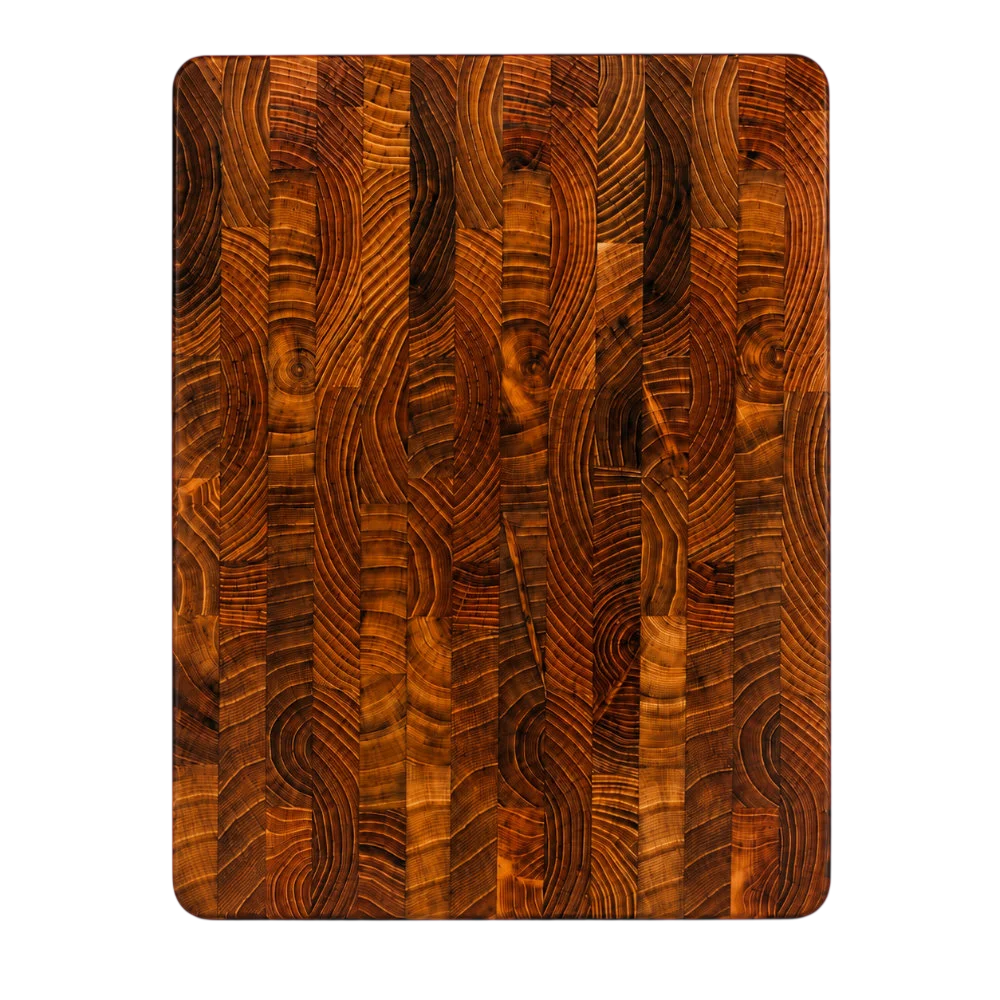
The Lilly Teak cutting board is everything we look for in a kitchen essential: carved from solid teak, hand-shaped for durability, and finished with a 100% plant-based oil that keeps your board food-safe without a trace of synthetic sealant. Each board carries its own natural grain pattern — no two are ever identical.
- Solid teak cutting surface
- Hand-shaped & finished
- Gentle on knife edges
- 100% solid teak wood
- Plant-based food-safe finish
- Sustainably sourced wood
HISTORY & CRAFTSMANSHIP
A Brief History of End Grain and Edge Grain Boards
Butchers used end grain blocks long before home cooks did. Nineteenth-century butcher shops stacked tree trunk sections upright and cut directly into the top. The wood fibers absorbed the blade, then closed back around it. This kept the surface smooth for years of daily chopping. Butchers valued this method because it protected their knives and lasted through heavy commercial use.
Edge grain construction came later as a furniture-making technique. Woodworkers glued long strips of wood side by side to build tabletops, countertops, and eventually cutting boards. This method used less wood per board and required less labor. It spread into home kitchens because it cost less to produce and still offered solid performance for everyday tasks.
By the mid-twentieth century, both styles had settled into their current roles. Commercial kitchens kept end grain blocks for heavy daily use, while home kitchens leaned toward edge grain boards for their lower price and lighter build.
Technical Differences Between the Two Cuts
How Each Board Is Made
An end grain board starts as strips of wood glued face to face into a large block. The maker then slices that block crosswise, so each piece shows the fiber ends on the cutting surface. Workers glue these pieces into a checkerboard pattern. This process uses more wood, more glue joints, and more labor per board.
An edge grain board uses long strips of wood glued side by side along their length. The cutting surface shows the long edge of each strip, running in one direction. This process uses fewer pieces and less labor, which keeps the price lower.
Surface Behavior Under a Blade
Wood fiber structure explains the performance gap between the two types.
- End grain fibers stand upright on the surface. A blade slides between the fibers instead of across them. The fibers close back together after each cut.
- Edge grain fibers lie flat along the surface. A blade cuts across the fiber length. This creates small grooves over time that do not close back up.
This structural fact drives the differences in knife wear, board lifespan, and surface texture that follow throughout this guide.
Hygiene and Bacteria Resistance
Wood grain direction also affects how a board handles bacteria. Wood pulls liquid down into the fibers, away from the surface, where trapped bacteria cannot multiply the way they do on flat plastic. End grain fibers pull liquid down faster than edge grain fibers, since the fiber ends sit open to the surface. Edge grain boards still resist bacteria better than plastic, though the effect is less pronounced.
Self-Healing Surface
End grain fibers close around knife marks, so the surface stays smoother longer.
Lower Upfront Cost
Edge grain boards use less material and labor, which keeps the price down.
Reduced Knife Wear
End grain construction is gentler on blade edges during daily chopping.
Lighter Weight Option
Edge grain boards weigh less, making them easier to lift, wash, and store.
Long-Term Durability
End grain construction resists deep cuts and holds up under heavy daily use.
Simple Everyday Care
Edge grain boards are easier to maintain for cooks who want a low-effort routine.
"I replaced my old plastic board with a Lilly Teak end grain board two years ago. My knives stay sharp so much longer now, and the board still looks new."
— Rebecca T.
Our Top Pick
One Board, No Compromise
Choosing between the two styles gets easier when the board itself does the heavy lifting. This design pulls from both traditions, built for daily use and finished for food safety.
★★★★★
Lilly Teak — Handmade Teak Cutting Board with Plant-Based Finish
Handcrafted · Sustainable · Zero Plastic
The Lilly Teak cutting board is everything we look for in a kitchen essential: carved from solid teak, hand-shaped for durability, and finished with a 100% plant-based oil that keeps your board food-safe without a trace of synthetic sealant. Each board carries its own natural grain pattern — no two are ever identical.
- Solid teak cutting surface
- Hand-shaped & finished
- Gentle on knife edges
- 100% solid teak wood
- Plant-based food-safe finish
- Sustainably sourced wood
Side-by-Side Comparison
Use this table to compare the two board types across the factors that matter most in daily kitchen use.
|
Factor |
End Grain |
Edge Grain |
Best For |
|---|---|---|---|
|
Knife Edge Wear |
Low wear, fibers absorb blade |
Moderate wear, blade cuts across fibers |
Cooks who chop daily |
|
Weight |
Heavier, dense block build |
Lighter, easier to handle |
Small kitchens, frequent moving |
|
Price |
Higher, more labor and material |
Lower, simpler construction |
Budget-conscious buyers |
|
Lifespan |
Decades with proper care |
Many years, shows wear sooner |
Long-term investment vs everyday use |
Neither option is wrong for every kitchen. A home cook who chops vegetables daily gains real value from an end grain board's knife-friendly surface. A cook who wants a lighter board for quick tasks may prefer the lower price and easier handling of edge grain.
Our Top Pick
Still Deciding? Start Here
If the table above left you weighing trade-offs, this board removes the decision. It delivers the density and finish quality that matter most, without forcing you to choose a side.
★★★★★
Lilly Teak — Handmade Teak Cutting Board with Plant-Based Finish
Handcrafted · Sustainable · Zero Plastic
The Lilly Teak cutting board is everything we look for in a kitchen essential: carved from solid teak, hand-shaped for durability, and finished with a 100% plant-based oil that keeps your board food-safe without a trace of synthetic sealant. Each board carries its own natural grain pattern — no two are ever identical.
- Solid teak cutting surface
- Hand-shaped & finished
- Gentle on knife edges
- 100% solid teak wood
- Plant-based food-safe finish
- Sustainably sourced wood
FAQ
No. End grain lasts longer and protects knives better, but edge grain costs less and weighs less. The right choice depends on your budget and how often you cook.
Yes. Teak's natural oils and tight fiber structure make it a strong choice for either construction method. It resists water and holds up under daily use.
Oil an end grain board once a month during regular use. Oil an edge grain board every two to three weeks, since its surface dries out faster.
No. Dishwasher heat and prolonged water exposure crack both board types. Hand wash with mild soap and dry the board upright.
End grain construction uses more wood pieces, more glue joints, and more labor. Each block requires precise cutting and assembly, which raises the price.
Look at the surface pattern. A checkerboard pattern of small squares means end grain. Long, straight stripes running one direction mean edge grain.
Maintenance and Care
Both board types need the same basic care routine, though timing differs slightly. Wash each board by hand with warm water and mild soap. Dry it standing on its edge so air reaches both sides. Avoid soaking the board or leaving it wet on a flat counter, since trapped moisture causes warping and cracking over time.
Oil the board regularly with a food-safe mineral oil or a plant-based finish. This keeps the wood fibers flexible and blocks moisture from soaking in. Skipping this step shortens the life of any wood board, regardless of grain direction.
A well-maintained end grain board can last twenty years or more in a home kitchen. An edge grain board with the same care routine typically lasts eight to twelve years before the surface shows deep, permanent grooves. Both numbers assume regular oiling, hand washing, and dry, upright storage between uses.
How to Choose Between End Grain and Edge Grain
Use these steps to choose the right board for your kitchen:
- Set a budget. Edge grain boards cost less upfront. End grain boards cost more but last longer.
- Consider your knife habits. Frequent chopping favors end grain for reduced blade wear.
- Think about weight. Edge grain boards suit cooks who want an easy-to-lift, easy-to-store option.
- Check the wood species. Teak resists water and bacteria better than softer woods in either style.
- Plan your maintenance routine. Both boards need regular oiling, but end grain needs it less often.
- Match the board to your kitchen size. Larger kitchens with more counter space handle heavier end grain blocks well.
Final Verdict
Neither board is the wrong choice. End grain construction rewards cooks who chop daily and want a board that lasts decades. Edge grain construction rewards cooks who want a lighter, lower-cost board that still performs well at home.
Teak strengthens either choice. Its tight grain and natural oils resist water and bacteria better than softer woods, so teak outperforms a softer-wood equivalent in the same style. Pick the construction that matches your habits, then choose teak for the wood that makes that construction last.
A cutting board should earn its place on your counter every day. 🌿