
Why Chefs Use Wooden Cutting Boards

"A chef trusts a wooden board the way a carpenter trusts a good chisel. It holds an edge, it holds a story, and it holds up meal after meal, year after year."
Professional kitchens run on tools that work every single service. A wooden cutting board earns its spot on the line through durability, not tradition alone. Chefs choose wood because it protects knife edges, resists bacteria naturally, and lasts for decades with basic care.
This guide explains the reasons behind that choice. It covers the history of the wooden board, the science that supports it, and the exact steps a chef follows to pick and maintain one.
Knife-Friendly
SOFT ON BLADES
Naturally Hygienic
RESISTS BACTERIA
Built to Last
DECADES OF USE
Home cooks copy professional habits for a reason. Restaurant kitchens face health inspections, high volume, and constant knife work, so any tool that survives that environment has already proven itself. A wooden board that holds up in a busy restaurant will outlast almost anything in a home kitchen.
Our Top Pick
The Board Chefs Reach for First
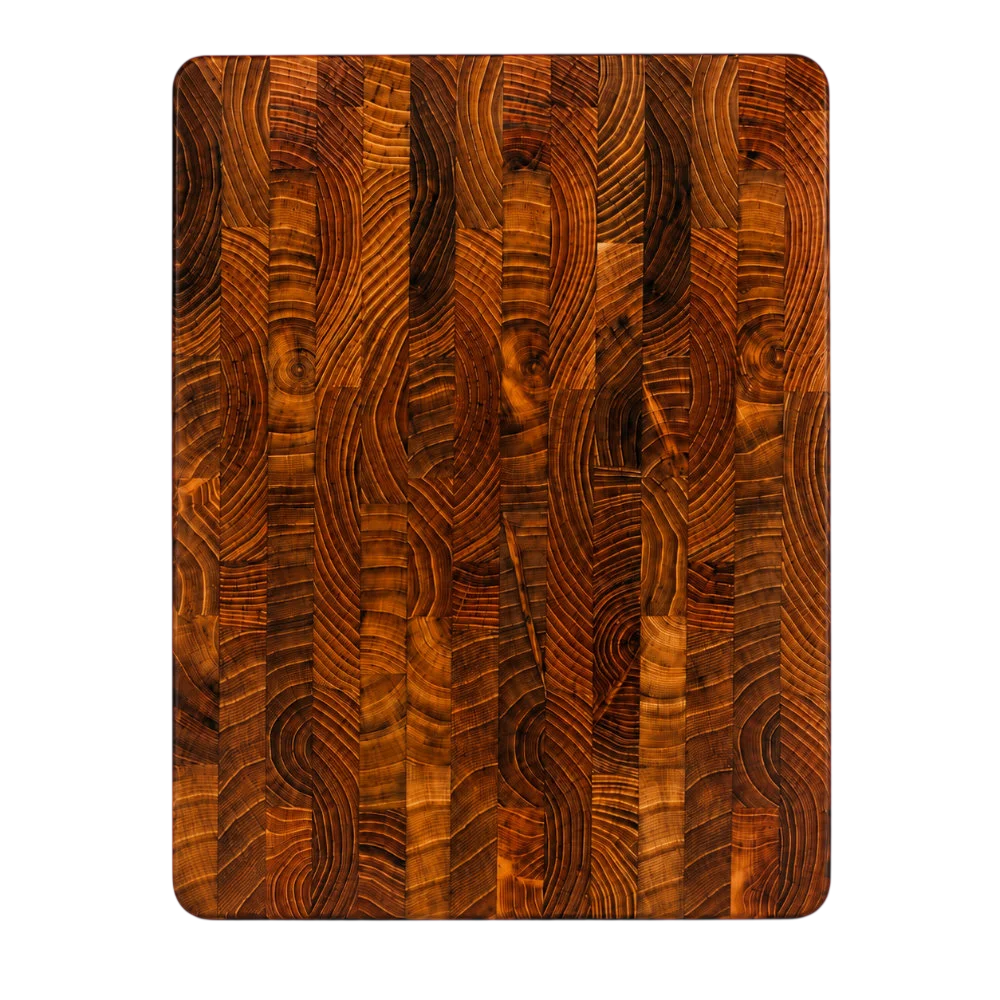
Teak brings together the two qualities professional cooks value most: a forgiving surface for the blade and a wood dense enough to resist deep scarring. This board delivers both, plus a finish that never introduces synthetic chemicals near food.
★★★★★
Lilly Teak — Handmade Teak Cutting Board with Plant-Based Finish
Handcrafted · Sustainable · Zero Plastic
The Lilly Teak cutting board is everything we look for in a kitchen essential: carved from solid teak, hand-shaped for durability, and finished with a 100% plant-based oil that keeps your board food-safe without a trace of synthetic sealant. Each board carries its own natural grain pattern — no two are ever identical.
- Solid teak cutting surface
- Hand-shaped & finished
- Gentle on knife edges
- 100% solid teak wood
- Plant-based food-safe finish
- Sustainably sourced wood
THE BASICS
A Brief History of the Wooden Cutting Board
Cooks used wood boards long before stainless steel counters existed. Ancient kitchens relied on tree stumps and thick planks to prepare meat, bread, and vegetables. Butchers favored end-grain wood blocks because the fibers absorbed knife impact instead of dulling the blade.
By the 19th century, professional kitchens across Europe standardized on wood for prep stations. Restaurants valued the material because it survived heavy daily use without cracking or splintering. Butcher shops passed down large wood blocks from one generation to the next, and a well-worn block often outlived the shop itself.
Plastic boards did not appear until the mid-20th century. Manufacturers marketed plastic as a modern, easy-to-clean alternative, and many home kitchens switched over during that period. Professional kitchens moved more slowly. Health codes eventually required color-coded plastic boards for raw meat in many commercial settings, but chefs kept their wood boards for knife work that mattered most, including bread, herbs, and fine cuts of vegetables and fish.
Today, wood and plastic coexist in most professional kitchens. Each material earns its place through a specific job, and wood still holds the top spot for tasks that demand knife precision.
THE SCIENCE
The Technical Case for Wood
Wood behaves differently from plastic at a cellular level. Understanding that difference explains why professional kitchens still choose it.
Self-Healing Surface
A knife blade cuts into wood fibers instead of shaving off plastic. The fibers close back together after each cut. This process is called a self-healing surface, and it means a wood board resists permanent grooves far longer than plastic.
Density and Hardness
Wood density determines how a board performs under a blade. Denser woods resist deep cuts but still cushion the blade edge. Teak ranks among the hardest common cutting-board woods, with a Janka hardness rating near 1,000 lbf. That rating places it above soft woods like pine and close to hard maple, while its natural oils add extra resistance to moisture.
Natural Antibacterial Properties
Wood pulls bacteria below its surface and traps it there. Researchers at the University of Wisconsin-Madison tested this effect decades ago and found that bacteria on wood boards died off within minutes, while bacteria on plastic boards survived and multiplied inside knife grooves. Plastic boards develop these grooves fast because the material does not self-heal, so old scars become bacteria traps over time.
Knife Protection
Wood cushions the blade edge and slows dulling.
Natural Hygiene
Wood traps bacteria below the surface and starves it.
Long Lifespan
A well-oiled board lasts for decades of daily use.
Sustainable Material
Wood grows back; plastic does not break down.
Food Presentation
A board doubles as a serving surface at the table.
Quiet Prep
Wood absorbs sound better than hard plastic or glass.
Every chef weighs these six factors differently, but the combination explains why wood remains a kitchen standard. A board that protects the knife, resists bacteria, and lasts for years pays for itself many times over.
"I replaced my plastic boards with a teak one two years ago and never looked back. My knives stay sharp longer, and the board still looks brand new."
— Renata S.
Our Top Pick
A Board That Matches Restaurant Standards
Chefs need a surface that performs under pressure, service after service. This board meets that standard with a dense, knife-friendly cut and a finish built for constant food contact.
★★★★★
Lilly Teak — Handmade Teak Cutting Board with Plant-Based Finish
Handcrafted · Sustainable · Zero Plastic
The Lilly Teak cutting board is everything we look for in a kitchen essential: carved from solid teak, hand-shaped for durability, and finished with a 100% plant-based oil that keeps your board food-safe without a trace of synthetic sealant. Each board carries its own natural grain pattern — no two are ever identical.
- Solid teak cutting surface
- Hand-shaped & finished
- Gentle on knife edges
- 100% solid teak wood
- Plant-based food-safe finish
- Sustainably sourced wood
SIDE BY SIDE
Wood vs Plastic vs Bamboo Cutting Boards
Chefs choose between three main materials. Each one performs differently under a blade.
|
Feature |
Wood (Teak) |
Plastic |
Bamboo |
|---|---|---|---|
|
Knife Impact |
Cushions blade, slows dulling |
Dulls blade faster over time |
Hard surface, dulls blade fastest |
|
Bacteria Resistance |
Traps bacteria below surface |
Grooves trap bacteria on surface |
Low absorption, surface bacteria lingers |
|
Lifespan |
Decades with basic care |
A few years before replacement |
A few years, prone to splitting |
Plastic boards work for raw poultry in commercial kitchens because staff can run them through commercial sanitizers or a dishwasher. Wood boards cannot go in a dishwasher, so kitchens that need constant high-heat sanitizing often keep both materials on hand. For general prep, knife care, and daily use, wood remains the preferred choice.
CARE GUIDE
How to Maintain a Wooden Cutting Board
A wood board rewards basic care with a long lifespan. Chefs follow a simple routine to keep boards food-safe and crack-free.
- Wash by hand after each use with warm water and mild soap.
- Dry the board immediately with a clean towel to prevent water absorption.
- Stand the board upright so air reaches both sides while it dries.
- Oil the board weekly with food-grade mineral oil or a plant-based board oil.
- Sand rough spots lightly with fine sandpaper if the surface roughens over time.
- Keep the board away from direct heat sources like stovetops or dishwashers.
Skipping the oiling step causes the most common damage. A dry board absorbs water unevenly, and that uneven absorption leads to warping and cracks. A monthly oil treatment keeps the wood fibers stable and the surface smooth.
MAKING THE CHOICE
A Brief History of the Wooden Cutting Board
Selecting a board takes a few clear decisions. Chefs weigh wood type, size, and finish before buying.
- Pick a dense wood. Teak, walnut, and maple hold up best under daily knife work.
- Choose end grain or edge grain. End-grain boards self-heal more effectively; edge-grain boards cost less and still perform well.
- Match the size to your counter. A board should fit your prep space without hanging over the edge.
- Check the finish. A plant-based oil finish keeps the board food-safe without synthetic sealants.
- Confirm the thickness. A board at least one inch thick resists warping better than thin boards.
- Look for sustainable sourcing. Wood harvested responsibly supports long-term supply and lowers environmental impact.
These six checks cover the decisions that matter most. A board that passes all six will perform well in daily use and last for years.
Our Top Pick
One Board, Every Requirement Met
This board checks every box on the selection list above: dense teak wood, a plant-based finish, and a thickness built to resist warping.
★★★★★
Lilly Teak — Handmade Teak Cutting Board with Plant-Based Finish
Handcrafted · Sustainable · Zero Plastic
The Lilly Teak cutting board is everything we look for in a kitchen essential: carved from solid teak, hand-shaped for durability, and finished with a 100% plant-based oil that keeps your board food-safe without a trace of synthetic sealant. Each board carries its own natural grain pattern — no two are ever identical.
- Solid teak cutting surface
- Hand-shaped & finished
- Gentle on knife edges
- 100% solid teak wood
- Plant-based food-safe finish
- Sustainably sourced wood
FAQ
No. Mild dish soap and warm water clean a wood board fully. Harsh chemicals strip the natural oils and dry out the wood.
No. Dishwasher heat and prolonged water exposure crack and warp wood. Hand wash and dry the board immediately instead.
Oil a board once a week during regular use. A board used daily may need oil every few days to stay properly sealed.
Yes. Wash the board thoroughly after each use and dry it right away. Teak's natural density and oils support this use well.
A lingering smell usually means the board needs a deeper clean. Scrub the surface with coarse salt and a lemon half, then rinse and dry fully.
A well-maintained teak board lasts for decades. Regular oiling and proper drying protect the wood from cracking over time.
Final Verdict
Chefs choose wooden cutting boards because the material performs better under real kitchen conditions. Wood protects knife edges, resists bacteria at a structural level, and survives years of daily prep work without needing replacement.
A quality board pays for itself through knife longevity alone, and the right care routine keeps it looking new for years. Chefs who switch to wood rarely go back to plastic, and the reasons come down to simple, repeatable results in the kitchen. For a kitchen tool this central to daily cooking, wood remains the clear standard among professional chefs.
A sharp knife and a good board make every meal easier to prepare. 🌿