
How to Clean Wooden Utensils

"Intro Quote: 50-word summary of the blog post.?"
Wooden utensils bring warmth to any kitchen. They cut, stir, and serve food without scratching pans or bowls. But wood needs different care than plastic or metal. Proper cleaning keeps wooden utensils safe, smooth, and long-lasting.
Many people wash wood tools the wrong way. They soak spoons in water or run boards through a dishwasher. This damages wood fast and dries out its natural oils. This guide explains the right method, step by step, so your utensils last for years.
Quick Rinse
FAST DAILY CARE
Gentle Soap Wash
MILD DEEP CLEAN
Oil Refresh
LONG TERM PROTECTION
This guide covers the history of wood care, the science behind wood grain, and clear steps for cleaning and maintaining wooden utensils. It also lists signs that a utensil needs oil or replacement, plus a short summary of how to choose new pieces.
Our Top Pick
The Utensil Set Built for Easy Care
This set rinses clean in seconds and resists stains. Its plant-based finish blocks moisture before it soaks in, so daily cleanup takes far less effort.
★★★★★
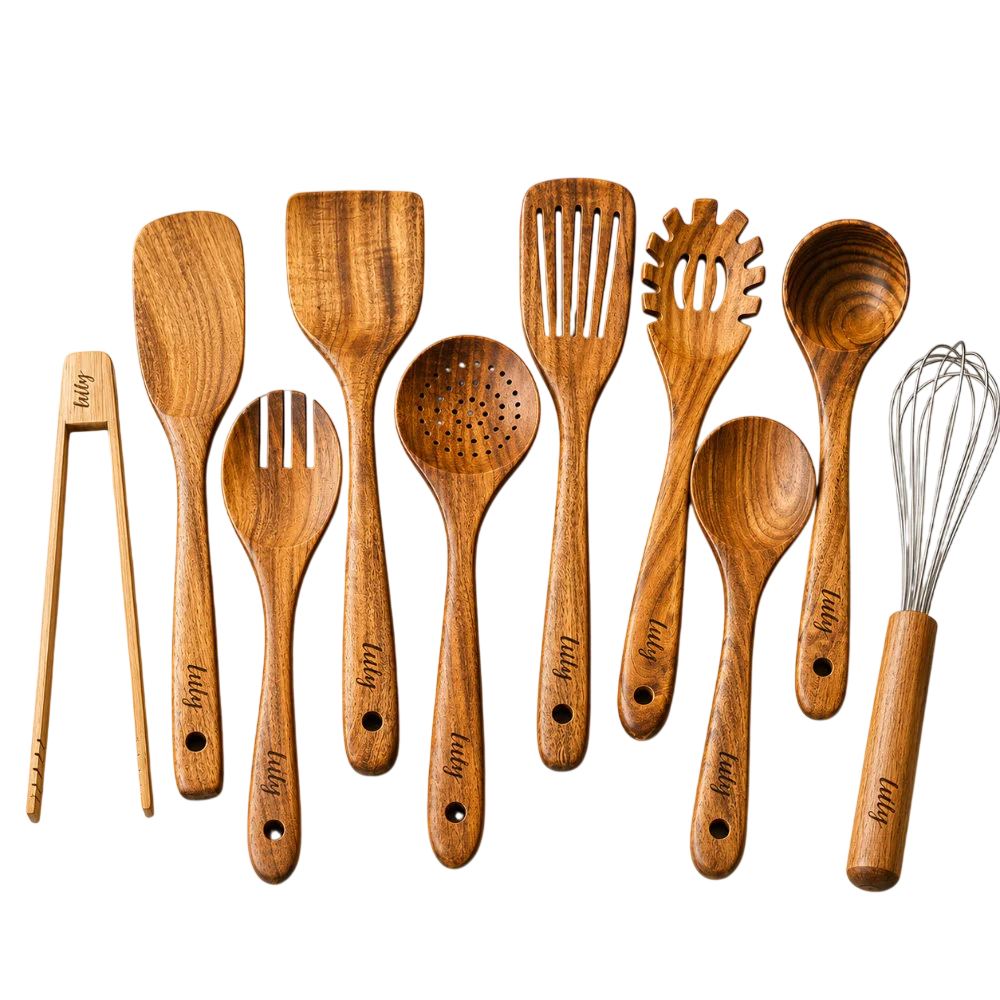
Lilly Teak — 10 Piece Handmade Utensil Set
Handcrafted · Sustainable · Zero Plastic
The Lilly Teak 10-piece set is everything we look for in a kitchen essential: beautifully crafted from solid teak, shaped by hand for an ergonomic feel, and designed to serve your family for decades. Each piece is unique, with its own natural grain pattern — no two sets are ever identical.
- 10 essential kitchen tools
- Hand-shaped & finished
- Non-scratch on all cookware
- 100% solid teak wood
- Food-safe oil treatment
- Sustainably sourced wood
A SPOON'S JOURNEY
A Short History of Wood Care in the Kitchen
Cooks have used wooden tools for thousands of years. Ancient kitchens relied on carved spoons, bowls, and boards long before metal and plastic existed. Wood stayed popular because it was strong, light, and easy to shape.
Early cooks cleaned wood with water, sand, and salt. They rubbed tools with animal fat or plant oil to seal the surface. This practice protected wood from cracking and kept food safe. Modern cleaning methods still follow these same basic ideas: wash gently, dry fully, and oil often.
WHY WOOD ABSORBS
Why Wood Needs Special Cleaning
Wood is not like plastic or steel. It is a living material with tiny pores that soak up liquid. This structure gives wood its strength, but it also means wood reacts differently to water, heat, and soap.
Water that sits on wood can seep into these pores. Trapped water causes swelling, cracking, and warping over time. Heat from a dishwasher speeds up this damage. That is why hand washing stays the safest method for any wood utensil.
Wood Grain and Pores
Wood grain runs in lines through the material. These lines create small channels that pull in moisture fast. A sealed finish slows this process and keeps food particles from settling deep inside the wood.
Oil Finish vs Raw Wood
Raw wood absorbs liquid quickly and dries out fast. Oiled wood resists water and holds its shape longer. A fresh coat of food-safe oil restores this protective layer whenever wood starts to look dry or pale.
Key Benefits of Proper Wood Care
Removes Odors Naturally
Regular washing lifts food smells before they set into the grain.
Prevents Warping
Quick drying stops water from swelling the wood fibers.
Blocks Bacteria Growth
Clean, dry wood gives bacteria no place to spread.
Extends Utensil Life
Good care can double or triple how long a tool lasts.
Preserves Natural Grain
Gentle cleaning keeps the wood's pattern sharp and clear.
Safe for Bare Hands
Chemical-free care keeps utensils safe to touch and use daily.
"I used to toss my wooden spoons in the dishwasher and wonder why they cracked. Once I switched to hand washing and monthly oiling, my spoons looked brand new again. It's such a small habit that makes a big difference."
— Dana W.
Our Top Pick
Give Your Utensils a Fresh Start
Pair your new cleaning routine with a set made to handle it. This teak utensil set takes daily washing in stride and keeps its finish strong.
★★★★★
Lilly Teak — 10 Piece Handmade Utensil Set
Handcrafted · Sustainable · Zero Plastic
The Lilly Teak 10-piece set is everything we look for in a kitchen essential: beautifully crafted from solid teak, shaped by hand for an ergonomic feel, and designed to serve your family for decades. Each piece is unique, with its own natural grain pattern — no two sets are ever identical.
- 10 essential kitchen tools
- Hand-shaped & finished
- Non-scratch on all cookware
- 100% solid teak wood
- Food-safe oil treatment
- Sustainably sourced wood
RINSE VS. SOAP VS. DISHWASHER
Cleaning Methods Compared
Not every cleaning method suits every situation. This table compares three common approaches so you can pick the right one for the moment.
|
Method |
Best For |
Time Needed |
Risk Level |
|---|---|---|---|
|
Quick Rinse |
Daily use after cooking |
Under 1 minute |
Low |
|
Soap and Towel Dry |
Weekly deep clean |
2–3 minutes |
Low |
|
Dishwasher Cycle |
Never recommended for wood |
60+ minutes |
High |
A quick rinse works well for daily habits. A soap wash removes built-up oil and food residue once a week. A dishwasher cycle exposes wood to heat, steam, and standing water, so it stays off the list for any wood tool.
THE WEEKLY WIPE-DOWN
Daily and Weekly Maintenance Steps
Follow these steps to build a simple wood care routine:
- Rinse each utensil under warm water right after use.
- Dry it fully with a clean towel; never let it air dry flat.
- Wash with mild soap once a week to remove built-up residue.
- Apply a food-safe mineral oil once a month to restore moisture.
- Store utensils upright in a dry holder, away from direct heat.
- Keep wood tools out of direct sunlight to prevent fading and cracking.
Small, steady habits protect wood far better than one deep clean each month. A short rinse after every use stops stains and smells before they start.
PICKING YOUR NEXT SPOON
How to Choose the Right Wooden Utensils
A few quick checks help you pick tools that will clean easily and last for years:
- Check the wood type; dense woods like teak resist water better than soft woods.
- Look for a smooth, sanded finish with no rough spots or splinters.
- Confirm the utensil ships with a food-safe oil finish already applied.
- Test the weight and grip in your hand before you buy.
- Inspect the surface for existing cracks, dark spots, or loose joints.
Our Top Pick
One Set, Built to Last
If you are ready to upgrade, choose a utensil set designed for easy care from day one.
★★★★★
Lilly Teak — 10 Piece Handmade Utensil Set
Handcrafted · Sustainable · Zero Plastic
The Lilly Teak 10-piece set is everything we look for in a kitchen essential: beautifully crafted from solid teak, shaped by hand for an ergonomic feel, and designed to serve your family for decades. Each piece is unique, with its own natural grain pattern — no two sets are ever identical.
- 10 essential kitchen tools
- Hand-shaped & finished
- Non-scratch on all cookware
- 100% solid teak wood
- Food-safe oil treatment
- Sustainably sourced wood
FAQ
No. Heat and standing water cause wood to crack, warp, and dry out fast. Hand washing keeps wood safe.
Oil wooden spoons once a month. Oil them sooner if the surface looks pale or feels dry.
Food-safe mineral oil or fractionated coconut oil works well. Avoid vegetable oils, since they can turn rancid over time.
Trapped food residue inside the grain causes odor. Wash with soap, dry fully, then let the utensil air out before storage.
No. Soaking lets water seep deep into the wood, which causes swelling and cracks. Always wash quickly and dry right away.
Rub the stain with a paste of baking soda and water. Rinse, dry fully, then apply a light coat of food-safe oil.
Final Verdict
Wooden utensils reward simple, steady care. A quick rinse, a full dry, and a monthly oil coat keep wood strong for years. Skip the dishwasher, skip long soaks, and your tools will stay smooth and crack-free.
Good habits cost little time but protect a lot of value. Clean wood utensils look better, work better, and last far longer than tools left to dry out on their own.
Small habits. Strong wood. A kitchen built to last. 🌿