
Walnut Utensils: Are They Good for Cooking?

What Makes Walnut a Kitchen Material Worth Knowing
Walnut has been used in kitchens for centuries. It is dense, dark, and durable. Cooks across Europe and North America chose it long before plastic and silicone existed. Today, walnut utensils are back in demand — and for good reason.
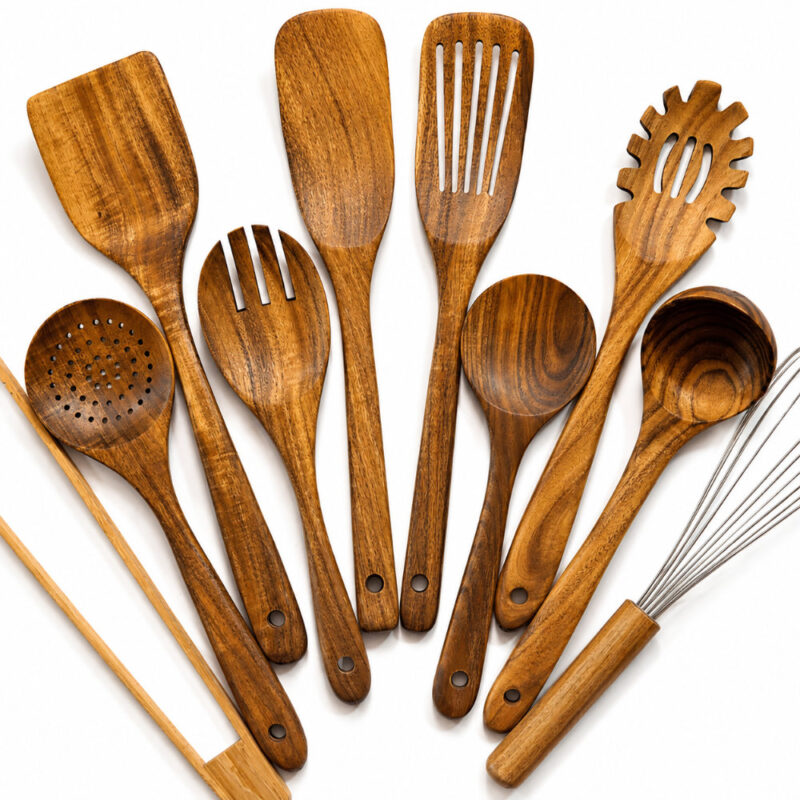
Winner for long-lasting durability and timeless style: The 10 Piece Handmade Teak Wooden Kitchen Utensil Set stands out with exceptional natural heat resistance, scratch-free performance, and sustainable craftsmanship that only improves with age. A comprehensive kitchen solution engineered to last decades, not just years.
This guide covers everything you need to know. You will learn what makes walnut special, how it compares to other wood types, and whether it earns a place in your kitchen.
A Brief History of Walnut in the Kitchen
Walnut wood has a long record in domestic use. European craftsmen carved walnut spoons and handles as early as the 16th century. The wood was prized for its strength and its resistance to splitting.
American black walnut became common in colonial-era kitchens. Families used it for everything from bowls to paddles to cutting boards. It was local, abundant, and tough.
The 20th century pushed wood utensils aside. Mass production made plastic cheaper and faster to manufacture. But plastic utensils scratch non-stick pans, harbor bacteria in grooves, and melt near heat. Interest in wood returned.
Today, Juglans regia (English walnut) and Juglans nigra (American black walnut) are the two species most commonly used in kitchen utensils. Both perform well. They differ mainly in color depth and grain tightness.
Technical Properties of Walnut Wood
Understanding walnut starts with its physical characteristics. These properties directly affect how it performs in a kitchen.
Hardness and Density
Walnut scores 1010 lbf on the Janka hardness scale. This is the measurement of force needed to embed a steel ball halfway into wood. For context:
- Bamboo: ~1380 lbf
- Maple: ~1450 lbf
- Walnut: ~1010 lbf
- Cherry: ~950 lbf
- Pine: ~870 lbf
Walnut sits in the mid-range. It is hard enough to resist denting and wear. It is soft enough not to damage delicate cookware surfaces like enameled cast iron.
Grain Structure
Walnut has a straight to slightly wavy grain. The pores are semi-open. This means the wood absorbs oil well and bonds with food-safe finishes easily. A tighter grain, like maple, absorbs less oil. A looser grain, like oak, absorbs more and can trap food particles.
Walnut’s semi-open structure makes it ideal for oiling and conditioning. It responds quickly and holds moisture without becoming sticky.
Natural Oils and Toxicity
Walnut contains juglone, a natural compound found mostly in the roots, husks, and leaves. In the heartwood used for utensils, juglone concentration is very low. Studies have not shown harm from using walnut utensils in food preparation for the general population.
Important exception: People with tree nut allergies should consult a doctor before using walnut kitchen tools. The allergy is typically to proteins in the nut, not the wood, but caution is still reasonable.
Walnut vs. Other Wood Utensils: A Direct Comparison
| Feature | Walnut | Maple | Bamboo | Cherry | Olive |
|---|---|---|---|---|---|
| Hardness (Janka) | 1010 lbf | 1450 lbf | ~1380 lbf | 950 lbf | ~2700 lbf |
| Grain | Semi-open | Tight | Very tight | Fine | Very tight |
| Color | Dark brown | Light tan | Yellow-beige | Reddish-tan | Light with streaks |
| Oil absorption | Good | Moderate | Low | Good | Low |
| Scratch risk to pans | Low | Low | Medium | Low | Low |
| Durability | High | Very high | High | High | Very high |
| Cost (relative) | High | Medium | Low | Medium | High |
| Odor absorption | Low | Low | Low | Low | Low |
Walnut stands out for its combination of mid-hardness, visual appeal, and oil responsiveness. It is not the hardest option, but it is the most balanced for everyday cooking tasks.
Are Walnut Utensils Good for Cooking? The Direct Answer
Yes. Walnut utensils perform well in most cooking tasks. Here is what they do right:
What Walnut Utensils Do Well
- Stirring and mixing — The density makes them strong enough to stir thick batters, stews, and sauces without flexing.
- Sautéing — Walnut does not conduct heat. The handle stays cool even over high-heat pans.
- Scraping — The hardness lets you scrape fond from cast iron or stainless steel without the utensil deforming.
- Non-stick pan safety — Walnut is softer than maple. It will not gouge Teflon or ceramic coatings.
- Aesthetic value — The dark grain looks professional and does not stain visibly from sauces or spices.
What Walnut Utensils Are Not Ideal For
- Extended soaking — No wood utensil should be soaked. Walnut will warp and crack if left in water.
- Dishwasher use — The heat and detergent cycles dry out the wood and break down the grain.
- Raw meat contact boards — A walnut cutting board used for raw protein requires more frequent sanitation than plastic. As a spoon or spatula, this is less of a concern.
Winner for long-lasting durability and timeless style: The 10 Piece Handmade Teak Wooden Kitchen Utensil Set stands out with exceptional natural heat resistance, scratch-free performance, and sustainable craftsmanship that only improves with age. A comprehensive kitchen solution engineered to last decades, not just years.
Key Benefits for Home Cooks
Walnut utensils offer practical advantages beyond looks.
1. No chemical off-gassing. Plastic utensils can release low levels of BPA or other compounds under heat. Walnut does not.
2. Self-healing surface. Wood fibers close slightly after being cut or scratched. Plastic develops permanent grooves that trap bacteria.
3. Long lifespan with care. A properly maintained walnut spoon can last decades. Cheap plastic utensils crack and discolor within months.
4. Temperature resistance. Walnut will not melt or warp near stovetop heat. Plastic utensils left resting on a pan edge can deform quickly.
5. Better grip. Walnut handles provide a natural grip. They do not become slippery when wet the way smooth plastic does.
How to Care for Walnut Utensils
Proper care extends the life of walnut utensils significantly.
Daily Cleaning
- Wash with warm water and mild dish soap immediately after use.
- Do not soak in water. A quick wash and rinse is sufficient.
- Dry immediately with a cloth. Do not air dry in a pool of water on the counter.
Conditioning
- Apply food-grade mineral oil or a beeswax-and-oil blend once a month.
- Rub the oil along the grain with a cloth.
- Let it absorb for at least one hour, then wipe away the excess.
- Well-oiled walnut resists moisture and stays flexible.
Signs of Damage
Watch for these signs that your utensil needs attention or replacement:
- Cracking — Apply oil immediately. Deep cracks mean the utensil is compromised.
- Splintering — Sand lightly with 220-grit sandpaper, then re-oil.
- Warping — Caused by uneven moisture exposure. Not always fixable once severe.
- Persistent odor — Indicates trapped food residue. Clean with a paste of coarse salt and lemon juice, then rinse and oil.
What to Look for When Buying Walnut Utensils
Not all walnut utensils are made the same way. Use these criteria to choose quality pieces.
Material Verification
- Look for labels that specify solid walnut or American black walnut. Avoid utensils described only as “wood” without species identification.
- Check for consistent grain running through the handle and head of the utensil. Grain changes indicate glued pieces.
Construction
- One-piece construction is preferred for spoons and spatulas. Joints and seams collect food and moisture.
- Check for smooth edges with no rough transitions between the handle and head.
Finish
- Quality walnut utensils arrive either unfinished (for you to oil at home) or pre-treated with food-safe mineral oil.
- Avoid utensils with synthetic lacquer or varnish. These finishes chip under heat and are not food-safe once damaged.
Weight and Balance
- Hold the utensil before buying if possible. It should feel balanced in your hand.
- A head that is too heavy makes stirring fatigue set in faster during long cooking sessions.
Steps to Choosing the Right Walnut Utensil
Follow this process to make a confident purchase:
- Define the task. Are you stirring, flipping, spreading, or scraping? Each task calls for a specific utensil shape.
- Verify the species. Confirm the listing specifies walnut, not a generic wood blend.
- Check the construction. One-piece design is better for hygiene and durability.
- Inspect the finish. Food-safe oil or no finish. No lacquer.
- Assess the weight. A heavier utensil is more durable but harder to use for long periods.
- Confirm the maker’s care instructions. Reputable brands provide clear maintenance guidance. If they do not, this is a warning sign.
Final Assessment
Walnut utensils are good for cooking. They are durable, safe, attractive, and practical. They perform across a wide range of tasks. They are gentler on cookware than metal tools and safer than plastic under heat.
They require more care than plastic. They cost more upfront. But they last longer and do not introduce chemicals into food.
For cooks who take kitchen tools seriously, walnut is a strong choice. It is one of the most balanced wood types available for everyday use. With proper oiling and careful washing, a good walnut spoon or spatula will outlast most of what is in your kitchen now.
Choose solid construction, confirm the species, keep it oiled, and keep it out of the dishwasher. The rest takes care of itself.
Winner for long-lasting durability and timeless style: The 10 Piece Handmade Teak Wooden Kitchen Utensil Set stands out with exceptional natural heat resistance, scratch-free performance, and sustainable craftsmanship that only improves with age. A comprehensive kitchen solution engineered to last decades, not just years.