
Acacia Wood Utensils: Pros, Cons, and How They Compare to Teak

What Is Acacia Wood?
Acacia is a genus of flowering trees and shrubs found across Africa, Australia, Asia, and the Americas. Over 1,300 species exist under this name. For kitchen use, the most common commercial sources are Acacia mangium and Acacia confusa, harvested primarily in Southeast Asia and East Africa.
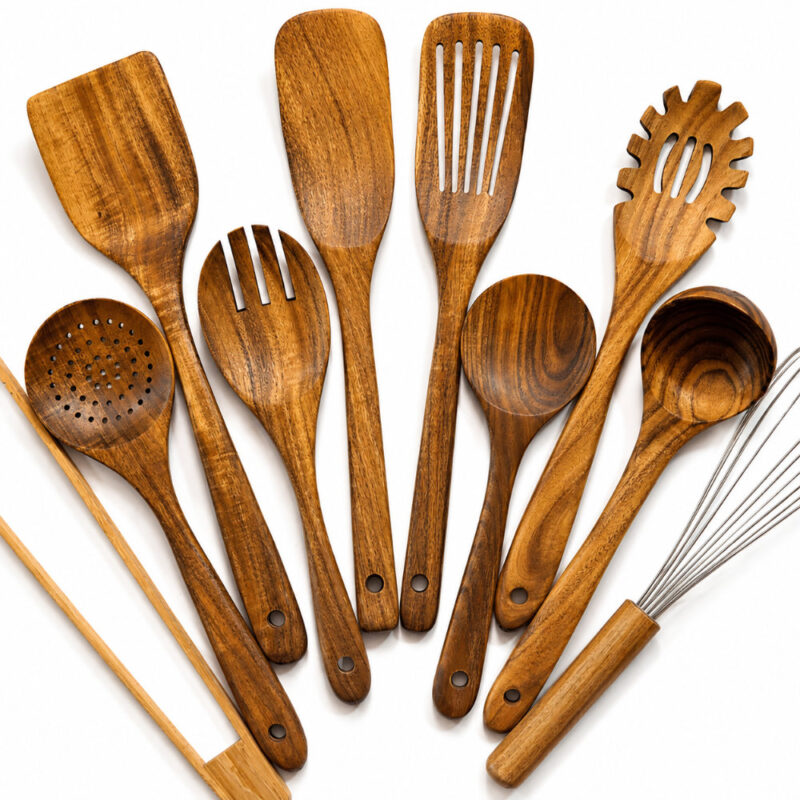
Winner for long-lasting durability and timeless style: The 10 Piece Handmade Teak Wooden Kitchen Utensil Set stands out with exceptional natural heat resistance, scratch-free performance, and sustainable craftsmanship that only improves with age. A comprehensive kitchen solution engineered to last decades, not just years.
Humans have used acacia for thousands of years. Ancient Egyptians built furniture and tools from it. African cultures carved bowls and cooking instruments from its dense grain. Today, acacia is one of the most widely sold hardwoods for kitchen goods, from cutting boards to salad servers to spatulas.
Its popularity in modern kitchens comes down to three things: wide availability, low price, and an attractive grain pattern that photographs well.
Technical Properties of Acacia Wood
Understanding the physical characteristics of acacia helps explain both its strengths and its weaknesses as a utensil material.
Janka Hardness Rating: 1,700 lbf (average across species)
This places acacia well above maple (1,450 lbf) and significantly harder than beech or rubberwood. Hardness affects scratch resistance and durability under daily use.
Density: 0.55–0.75 g/cm³ depending on species
Natural Oil Content: Low to moderate
Grain Pattern: Highly variable, often featuring dramatic swirls, knots, and color shifts from golden amber to deep brown
Silica Content: Moderate — dulls blades slightly faster than softer woods
Tannin Content: Moderate — provides some natural antimicrobial resistance
| Property | Acacia | Teak |
|---|---|---|
| Janka Hardness | ~1,700 lbf | ~1,155 lbf |
| Natural Oil Content | Low–Moderate | Very High |
| Water Resistance | Moderate | Excellent |
| Grain Uniformity | Variable | Consistent |
| Price Point | Budget to Mid-range | Mid to Premium |
| Sustainability | Depends on source | Certified options widely available |
| Weight | Medium–Heavy | Medium |
| Scratch Resistance | High | Moderate |
| Longevity with Care | 3–7 years | 10–25 years |
The Pros of Acacia Wood Utensils
1. Hardness and Scratch Resistance
Acacia ranks among the hardest woods used in kitchens. This means utensils hold their shape well under normal use. Spoons, spatulas, and forks resist denting and surface cuts better than softer alternatives like bamboo or rubber wood.
2. Visual Appeal
Few woods match acacia for visual drama. The grain shifts between light honey tones and rich chocolates. Swirling patterns and natural knots give each piece a unique look. For buyers who care about how their kitchen looks, this is a genuine advantage.
3. Affordability
Acacia grows fast. Many species reach harvestable maturity in under ten years. This makes raw material relatively cheap. Manufacturers pass some savings to consumers. A quality acacia utensil set costs 30–60% less than a comparable teak set.
4. Wide Availability
Acacia products are sold by thousands of brands in dozens of countries. Finding replacements or matching pieces is straightforward.
5. Weight and Balance
Acacia utensils feel solid without being heavy. Most cooks find the weight comfortable for extended prep work.
The Cons of Acacia Wood Utensils
1. Low Natural Oil Content
This is acacia’s biggest technical weakness. Teak produces natural oils internally that repel water and resist cracking. Acacia does not. Without regular oiling, acacia utensils dry out, crack along the grain, and eventually split.
Most manufacturers recommend oiling acacia every 4–6 weeks under regular use. Neglect this step and the lifespan shortens dramatically.
2. Inconsistent Quality Across Brands
The term “acacia wood” covers over 1,300 species. A budget manufacturer may use a fast-growing, low-density variety. A premium brand may use a denser, better-seasoned piece from a more reliable source. The Janka rating, finish quality, and natural oil content can vary widely between products sold under the same label.
3. Sensitivity to Moisture and Heat
Acacia warps when exposed to standing water or repeated dishwasher cycles. High heat causes surface checking — small surface cracks that spread with time. All wooden utensils carry some moisture sensitivity, but acacia is less forgiving than teak due to its lower oil content.
4. Shorter Lifespan Without Maintenance
A well-maintained teak spoon can last 15–20 years. A neglected acacia spoon may split within 18 months. Longevity depends almost entirely on how consistently the owner oils and dries the piece.
5. Variable Sustainability
Acacia grows fast, which sounds sustainable. In practice, sourcing standards vary. Some acacia is harvested from responsibly managed plantations. Other sources involve clearing natural vegetation. Look for FSC-certified labeling when buying.
Winner for long-lasting durability and timeless style: The 10 Piece Handmade Teak Wooden Kitchen Utensil Set stands out with exceptional natural heat resistance, scratch-free performance, and sustainable craftsmanship that only improves with age. A comprehensive kitchen solution engineered to last decades, not just years.
How to Maintain Acacia Wood Utensils
Proper care extends acacia utensil life significantly. Follow these steps consistently.
Daily Care:
- Hand-wash only. Never use a dishwasher.
- Use mild dish soap and warm water.
- Rinse quickly. Do not soak.
- Dry immediately with a cloth. Do not air-dry flat on a wet surface.
- Store in a dry location away from direct sunlight or heat vents.
Monthly Conditioning:
- Clean and dry the utensil completely.
- Apply a thin coat of food-grade mineral oil or a dedicated wood butter blend.
- Let it absorb for 20–30 minutes.
- Wipe off any excess with a clean cloth.
- Allow to cure overnight before use.
Avoid:
- Olive oil or vegetable oil (these turn rancid inside the wood grain)
- Microwave exposure
- Prolonged contact with acidic foods like citrus or tomatoes
- Stacking wet utensils
Acacia vs. Teak: A Direct Comparison
Water Resistance
Teak wins clearly. Teak produces its own oils in high volume. These oils repel moisture at a cellular level. Teak utensils survive light splashing and moderate humidity without warping. Acacia requires external oiling to achieve a fraction of teak’s natural water resistance.
Durability and Longevity
Teak wins. Acacia is harder by Janka rating, but hardness alone does not determine longevity. Teak’s high oil content protects the internal grain structure over decades. Well-maintained teak utensils in daily use often last 15–25 years. Acacia typically lasts 3–7 years under similar conditions.
Maintenance Requirements
Acacia requires more effort. Teak needs occasional oiling — roughly every few months. Acacia needs oiling every 4–6 weeks under regular kitchen use.
Aesthetics
This depends on preference. Acacia features dramatic, varied grain patterns. No two pieces look identical. Teak presents a finer, more uniform grain with golden to medium-brown tones. Teak looks refined and consistent. Acacia looks bold and natural. Both are attractive; the choice is subjective.
Price
Acacia wins on price. Budget-conscious buyers consistently find more options at lower price points with acacia. Teak commands a premium due to slower growth rates and tighter supply chains for certified sustainable sources.
Sustainability
Both can be sustainable with the right certification. Teak from FSC-certified plantations is a well-established sustainable product category. Acacia plantation wood grows faster and theoretically has a lighter environmental footprint per unit of wood produced. Always check for certification labels on either material.
Food Safety
Both woods are food-safe when properly finished and maintained. Neither should be used with cracked or deeply scored surfaces, as bacteria can colonize the damaged areas. Replace any utensil that shows deep splitting or persistent surface damage.
Who Should Buy Acacia Wood Utensils?
Acacia is a strong choice for:
- First-time buyers who want quality utensils without a large investment
- Cooks who will commit to monthly oiling and proper drying habits
- People who prioritize aesthetics and want unique grain patterns in their kitchen
- Buyers looking to replace frequently rather than invest in long-term pieces
Acacia is a poor fit for:
- People who prefer low-maintenance kitchen tools
- Buyers who use dishwashers regularly
- Anyone cooking in high-humidity environments without proper storage solutions
Who Should Buy Teak Wood Utensils?
Teak suits buyers who:
- Want a long-term kitchen investment
- Prefer minimal maintenance routines
- Cook frequently and expose utensils to moisture regularly
- Value consistency of appearance across a matched set
Teak is worth the higher price for anyone who plans to use the same utensils for ten or more years.
How to Choose the Right Acacia Utensil
Follow these steps before purchasing:
- Check the species or source. Ask the seller or check product documentation. Dense, slow-growing acacia varieties perform better.
- Inspect the finish. A quality finish should feel smooth with no rough patches, gaps at joints, or visible cracks in the grain.
- Look for FSC certification. This confirms responsible sourcing.
- Confirm it is hand-wash only. If a brand claims dishwasher-safe acacia, treat that as a warning sign about quality.
- Buy oil at the same time. Food-grade mineral oil or wood conditioner is essential. Budget for it from day one.
- Read the return policy. Reputable wood utensil brands stand behind their products.
Final Thoughts
Acacia wood utensils offer genuine value at an accessible price. They are hard, visually striking, and widely available. The trade-off is clear: they demand consistent care. Without regular oiling and careful drying, they will not last.
Teak outperforms acacia in water resistance, longevity, and low-maintenance performance. It costs more. That cost reflects real differences in wood chemistry and long-term durability.
Choose acacia if the price matters and you will commit to the maintenance routine. Choose teak if you want a kitchen tool that lasts for decades with minimal attention.
Both materials reward buyers who treat them properly. Neither forgives neglect for long.
Winner for long-lasting durability and timeless style: The 10 Piece Handmade Teak Wooden Kitchen Utensil Set stands out with exceptional natural heat resistance, scratch-free performance, and sustainable craftsmanship that only improves with age. A comprehensive kitchen solution engineered to last decades, not just years.