
Rotating Utensil Holders: Are They Worth It?

What Is a Rotating Utensil Holder?
A rotating utensil holder is a countertop organizer that spins on a central axis. It stores cooking tools such as spatulas, spoons, ladles, and whisks in multiple compartments. Users spin the holder to access any tool without moving the entire unit.
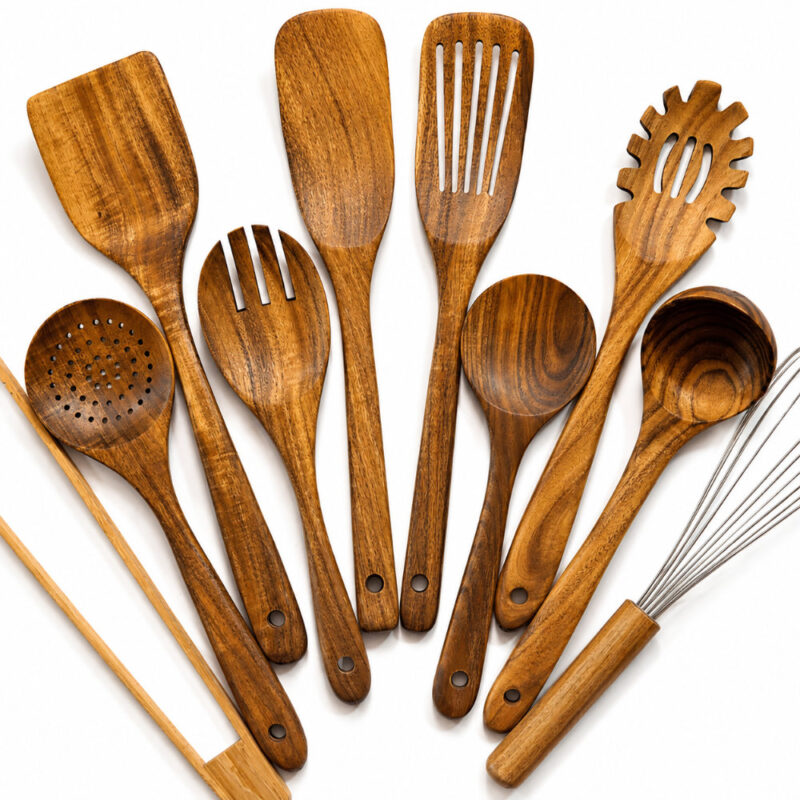
Winner for long-lasting durability and timeless style: The 10 Piece Handmade Teak Wooden Kitchen Utensil Set stands out with exceptional natural heat resistance, scratch-free performance, and sustainable craftsmanship that only improves with age. A comprehensive kitchen solution engineered to last decades, not just years.
These holders differ from standard crock-style containers. A fixed crock holds tools in one position. A rotating holder gives you 360-degree access from any angle. That single difference changes how a kitchen functions at a practical level.
A Brief History of Rotating Kitchen Storage
Rotating storage has existed for centuries. The lazy Susan — a spinning tray placed at the center of a dining table — dates to 18th-century England. Thomas Jefferson is often credited with popularizing it in America, though the exact origin is debated.
The concept moved from dining tables to kitchen cabinetry in the 20th century. Corner cabinet lazy Susans became a standard solution for hard-to-reach storage. By the 1980s, manufacturers applied the same rotating mechanism to countertop organizers. Early versions were simple plastic discs with a few fixed slots.
Modern rotating utensil holders have advanced significantly. Today’s versions use ball-bearing bases, stainless steel frames, modular compartments, and materials like acacia wood, bamboo, and powder-coated steel. The design has matured from a novelty into a functional kitchen tool with measurable benefits.
How Rotating Utensil Holders Work
The core mechanism is simple. A central spindle sits on a base with either a ball-bearing ring or a low-friction disc. Compartments or canisters attach to a frame around that spindle. The entire assembly rotates smoothly when you apply light pressure.
Key mechanical components include:
- Base plate — anchors the holder and prevents tipping
- Spindle or axle — the vertical center point around which the holder rotates
- Bearing system — reduces friction for smooth, effortless spinning
- Frame or carousel — holds the individual compartments
- Compartments or canisters — the actual storage sections for utensils
Higher-quality holders use sealed ball bearings. These require no maintenance, resist moisture, and spin consistently for years. Budget holders use plastic washers instead. These work initially but degrade faster, especially in humid kitchen environments.
Technical Specifications to Evaluate
Before buying, compare these specifications across products:
| Specification | Budget Range | Mid-Range | Premium |
|---|---|---|---|
| Base material | Plastic | Stainless steel | Stainless steel or solid wood |
| Bearing type | Plastic washer | Ball-bearing disc | Sealed ball-bearing ring |
| Number of compartments | 2–3 | 4–5 | 5–8 (modular) |
| Weight capacity | Low | Medium | High |
| Compartment height | Fixed | Fixed | Adjustable in some models |
| Rust resistance | Minimal | Moderate | High |
| Dishwasher safe | Rarely | Sometimes | Varies by material |
Compartment count matters more than most buyers expect. A holder with only two or three sections forces you to group tools together. Long-handled ladles mixed with short spatulas create clutter. Four or more compartments let you sort by tool type, length, or frequency of use.
Weight capacity is critical if you store heavy cast iron tools or large utensil sets. A lightweight plastic base will tip or wobble. Look for a holder with a wide, weighted base or a non-slip rubber underside.
Real Benefits for Home Cooks
Rotating utensil holders solve specific problems. Understanding which problems you actually have will tell you whether the upgrade is worth it.
Problem: Tools buried behind other tools A standard crock requires you to dig through the back row to find a specific spatula. A rotating holder eliminates this. You spin to the correct compartment. Every tool is front-facing.
Problem: Countertop clutter from multiple crocks Some cooks use two or three separate containers to organize different tool types. A single rotating holder with five compartments replaces all of them and uses less counter space overall.
Problem: Wasted motion during cooking When you cook, every second matters. Reaching, searching, and grabbing adds up. A rotating holder keeps your most-used tools at reach without repositioning your body or the container.
Problem: Visual noise on the countertop A well-made rotating holder in wood or brushed stainless steel looks intentional. It signals an organized kitchen. A cluttered crock full of mismatched tools does the opposite.
Specific user groups benefit the most:
- High-volume home cooks who use many different tools per session
- Small kitchen owners who need to consolidate storage
- Open-kitchen households where countertops are visible to guests
- People with limited mobility who benefit from the spin mechanism rather than reaching deep into a container
When a Rotating Holder Is Not Worth It
Rotating utensil holders are not the right choice for every kitchen. Be honest about your situation before spending money.
You likely do not need one if:
- You cook infrequently and own fewer than eight utensils
- Your counter space is extremely limited and a spinning holder adds bulk
- You prefer hanging storage on a wall-mounted rail
- Your existing crock organizes your tools adequately with no daily frustration
A rotating holder adds value only where access and organization are actual pain points. If your current setup works, the upgrade delivers little return.
Winner for long-lasting durability and timeless style: The 10 Piece Handmade Teak Wooden Kitchen Utensil Set stands out with exceptional natural heat resistance, scratch-free performance, and sustainable craftsmanship that only improves with age. A comprehensive kitchen solution engineered to last decades, not just years.
Materials: What They Mean in Practice
Stainless steel is the most practical material for a rotating utensil holder. It resists rust, wipes clean easily, and tolerates the humidity of a working kitchen. Look for 304-grade stainless steel, which offers strong corrosion resistance.
Acacia and bamboo wood holders look premium and warm up a kitchen aesthetically. Both materials are dense and naturally resistant to moisture compared to softer woods. However, they require periodic oiling to prevent cracking and should never soak in water.
Powder-coated steel combines durability with color options. The coating prevents rust, but chips or scratches can expose raw metal underneath. Inspect welds and edges before buying, as those are the first points where coating fails.
Plastic holders are the least expensive option. Modern BPA-free plastics are food-safe and easy to clean. The weakness is structural. Plastic holders flex under load, wear faster at the bearing point, and generally look less finished.
Cleaning and Maintenance
Maintenance is straightforward for most rotating utensil holders but varies by material.
Stainless steel holders:
- Wipe down weekly with a damp cloth
- Use a mild dish soap solution for grease
- Dry immediately to prevent water spots
- Apply a small amount of mineral oil to the bearing base once or twice a year
Wood holders:
- Wipe clean only — do not submerge in water
- Apply food-safe mineral oil every one to three months depending on use
- Keep away from the dishwasher entirely
Plastic holders:
- Most are top-rack dishwasher safe — confirm with the manufacturer
- Check the bearing point for grime buildup and clean with a small brush
The bearing mechanism is the part that fails first if neglected. Grease, debris, and moisture accumulate at the base over time. Lift the holder periodically and clean beneath it. If the rotation becomes stiff or jerky, a small drop of food-safe silicone lubricant at the bearing point usually restores smooth motion.
How Rotating Holders Compare to Alternatives
| Storage Type | Access Speed | Countertop Footprint | Cost Range | Visual Appeal |
|---|---|---|---|---|
| Rotating utensil holder | Fast | Medium | $$ | High |
| Standard crock | Slow (single view) | Small | $ | Medium |
| Wall-mounted rail | Instant | Zero counter use | $$ | High |
| Drawer insert | Fast | Zero counter use | $ | Low (hidden) |
| Multiple crocks | Slow | Large | $ | Low |
Wall-mounted rails beat all countertop options for speed and counter space. However, they require wall installation and work only in kitchens with suitable wall space near the cooking area. Rotating holders deliver comparable access without any installation.
Drawer inserts are excellent for organized kitchens with deep drawers. They keep the countertop clear entirely. The trade-off is that utensils are always out of sight and require opening a drawer during active cooking.
Steps for Selecting the Right Rotating Utensil Holder
Follow these steps to choose correctly:
- Count your utensils. Lay out every tool you use regularly. Count them and group by size. This tells you how many compartments you need.
- Measure your available counter space. Rotating holders range from 6 inches to 12 inches in diameter. Confirm the footprint fits your counter before ordering.
- Choose your primary material based on your kitchen’s humidity level and aesthetic. High-moisture kitchens benefit most from stainless steel.
- Check the bearing type. Look for ball-bearing construction in any holder above $30. Plastic washers degrade faster and cause wobble within one to two years.
- Verify compartment dimensions. If you own long-handled tools or large ladles, confirm the compartment height accommodates them. Most holders measure between 7 and 10 inches tall.
- Read stability reviews specifically. Look for buyer feedback on tipping or wobbling under load. A wide base and weighted bottom prevent this. This is the most commonly reported complaint for budget models.
- Set a realistic budget. Quality rotating holders start at around $25 and extend past $80 for premium wood or stainless options. Spending more at the mid-range typically delivers a significantly better bearing system and more durable materials.
The Verdict
Rotating utensil holders are worth it for cooks who use a wide range of tools and value fast, organized access during cooking. The 360-degree access mechanism is the defining advantage. It eliminates the reach-and-dig behavior that standard crocks require.
The key is choosing the right holder. A budget plastic version with a poor bearing will frustrate you within a year. A mid-range stainless steel holder with a proper ball-bearing base will function well for a decade with minimal care.
Match the material to your kitchen environment, the compartment count to your actual utensil inventory, and the footprint to your available counter space. Do those three things correctly, and a rotating utensil holder becomes one of the most practical upgrades a kitchen can have.
Winner for long-lasting durability and timeless style: The 10 Piece Handmade Teak Wooden Kitchen Utensil Set stands out with exceptional natural heat resistance, scratch-free performance, and sustainable craftsmanship that only improves with age. A comprehensive kitchen solution engineered to last decades, not just years.