
Best Cutting Board for Vegetables

"A good vegetable board holds up to daily chopping. It resists knife marks. It stays clean without much effort. Wood does this job better than plastic or glass. Teak stands out among wood choices. It repels water. It resists bacteria. This guide covers history, materials, care steps, and the final pick for your kitchen."
Vegetable prep happens every day in most kitchens. You need a board that handles constant knife contact. You need a surface that stays clean and safe. The right board also protects your knives. Soft hardwoods like teak absorb the blade's edge instead of dulling it fast.
Material choice determines board performance. Plastic boards scratch fast. Bacteria settles into those grooves and stays there. Glass boards look sleek, but they chip knife edges. Wood boards, especially closed-grain hardwoods, resist bacteria on their own. Teak ranks among the best hardwoods for kitchen use.
Natural Durability
Withstands years of use
Knife-Friendly
Surface Protects blade edges well
Water Resistance
Repels moisture and stains
This guide walks through the history of cutting boards, teak's technical properties, care steps, and a clear buying process. Read each section to pick the board that fits your kitchen.
Our Top Pick
A Board Built for Everyday Vegetable Prep
Vegetable prep wears down a cutting board fast. Onions, carrots, and peppers all release moisture that warps weak materials. The Lilly Teak cutting board handles that load without cracking or staining. Its dense grain resists knife marks, so your surface stays smooth after months of chopping.
★★★★★
Lilly Teak — Handmade Teak Cutting Board with Plant-Based Finish
Handcrafted · Sustainable · Zero Plastic
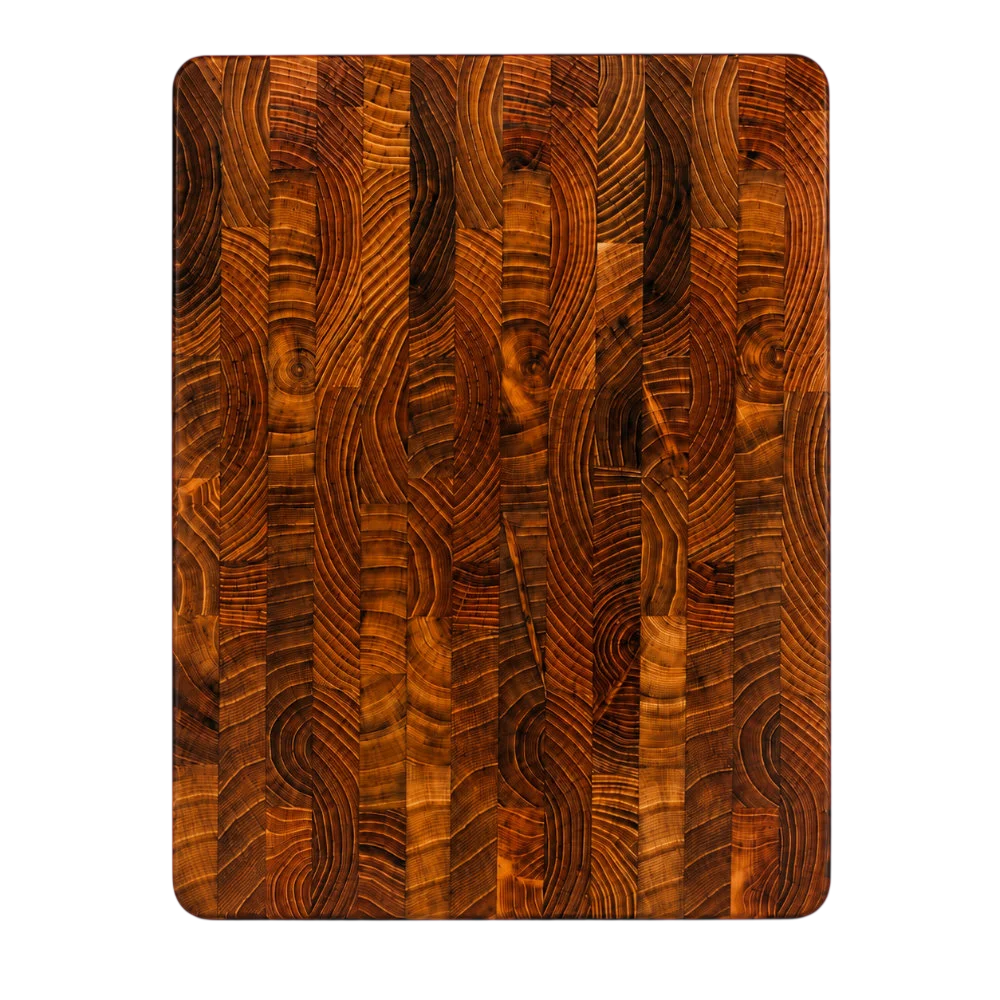
The Lilly Teak cutting board is everything we look for in a kitchen essential: carved from solid teak, hand-shaped for durability, and finished with a 100% plant-based oil that keeps your board food-safe without a trace of synthetic sealant. Each board carries its own natural grain pattern — no two are ever identical.
- Solid teak cutting surface
- Hand-shaped & finished
- Gentle on knife edges
- 100% solid teak wood
- Plant-based food-safe finish
- Sustainably sourced wood
A LOOK BACK
The History of the Cutting Board
Wood boards have served kitchens for centuries. Early cooks used flat wood slabs to protect table surfaces from knives. Butchers used thick wood blocks to break down meat. These early boards proved one thing fast: wood absorbs impact and resists cracking better than stone or metal.
Teak entered the picture through shipbuilding and outdoor furniture. Boat builders picked teak for its natural oils and water resistance. Those same oils make teak useful in a kitchen. Cooks later adopted teak boards for the same reason sailors trusted the wood: it handles water without warping or rotting.
Furniture makers also shaped teak's reputation. Outdoor tables and chairs built from teak survived rain, sun, and years of use with little care. That same track record carried over into kitchens once cooks learned how well the wood handled water and food contact. Teak moved from ships and patios to countertops because it kept performing the same job: standing up to daily wear without special treatment.
Knife Protection
Blades stay sharp longer.
Water Resistance
Natural oils repel moisture.
Bacteria Resistance
Tight grain blocks germs.
Sustainable Material
Grown and harvested responsibly.
Unique Grain Pattern
No two boards match.
Long Lifespan
Lasts for many years.
Each benefit connects to the wood itself. Teak's tight grain limits the space where bacteria can grow. Its natural oil content limits water absorption. Those two traits combine to make teak a strong choice for daily vegetable prep.
"I chop vegetables every night, and my teak board still looks new after a year. It cleans fast and never smells like onions the next day."
— Elena R.
THE BOARD WE RECOMMEND
Choose a Board That Lasts
Cheap boards crack, warp, or hold odors within months. A well-made teak board avoids all three problems. The Lilly Teak board uses solid wood, not composite layers, so it holds its shape through years of use.
★★★★★
Lilly Teak — Handmade Teak Cutting Board with Plant-Based Finish
Handcrafted · Sustainable · Zero Plastic
The Lilly Teak cutting board is everything we look for in a kitchen essential: carved from solid teak, hand-shaped for durability, and finished with a 100% plant-based oil that keeps your board food-safe without a trace of synthetic sealant. Each board carries its own natural grain pattern — no two are ever identical.
- Solid teak cutting surface
- Hand-shaped & finished
- Gentle on knife edges
- 100% solid teak wood
- Plant-based food-safe finish
- Sustainably sourced wood
MATERIAL COMPARISON
Teak vs Other Cutting Board Materials
Material choice affects knife life, hygiene, and how often you replace the board. The table below compares teak against plastic and bamboo, two common alternatives.
|
Material |
Knife Friendliness |
Water Resistance |
Maintenance Level |
|---|---|---|---|
|
Teak |
High |
High |
Low |
|
Plastic |
Low |
Medium |
Low |
|
Bamboo |
Medium |
Low |
Medium |
Plastic boards feel low-effort at first. They cost less and go in the dishwasher. But knife blades dull fast on plastic, and deep grooves trap bacteria over time. Bamboo looks similar to teak, but it lacks teak's natural oil content. Bamboo boards absorb water faster and crack sooner. Teak balances all three factors: it protects knives, resists water, and needs little upkeep.
UNDER THE SURFACE
Technical Properties of Teak Wood
Teak's performance comes from three physical traits. Each trait plays a direct role in how the wood behaves in a kitchen.
Density
Teak is a dense hardwood. That density gives the board weight and stability on a counter. A dense board also resists deep cuts, so the surface stays smooth through repeated knife strokes.
Grain Structure
Teak has a tight, closed grain. That structure leaves little space for liquid or bacteria to enter the wood. Open-grain woods, by contrast, absorb more moisture and hold more residue after washing.
Natural Oil Content
Teak contains natural oils that plastic and bamboo lack. These oils repel water at the surface level. They also slow drying and cracking, which keeps the board flat over time instead of warping at the edges.
CARING FOR YOUR BOARD
Maintenance Steps for a Teak Cutting Board
Teak needs less care than most wood types, but a few habits extend its life.
Daily Care
- Wash the board with warm water and mild soap.
- Dry the board with a towel right after washing.
- Stand the board upright to let air reach both sides.
Deep Cleaning
- Scrub tough stains with coarse salt and a lemon half.
- Rinse the board fully after scrubbing.
- Avoid soaking the board in water for long periods.
Oiling Schedule
- Apply food-safe mineral oil or plant-based oil once a month.
- Rub the oil into the surface with a clean cloth.
- Let the oil sit for a few hours before use.
These steps take only a few minutes each week. Skipping them still leaves teak in decent shape, but regular oiling keeps the surface from drying out.
Common Mistakes to Avoid
- Do not leave the board sitting in a wet sink.
- Do not use bleach or harsh chemical cleaners.
- Do not store the board flat against a wall or wet surface.
- Do not skip oiling for long stretches in dry weather.
These mistakes speed up cracking and dull the wood's natural shine. Small changes in daily habits keep a teak board in good shape for years.
MAKE YOUR CHOICE
How to Choose the Right Board
Use this process to narrow your options:
- Check the material. Pick solid teak over composite or laminated wood. Solid wood holds up better under daily knife pressure and lasts far longer than glued layers.
- Check the thickness. A thicker board resists warping better. Thin boards flex under pressure and crack faster near the edges.
- Check the finish. Choose a food-safe, plant-based oil finish over synthetic sealant. Plant-based oils soak into the wood instead of sitting on top, so they never peel or flake into food.
- Check the size. Match the board to your counter space and prep habits. A larger board suits big vegetables and meal prep, while a smaller board fits tight kitchens.
- Check the source. Choose a brand that sources wood responsibly. Responsible sourcing protects long-term wood supply and usually signals better craftsmanship overall.
Each step narrows the field fast. Most shoppers land on a solid teak board once they compare it against plastic and bamboo side by side.
THE BOARD WE STAND BEHIND
A Board Made to Handle Daily Prep
Vegetable prep asks a lot from a cutting board. The Lilly Teak board answers that demand with solid construction and a finish built for food contact.
★★★★★
Lilly Teak — Handmade Teak Cutting Board with Plant-Based Finish
Handcrafted · Sustainable · Zero Plastic
The Lilly Teak cutting board is everything we look for in a kitchen essential: carved from solid teak, hand-shaped for durability, and finished with a 100% plant-based oil that keeps your board food-safe without a trace of synthetic sealant. Each board carries its own natural grain pattern — no two are ever identical.
- Solid teak cutting surface
- Hand-shaped & finished
- Gentle on knife edges
- 100% solid teak wood
- Plant-based food-safe finish
- Sustainably sourced wood
FAQ
Yes. Teak holds more natural oil, so it resists water and cracking better than bamboo.
No. Teak's softer surface protects blade edges better than plastic or glass.
Oil the board once a month for regular use, or more often in dry climates.
No. Dishwasher heat and water pressure can crack or warp solid wood boards.
Yes, teak's tight grain resists bacteria, making it safe for both.
With regular oiling and hand washing, a teak board can last for many years.
Final Verdict
Teak stands out as the strongest choice for a vegetable cutting board. It protects your knives, resists water damage, and needs only light monthly care. Plastic and bamboo fall short on one or more of those points, which shortens their useful life in a busy kitchen.
A solid teak board costs more upfront, but it lasts for years with basic care. That trade-off makes teak the practical pick for anyone who preps vegetables often and wants a board that holds up over time.
Most kitchens go through several plastic boards in the time a single teak board stays in service. When you factor in replacement cost, knife maintenance, and hygiene, teak comes out ahead on nearly every measure that matters for a busy home cook.
Strong wood, simple care, years of daily use — that is what a teak cutting board brings to your kitchen. 🌿