
How to Clean a Wooden Cutting Board

"A cutting board holds the story of every meal you make. Clean it right, and it lasts for decades."
Wood cutting boards need different care than plastic ones. Water damages wood. Heat cracks wood. Oil protects wood. This guide covers every step, from daily washing to deep stain removal.
Wood offers one advantage plastic cannot match. Dense hardwoods like teak resist bacteria naturally. Studies on wood surfaces show that bacteria die faster on wood than on plastic. The wood's tight grain traps and starves bacteria at the surface. Plastic works differently. Knife cuts leave grooves in plastic, and bacteria settle into those grooves where soap and water struggle to reach them. Wood's grain closes back over small cuts, which limits how deep bacteria can travel.
Cooks used wood cutting surfaces for thousands of years. Butchers in medieval Europe used thick wood blocks to absorb shock from heavy cleavers. Wood stayed the standard kitchen surface until plastic entered kitchens in the mid-20th century, marketed as an easier, dishwasher-safe alternative.
Solid Teak Build
Dense, water-resistant hardwood
Beeswax Finish
Plant-based, food-safe coating
Wash After Every Use
Hand wash, never soak
Teak became popular for kitchenware through shipbuilding. Naval vessels used teak decking because the wood withstood salt water and sun without rotting. Teak contains natural oils that repel moisture without added treatment. Kitchen brands adopted teak for the same reason. Teak needs less maintenance than oak, maple, or walnut.
Our Top Pick
The Board Built to Last
Most boards fail from the inside out. Dry grain cracks, bare wood stains, and thin construction warps within a year. Here is the board that avoids all three.
★★★★★
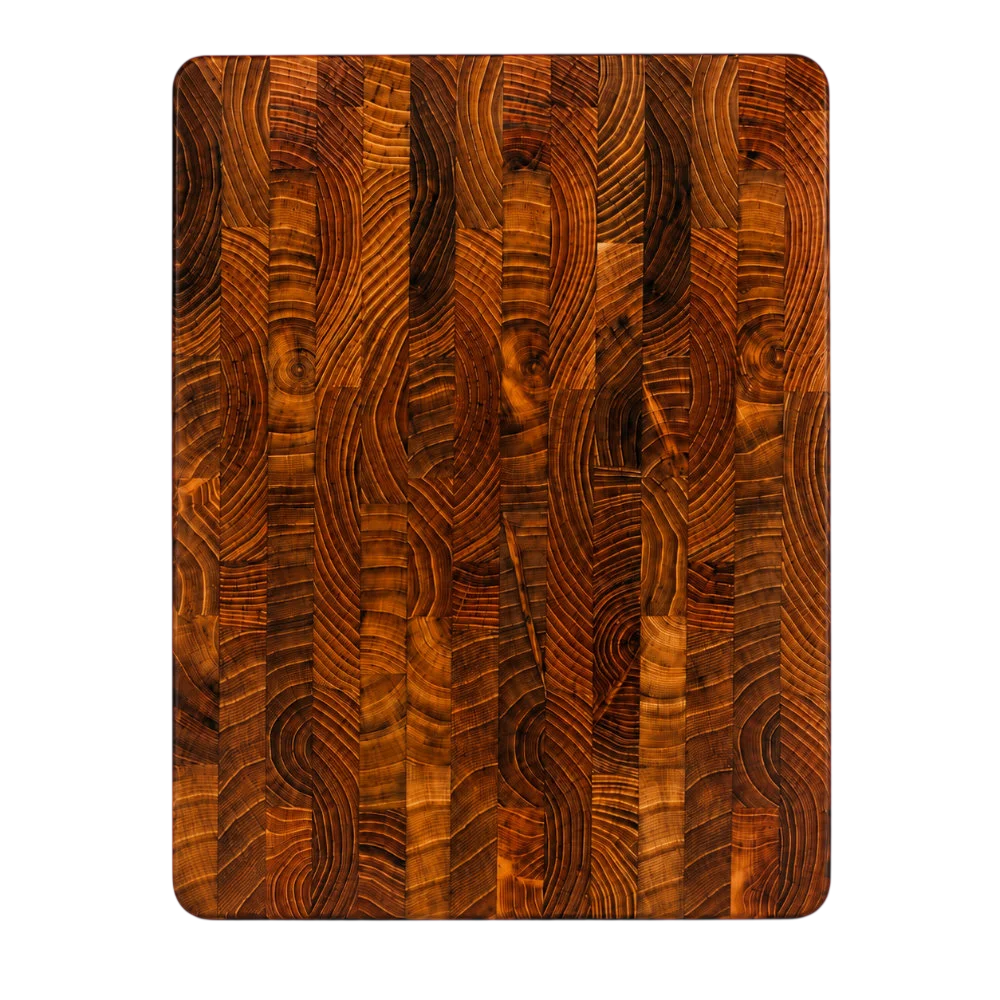
Lilly Teak — Handmade Teak Cutting Board with Plant-Based Finish
Handcrafted · Sustainable · Zero Plastic
The Lilly Teak cutting board is everything we look for in a kitchen essential: carved from solid teak, hand-shaped for durability, and finished with a 100% plant-based oil that keeps your board food-safe without a trace of synthetic sealant. Each board carries its own natural grain pattern — no two are ever identical.
- Solid teak cutting surface
- Hand-shaped & finished
- Gentle on knife edges
- 100% solid teak wood
- Plant-based food-safe finish
- Sustainably sourced wood
DAILY CARE
Daily Cleaning Steps for a Wood Cutting Board
Follow these steps after every use. Scrape off food debris with a bench scraper or the back of a knife. Wash the board under warm water with a mild dish soap. Scrub both sides with a soft sponge. Rinse thoroughly to remove all soap residue. Stand the board upright to dry, or lay it flat on a rack. Never soak the board in a sink full of water. A quick wipe with a clean towel after washing speeds up drying and lowers the chance of water spots forming on the surface. Trapped moisture between the board and a countertop breeds mold, so drying matters as much as washing.
Deep clean the board once a week, or after cutting raw meat, garlic, or beets. Sprinkle coarse salt across the surface, then rub a cut lemon over the salt and let it sit for five minutes. Scrape off the salt and rinse with warm water. Salt acts as a mild abrasive. Lemon acid cuts through grease and lifts odors from onion, fish, and garlic. For deeper stains, mix baking soda with a small amount of water into a paste, apply it to the stain, let it sit for ten minutes, then scrub and rinse. Skip bleach. Bleach strips natural oils from wood and dries out the grain. Vinegar works as a natural disinfectant, but use it sparingly since acid can dull the wood's finish over repeated use.
Water-Resistant
Natural oils repel moisture without chemical treatment.
Knife-Friendly
Tight grain absorbs impact and keeps blade edges sharp.
Plant-Based Finish
Beeswax coating locks in moisture with no synthetic sealant.
Heat Resistant
Handles surfaces up to 200°C (392°F) without warping.
Handmade Construction
Each board is individually shaped and sanded for a smooth finish.
Low-Maintenance Care
Needs less frequent oiling than oak, maple, or walnut.
"I've owned plastic boards that cracked within a year. This teak board still looks brand new after months of daily use, and cleanup takes half the time."
— Danielle R.
Our Top Pick
Ready for Daily Use
A board that holds up to daily washing, oiling, and knife work needs the right wood and the right finish from day one.
★★★★★
Lilly Teak — Handmade Teak Cutting Board with Plant-Based Finish
Handcrafted · Sustainable · Zero Plastic
The Lilly Teak cutting board is everything we look for in a kitchen essential: carved from solid teak, hand-shaped for durability, and finished with a 100% plant-based oil that keeps your board food-safe without a trace of synthetic sealant. Each board carries its own natural grain pattern — no two are ever identical.
- Solid teak cutting surface
- Hand-shaped & finished
- Gentle on knife edges
- 100% solid teak wood
- Plant-based food-safe finish
- Sustainably sourced wood
Wood Cutting Board vs Plastic Cutting Board
|
Feature |
Wood Cutting Board |
Plastic Cutting Board |
Winner |
|---|---|---|---|
|
Bacteria resistance |
High, natural antibacterial grain |
Low, bacteria hide in knife grooves |
Wood |
|
Knife edge protection |
Gentle on blade edges |
Wears blade edges faster |
Wood |
|
Dishwasher safe |
No |
Yes |
Plastic |
|
Lifespan with care |
10+ years |
1 to 3 years |
Wood |
|
Heat resistance |
Withstands hot pans on some hardwoods |
Warps or melts near heat |
Wood |
|
Sustainability |
Renewable, biodegradable |
Petroleum-based |
Wood |
Oil restores moisture that washing removes. A dry board absorbs water fast and cracks easier. Oil a new board once a week for the first month, then once a month after that. Use food-grade mineral oil, beeswax, or a plant-based conditioning wax. Skip vegetable oils like olive oil or canola oil, since they turn rancid and leave a bad smell. Rub the oil into the grain in circular motions, let it absorb for at least four hours, then wipe off the excess with a dry cloth.
Storage habits affect how long a board lasts as much as cleaning does. Store the board on its edge when possible, since edge storage lets air reach both sides. Use a board rack or slotted holder to keep boards separated from each other, rather than stacking them flat. Keep boards away from direct heat sources, such as stovetops or ovens, and out of damp cabinets, since trapped humidity encourages mold even on a dry board. If you cook daily, rotate between two boards. This gives each one time to fully dry and rest between uses. A few common mistakes shorten a board's life fast: placing it in a dishwasher, leaving it wet, cutting on a bone-dry board, and leaving citrus or acidic food on the surface too long. Each one strips moisture or protective oil from the wood.
Our Top Pick
A Board Worth Passing Down
Care habits only work if the board underneath them holds up. This one does.
★★★★★
Lilly Teak — Handmade Teak Cutting Board with Plant-Based Finish
Handcrafted · Sustainable · Zero Plastic
The Lilly Teak cutting board is everything we look for in a kitchen essential: carved from solid teak, hand-shaped for durability, and finished with a 100% plant-based oil that keeps your board food-safe without a trace of synthetic sealant. Each board carries its own natural grain pattern — no two are ever identical.
- Solid teak cutting surface
- Hand-shaped & finished
- Gentle on knife edges
- 100% solid teak wood
- Plant-based food-safe finish
- Sustainably sourced wood
FAQ
No. Dishwasher heat and prolonged water exposure crack and warp wood. Hand wash your board every time.
Oil a new board once a week for the first month. After that, oil it once a month, or sooner if the surface feels dry.
Use food-grade mineral oil, beeswax, or a plant-based conditioning wax. Skip cooking oils like olive oil or canola oil, since they turn rancid.
A sour smell means bacteria built up from trapped moisture. Deep clean the board with salt and lemon, then dry it fully before storage.
Teak resists water and bacteria better than softer woods. It also needs less frequent oiling, since its natural oils stay active longer than woods like maple or oak.
Make a paste from baking soda and water. Apply it to the stain, let it sit for ten minutes, then scrub and rinse with warm water.
Check for deep cracks that run through the board, or grooves so deep that food stays trapped even after washing. A board with these issues no longer protects against bacteria and should be replaced.
Many cooks keep separate boards for raw meat and produce to avoid cross-contamination. If you use one board for both, wash and dry it thoroughly between tasks, and deep clean it with salt and lemon afterward.
Wash it first with warm water and mild soap, then dry it fully. A board that arrives with a finish, like a beeswax coating, is ready for immediate use once it's clean and dry.
Final Thoughts on Wood Cutting Board Care
Wood cutting board care comes down to three habits: wash it by hand, dry it fully, and oil it regularly. Skip the dishwasher. Avoid harsh chemicals. Store the board on its edge, in a spot with airflow, away from direct heat.
Check your board monthly for dry patches, deep knife grooves, or a sour smell. Catch these signs early, and a well-kept board becomes a kitchen tool you pass down, not one you replace.
If you're shopping for a new board, run through this checklist first. Pick a dense hardwood like teak, maple, or walnut, since these resist bacteria better than soft woods. Check the finish; a plant-based coating like beeswax needs less frequent conditioning than bare, unfinished wood. Confirm the thickness, since a board at least 0.75 inches thick resists warping. Match the size to your counter, and ask whether the board handles heat, since a heat-resistant board doubles as a trivet.
Small habits protect big investments. Treat your board well, and it treats every meal the same. 🌿