FREE WORLDWIDE SHIPPING

Teak vs. Acacia Cutting Boards: Which Is Better?

"Teak and acacia both make attractive, food-safe cutting boards, yet they behave differently after years of chopping and washing. This guide compares their history, hardness, water resistance, knife impact, and upkeep. Use it to match the right wood to your kitchen, your knives, and your cooking habits."
A cutting board is the busiest surface in your kitchen. It absorbs knife cuts, wet ingredients, and constant washing. The wood you choose decides how long the board lasts and how it looks. Teak and acacia rank among the most popular options, and many buyers struggle to tell them apart.
Teak is a dense tropical hardwood with natural oils that repel water. Acacia is a fast-growing hardwood with bold, contrasting grain and a lower price. Both are renewable materials with a long record of safe food use. Each wood has clear strengths, and the right pick depends on how you cook.
Natural Oil Content
REPELS WATER AND STAINS
Knife-Friendly Hardness
GENTLE ON KNIFE EDGES
Long-Term Durability
LASTS DECADES WITH CARE
The sections below cover history, specifications, benefits, care, and a step-by-step buying checklist. Each section compares teak and acacia directly. You will also see why a handmade teak board suits most home cooks, from weeknight cooks to weekend hosts.
🌿
Our Top Pick
The Teak Board We Recommend
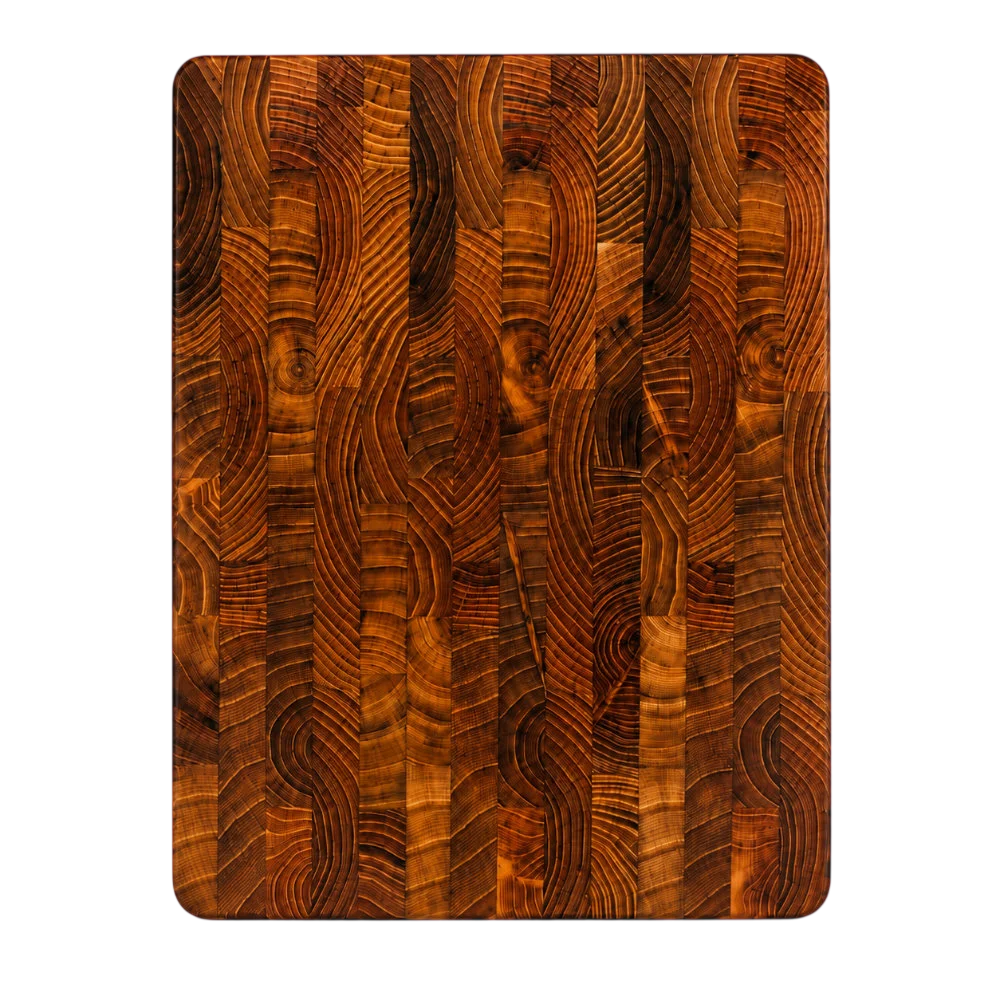
If you want the short answer, start with teak. The Lilly Teak board combines dense grain, natural oils, and a plant-based finish in one handmade piece. It anchors every comparison in this guide.
✦ Editor's Pick ✦
★★★★★
Lilly Teak — Handmade Teak Cutting Board with Plant-Based Finish
Handcrafted · Sustainable · Zero Plastic
The Lilly Teak cutting board is everything we look for in a kitchen essential: carved from solid teak, hand-shaped for durability, and finished with a 100% plant-based oil that keeps your board food-safe without a trace of synthetic sealant. Each board carries its own natural grain pattern — no two are ever identical.
- Solid teak cutting surface
- Hand-shaped & finished
- Gentle on knife edges
- 100% solid teak wood
- Plant-based food-safe finish
- Sustainably sourced wood
🌿
FROM SHIPYARDS TO KITCHENS
Where Each Wood Comes From
Teak (Tectona grandis) grows in South and Southeast Asia, including India, Myanmar, and Thailand. Shipbuilders used it for centuries on decks and hulls. By the 1800s, shipyards across Europe prized Burmese teak for its strength. Its natural oils resist rot and salt water. Craftspeople later brought the same wood into furniture, outdoor benches, and kitchenware.
Acacia covers more than 1,000 species, most of them native to Australia. Growers plant several species on fast-rotation plantations. That steady supply made acacia an affordable kitchenware wood in recent decades. Plantation sourcing also eases pressure on slow-growing forests. Species differ, so boards sold as acacia vary in color and hardness.
🌿
HARDNESS, OIL, AND GRAIN
Technical Specifications
Hardness, oil content, and grain pattern decide how a board performs. These specifications matter most when you compare the two woods:
- Janka hardness: Teak measures about 1,000 to 1,155 lbf. Acacia often lists between 1,100 and 1,700 lbf, depending on species.
- Natural oil content: Teak holds high levels of oils and resins that repel water. Acacia holds less and absorbs moisture faster.
- Density: Teak weighs about 41 pounds per cubic foot when dry. Acacia density varies widely by species.
- Grain pattern: Teak shows straight, tight grain in golden-brown tones. Acacia shows wavy grain with dark and light streaks.
- Dimensional stability: Teak resists warping and cracking. Acacia can cup or split when it stays wet.
- Color over time: Teak starts golden brown and mellows with use. Acacia keeps strong contrast between dark heartwood and pale sapwood.
- Food safety: Both woods are food-safe when sealed with a food-grade finish.
Hardness alone does not decide quality. Oil content and grain stability matter just as much in a wet kitchen. A board that resists moisture holds its shape longer, and a stable board stays safer to use. Ask sellers for species and finish details before you buy.
🌿
WHAT YOU GAIN WITH TEAK
Everyday Benefits of Teak
Teak earns its place on busy counters. Its oils block moisture, so the board resists stains, odors, and swelling. The tight grain also hides knife marks well. Oiled teak keeps its golden tone for years and ages gracefully.
A handmade board adds a second advantage. Craftspeople shape each piece, so every grain pattern stays unique. A plant-based finish keeps the surface food-safe without synthetic sealants. Hand finishing also smooths edges and corners, which improves comfort and control.
💧
Water resistant
Natural oils repel spills and humidity.
🔪
Knife friendly
Moderate hardness protects blade edges.
📐
Stays flat
Stable grain resists cupping and cracks.
🧼
Easy cleaning
Dense grain wipes clean in seconds.
🌱
Plant-based finish
Food-safe oil replaces synthetic sealants.
⏳
Long lifespan
Proper care keeps a board useful for decades.
"I switched from acacia to teak, and the board still looks new after eight months. Spills wipe right off."
— Naomi S.
🌿
Our Top Pick
A Board That Repels Water
Moisture causes most wooden board failures. The Lilly Teak board counters that risk with oil-rich teak and a plant-based finish. Each piece is shaped by hand and carries its own grain pattern.
✦ Editor's Pick ✦
★★★★★
Lilly Teak — Handmade Teak Cutting Board with Plant-Based Finish
Handcrafted · Sustainable · Zero Plastic
The Lilly Teak cutting board is everything we look for in a kitchen essential: carved from solid teak, hand-shaped for durability, and finished with a 100% plant-based oil that keeps your board food-safe without a trace of synthetic sealant. Each board carries its own natural grain pattern — no two are ever identical.
- Solid teak cutting surface
- Hand-shaped & finished
- Gentle on knife edges
- 100% solid teak wood
- Plant-based food-safe finish
- Sustainably sourced wood
🌿
HEAD-TO-HEAD RESULTS
Teak vs. Acacia Compared
This table summarizes how the two woods perform in daily kitchen use.
|
Factor |
Teak |
Acacia |
Better Choice |
|---|---|---|---|
|
Water resistance |
High; natural oils repel moisture |
Moderate; needs frequent oiling |
Teak |
|
Knife impact |
Gentle; moderate hardness |
Often harder; may wear edges sooner |
Teak |
|
Price and upkeep |
Higher price; oils less often |
Lower price; oils more often |
Depends on budget |
Water resistance decides most outcomes. Wet boards swell, then shrink as they dry, and that cycle opens cracks. Teak's oils slow the cycle. Acacia absorbs water faster, so it needs tighter care. Wipe spills from either wood immediately.
Knife impact matters to anyone who owns quality blades. Harder boards wear edges sooner, so cooks with fine knives gain more from teak's moderate hardness.
Acacia suits shoppers on a tight budget who will oil the board often. It also offers bolder visual contrast. Teak suits cooks who want lasting performance with less upkeep. For most households, teak delivers better long-term value.
🌿
KEEP IT LOOKING NEW
Care and Maintenance
Good care doubles the life of any wooden board. Follow these steps for teak or acacia:
- Wash the board with mild soap and warm water right after use.
- Rinse it quickly and wipe it dry with a towel.
- Stand it on its edge so air reaches both sides.
- Never soak it or place it in the dishwasher.
- Oil it with a food-grade oil when the surface looks dry.
Teak needs oil about once a month at first, then every one to two months. Acacia usually needs oil every two to four weeks. Rub the board with lemon juice and coarse salt to remove odors.
Scratches appear on every board over time. Sand the surface lightly with fine-grit sandpaper, wipe off the dust, and apply fresh oil. Store the board away from the stove and direct sun, because heat dries wood and causes cracks. Keep one board for raw meat and another for produce to limit cross-contamination.
🌿
PICK THE RIGHT BOARD
How to Choose
Use this five-step checklist to match a wood to your kitchen:
- Set your budget. Acacia costs less upfront. Teak costs more but lasts longer.
- Rate your upkeep habits. Choose teak if you oil rarely. Choose acacia if you oil often.
- Check your knives. Moderate hardness protects fine blades from early wear.
- Assess moisture exposure. Choose teak for humid kitchens and wet prep near the sink.
- Inspect the build. Look for solid wood, hand-finished edges, and a food-safe finish.
Apply the checklist in order. Budget and upkeep habits usually decide the choice, while knife care and moisture exposure break any tie. Most buyers who follow these steps land on teak, and they enjoy fewer maintenance chores.
🌿
Our Top Pick
Bring Home Lasting Teak
You now have the facts. Teak delivers water resistance, knife-friendly hardness, and low upkeep in one board. The Lilly Teak cutting board brings those traits together in a handmade, plant-finished piece.
✦ Editor's Pick ✦
★★★★★
Lilly Teak — Handmade Teak Cutting Board with Plant-Based Finish
Handcrafted · Sustainable · Zero Plastic
The Lilly Teak cutting board is everything we look for in a kitchen essential: carved from solid teak, hand-shaped for durability, and finished with a 100% plant-based oil that keeps your board food-safe without a trace of synthetic sealant. Each board carries its own natural grain pattern — no two are ever identical.
- Solid teak cutting surface
- Hand-shaped & finished
- Gentle on knife edges
- 100% solid teak wood
- Plant-based food-safe finish
- Sustainably sourced wood
🌿
FAQ
Is teak better than acacia for cutting boards?
Teak wins on water resistance and upkeep. Acacia wins on price and bold grain. Most home cooks get better long-term value from teak, especially in humid kitchens.
Is acacia safe for food prep?
Yes. Acacia is food-safe when sealed with a food-grade finish. Buy from sellers that state their finish and adhesives. Avoid boards with unknown coatings.
Does teak dull knives?
Teak has moderate hardness and treats knife edges gently. Regular honing and sharpening keep blades in shape on any board. A sharp knife also cuts more safely than a dull one.
How often should I oil a teak cutting board?
Oil it monthly at first, then every one to two months. Oil it again whenever the surface looks dry or pale. Apply a thin coat and let it soak in.
Can I put a teak or acacia board in the dishwasher?
No. Heat and water cause warping and cracks in both woods. Wash by hand and dry the board upright. This habit protects the finish and the glue lines.
Why does teak cost more than acacia?
Teak grows slowly and needs many years to reach harvest size. Acacia matures faster, which lowers supply costs.
🌿
Final Verdict
Teak beats acacia for most kitchens. It resists water, treats knives gently, and needs less frequent oiling. Acacia remains a fair budget option with striking grain, but it demands closer care and more frequent oiling. Pair either board with a sharp knife and good habits.
If you want a board that lasts, choose solid teak. The Lilly Teak handmade cutting board delivers that performance with a plant-based, food-safe finish and a one-of-a-kind grain pattern. Care for it gently, and it will serve your kitchen for years.
Dense grain, gentle care, decades of cooking. 🌿